
Best Paint Finish for Bathroom Walls: How to Choose
Discover the best paint finish for bathroom walls. Compare satin, semi-gloss, and matte sheens to find the right moisture-resistant option for your home today!

The best paint finish for bathroom walls isn’t automatically the glossiest one. Semi-gloss can be easier to wipe, but its shine may draw attention to uneven patches. Matte has a softer look, yet may not suit a bathroom where walls get frequent splashes and cleaning. The right choice depends on how the room is used, the condition of the walls, and the paint product you select.
If you’re weighing matte, satin, and semi-gloss, consider the room’s everyday demands. Bathroom walls are exposed to humidity, splashes, and regular cleaning, and no finish can compensate for lingering moisture or poor preparation. Even durable paint can peel if the surface isn’t sound or the room doesn’t dry properly.
This guide compares common bathroom sheens so you can choose one that suits your household, cleaning habits, and preferred look. You’ll see when satin can be a practical middle ground, when semi-gloss may be worth considering, and why matte or eggshell can work in lower-moisture powder rooms. We’ll also cover what sheen can and can’t do, plus preparation steps that help a bathroom paint job look its best.
Key Takeaways
- The best paint finish for bathroom walls depends on how the room is used, how often you clean, and the condition of the walls.
- Compare matte, eggshell, satin, and semi-gloss by appearance, cleanability, and how much surface texture they reveal.
- A glossier sheen may be easier to wipe, but it won’t solve leaks, persistent condensation, or inadequate ventilation.
- Test finish samples in your bathroom’s lighting before choosing, since sheen can look different across the room.
- Peeling paint, complex repairs, or uncertain surface conditions can make professional preparation and painting worth considering.
What Is the Best Paint Finish for Bathroom Walls? Start With Sheen
Satin is a practical finish to consider first in many bathrooms because it has a gentle sheen and is often easier to wipe than flatter finishes. It isn’t automatically the best paint finish for bathroom walls, though. The right choice depends on the wall’s condition, the look you prefer, how often you clean, and whether the room gets regular steam and splashes.
Paint finish describes how much light the dried surface reflects, from low-reflection matte to more reflective semi-gloss. Sheen can change how a color looks and how clearly wall texture shows. For a neutral overview of the term, see What Is Paint Sheen?
Sheen is only one part of a paint job. It isn’t the same as paint type, primer, or surface preparation, and it won’t waterproof a wall. A glossier finish may be easier to clean, but it can’t repair a leak, stop persistent condensation, or make up for inadequate ventilation. The full paint system and the condition of the surface matter, too.
What does paint sheen change on a bathroom wall?
Sheen changes how light reflects off a wall. A flatter finish tends to diffuse light for a softer look, while a more reflective finish can make a color appear brighter or more pronounced. That same reflection can emphasize bumps, patch marks, or uneven repairs, especially where light hits at an angle. A glossy surface isn’t always the best-looking choice for an imperfect wall.
Think of finish as affecting the appearance and cleanability of the paint’s surface, not as a fix for what lies beneath it. Primer helps prepare the surface for paint, but the wall itself also needs to be sound and properly prepared. Choosing the right sheen won’t hide every flaw or correct peeling and damage.
Is satin always the best bathroom wall finish?
No. Satin is a useful starting point for many bathrooms, but household habits and wall condition can change the decision. If walls need frequent wiping, you may prioritize cleanability. If the surface has visible irregularities, a less reflective finish may be more forgiving in appearance. In a powder room with little moisture, your priorities may differ from those in a busy bathroom used for daily showers.
Before deciding, check the paint manufacturer’s label and product guidance for bathroom suitability, cleaning instructions, and recommended surfaces. Formulations vary, so don’t assume every paint with the same sheen performs identically. View samples on the actual wall in the room’s lighting, and consider whether the result works for both your preferred look and everyday routine.
Bathroom Paint Finishes Compared: Matte, Eggshell, Satin, and Semi-Gloss
Each sheen creates a different look and cleaning experience, but the label alone doesn’t tell you how a specific paint will perform. Use this comparison to narrow your options, then check the product’s bathroom guidance and cleaning instructions.
| Finish | Appearance | Cleanability | Texture visibility | Typical bathroom suitability |
|---|---|---|---|---|
| Matte | Soft, low-reflection look | Varies by formulation; confirm scrub and cleaning guidance | Often draws less attention to minor texture | May suit lower-moisture rooms if the product is appropriate |
| Eggshell | Subtle, low sheen | Varies by product; check the label | Usually less revealing than glossier finishes | Can be considered for powder rooms or walls with modest cleaning needs |
| Satin | Gentle, noticeable sheen | Often selected when easier wiping is a priority; verify product directions | May show more irregularities than flatter finishes | A middle-ground option for many bathrooms, depending on the paint |
| Semi-gloss | More reflective, brighter-looking surface | Often chosen for wipeability, but performance is product-specific | Can emphasize flaws, especially in angled light | May suit walls needing frequent cleaning if the surface is well prepared |
When do matte or eggshell finishes make sense?
Matte and eggshell offer a softer appearance and can make small wall variations less noticeable than stronger reflection might. That can be appealing on older or lightly textured walls. But lower sheen doesn’t automatically mean poor cleanability, and it doesn’t guarantee a paint is suitable for a bathroom. Scrub resistance depends on the formulation. Check whether the specific product is intended for the room’s moisture exposure and expected cleaning. For broader selection guidance, see best paint for bathrooms.
Should bathroom walls be satin or semi-gloss?
Satin has a moderate sheen and can be a comfortable compromise between a softer look and practical wiping. Semi-gloss reflects more light and may be easier to clean, but that extra shine can make patching, ridges, and uneven surfaces more noticeable, especially near a window or bright fixture. Consider wall condition and cleaning habits together, then follow the paint product’s directions rather than assuming one sheen is always more suitable.
To choose the best paint finish for bathroom walls, compare actual samples on the surface and inspect them in the room’s lighting. Review the manufacturer’s guidance for bathroom use and cleaning, too. A carefully chosen sheen supports the look you want, but it works best with an appropriate paint product and sound preparation.
Does a Higher Bathroom Paint Sheen Prevent Moisture Damage?
No. A glossier finish may be easier to wipe, but it won’t stop leaks, persistent condensation, or poor ventilation. Cleanability and moisture control both matter to bathroom paint performance, but they aren’t the same thing. Finish affects the paint’s surface. Lasting results also depend on a suitable paint system, a sound wall, proper preparation, and conditions that let the room dry.
That distinction matters in Charleston and the Lowcountry, where humid weather makes it especially useful to consider how a bathroom circulates air and dries after use. Local humidity alone doesn’t mean a wall will fail. Check what’s happening in your particular room: does moisture linger after showers, or does the space dry comfortably?
How do ventilation and bathroom use affect finish choice?
Frequent hot showers can leave damp air and condensation on cooler surfaces. If air circulation is limited, walls may take longer to dry, so choosing a higher sheen by itself won’t address the cause. Make sure bathroom ventilation is functioning and pay attention to recurring dampness. If peeling, staining, or suspected water damage keeps returning, seek an appropriate professional assessment before repainting.
What should you do before repainting damp or peeling walls?
Start by checking for an active leak, loose or bubbling paint, stains, and damaged areas. Don’t simply cover a problem that may still be creating moisture. The right cleaning, drying, repair, and primer steps depend on the surface and its condition. Follow the paint manufacturer’s instructions instead of assuming one coating system suits every wall.
If the source of moisture isn’t clear, have it assessed by a suitable professional before painting. A painting professional can help evaluate the paint and surface preparation, but suspected leaks or underlying water damage may require a different specialist. Once the wall is sound and dry, you can choose a finish based on appearance and cleaning needs with more confidence. Moisture control and careful preparation matter just as much as wall-paint sheen. That’s the practical starting point for selecting the best paint finish for bathroom walls without expecting the finish to solve problems it can’t fix.
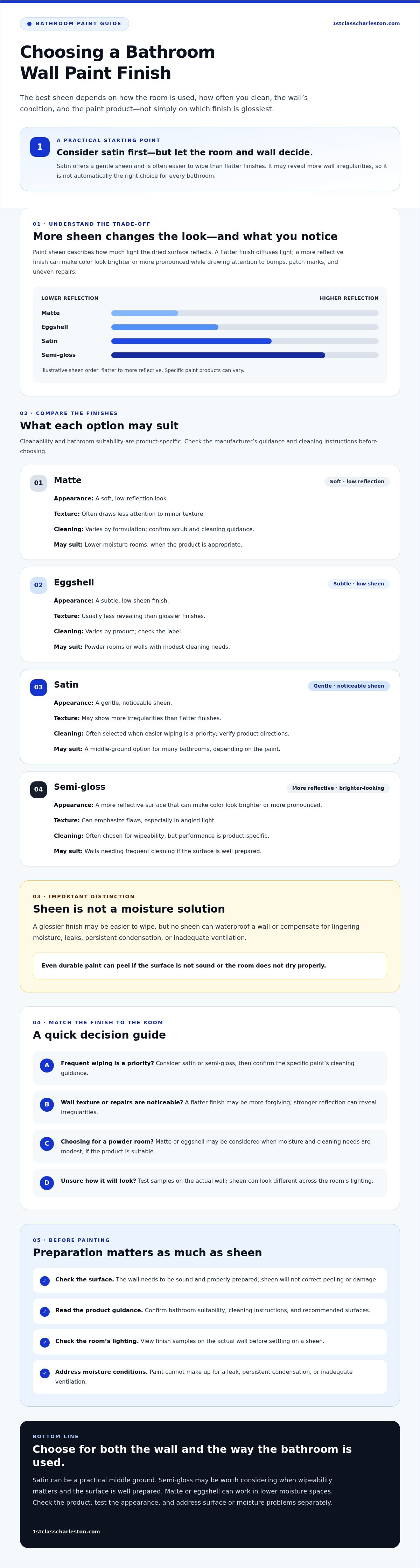
How to Choose the Right Bathroom Wall Finish for Your Home
Choose a finish by looking at the bathroom you actually have, not just a sheen chart. The best paint finish for bathroom walls should suit the room’s use, the wall’s condition, its lighting, and how often you clean. In Charleston and the Lowcountry, humidity is another reason to consider how well your bathroom dries, but local climate can’t replace checking the room itself.
Use this quick decision process:
- Consider bathroom use. Is it a powder room, an occasional guest bath, or a family bathroom used for daily showers?
- Check the walls. Note texture, patching, peeling, or other irregularities that reflected light could make more visible.
- Think about cleaning. Frequent wiping may make cleanability a priority; confirm the specific paint’s cleaning guidance.
- Review the product label. Make sure its directions support the bathroom conditions and surface you’re painting.
- Test before deciding. Compare actual samples in the room, rather than relying only on a small card or online image.
Which finish suits a powder room, guest bath, or busy family bathroom?
A powder room with little moisture and light cleaning may give you more room to prioritize a softer, lower-sheen look. A guest bath used occasionally may call for a different balance than a family bathroom with daily showers and frequent wipe-downs. Treat these room types as starting points, not fixed rules. The paint label, wall condition, and your household’s cleaning routine should guide the final choice.
How can lighting and wall texture change the result?
Windows, vanity lights, and overhead fixtures can change how strongly a sheen reflects. Light coming from the side may reveal bumps or repair marks more clearly, while the same wall can look smoother under softer, even lighting. Apply sample patches to the wall and check them at different times of day, with the bathroom lights on as well. Judge the color and sheen together because both affect the room’s overall feel.
If you’re still weighing the options, a painting professional can help assess the wall and compare finishes as part of a bathroom refresh. If you’re in the Charleston area, talk with a team about bathroom painting and choose a finish with the room’s actual conditions in mind.
When Professional Bathroom Painting Helps Deliver a Better Finish
A fresh coat can transform a bathroom, but peeling paint, complicated surface damage, or uncertainty about what lies beneath the old finish can make the job less straightforward. Professional painting help can bring care to surface preparation, product selection, and application, all of which contribute to a cohesive result. The best paint finish for bathroom walls still depends on the room and its surfaces, not just a sheen preference.
Before discussing a project, note what you’re seeing and how you use the space. Is paint lifting near the shower? Do stains return, or does the room stay damp after use? Share details about ventilation, lighting, wall texture, cleaning habits, and the appearance you want. This gives the painting team useful context for evaluating the work.
What should a professional bathroom painting conversation cover?
How can Charleston homeowners take the next step?
Not every bathroom refresh calls for a full remodel. Sometimes the goal is simply to renew the painted walls and create a more finished feel; other projects may be part of a broader bathroom update. 1st Class Painting & Restoration is a locally owned Charleston-area company offering professional interior painting, bathroom painting, and bathroom updates.
As you plan, bring your finish preference, sample observations, and any concerns about peeling or wall condition into the conversation. That helps keep the scope focused on what your room needs, whether it’s a painting project or a larger update. For a bathroom refresh in the Charleston area, discuss your project and the right scope of work with a local painting team.
Choose a Finish That Fits Your Bathroom
The right bathroom finish balances the look you want with the room’s condition and everyday demands. Satin can be a sensible starting point, but matte, eggshell, or semi-gloss may suit your space better depending on its wall texture, lighting, and cleaning routine. Check the paint label and view samples in your bathroom before making the final call.
Keep moisture management in perspective, too. A higher sheen may help with wiping, but it won’t correct a leak, persistent condensation, or inadequate ventilation. Sound surfaces, thoughtful preparation, and following product directions all contribute to a cohesive result. Choosing the best paint finish for bathroom walls is about more than gloss level.
For homeowners in Charleston, 1st Class Painting & Restoration is a locally owned and operated company offering professional painting and bathroom updates. Contact 1st Class Painting & Restoration to discuss bathroom painting or an update for your space.
Frequently Asked Questions
Is satin or semi-gloss better for bathroom walls?
Satin is a common middle-ground choice, while semi-gloss has a more reflective look and may suit bathrooms where walls need frequent wiping. Neither is automatically right for every room. Consider whether the walls are smooth or textured, how natural and vanity lighting hits them, and how often you clean. Ventilation and bathroom use matter, too. Check the specific paint label for bathroom suitability and cleaning guidance before deciding.
Can you use matte paint on bathroom walls?
Yes, some matte paints may be suitable for bathroom walls, but performance varies by formulation. Matte offers a softer, low-reflection appearance that can be appealing on textured walls. Depending on the product’s cleaning guidance, it may be less appropriate where surfaces need frequent scrubbing. Don’t rely on sheen alone: read the manufacturer’s guidance for bathroom use and maintenance, then weigh it against the room’s moisture exposure and your household’s cleaning habits.
What happens if bathroom walls stay damp after painting?
Persistent dampness can contribute to paint problems, but applying a glossier finish won’t identify or solve the cause. Check whether the bathroom ventilation is functioning and look for recurring condensation or signs of a leak. Address active moisture and allow the surface to dry before repainting. If peeling or damage keeps returning, seek a professional assessment before covering the area. Painting over an unresolved moisture source can leave the underlying problem untouched.
Is eggshell paint suitable for a bathroom?
Eggshell may work if the specific product is rated for the bathroom and its cleaning demands. It has less sheen than satin, but that difference alone doesn’t determine how well either paint will hold up. Check the label for intended use and cleaning instructions, then consider shower frequency and how quickly the room dries. Test a sample against your actual wall texture and lighting so you can judge the combined appearance before committing.
Does a higher-sheen paint make a small bathroom look bigger?
Higher sheen reflects more light, but it doesn’t automatically make a small bathroom feel larger. Reflections may brighten parts of the room, yet strong or angled light can also reveal uneven surfaces or create glare. Test finish samples on the wall and view them with the bathroom lights on. Consider sheen alongside wall color, mirrors, natural light, and surface condition. The overall balance matters more than gloss alone.
Do bathroom walls need special paint?
Choose a paint product whose manufacturer identifies it as suitable for the intended interior use and cleaning conditions. Formulations differ, so there isn’t one paint category that’s universally required for every bathroom. A successful result also depends on a clean, dry, properly prepared surface, appropriate ventilation, and following the product’s application instructions. Read the label before purchasing, especially if the room gets frequent showers or the walls need regular cleaning.
Should I hire a professional to paint bathroom walls?
Sound, straightforward walls may be manageable for a confident DIY painter, while recurring peeling, damaged surfaces, or uncertainty about preparation can make professional help worthwhile. Discuss wall condition, ventilation, and the finish you want before work begins. In Charleston, locally owned 1st Class Painting & Restoration offers professional painting, including bathroom painting, and bathroom updates. For suspected leaks or other non-painting repairs, consult an appropriately qualified trade.


