
Commercial Building Exterior Painting: A Charleston Property Owner’s Guide
Plan your commercial building exterior painting in Charleston. Learn how to assess surfaces, review contractor bids, and protect against coastal weather.

What if choosing a paint color is one of the last decisions you make? Successful commercial building exterior painting starts with the building itself: its surfaces, condition, daily use, and exposure to Charleston’s humidity, salt air, and strong sun. Assessing those factors first helps you plan a finish that suits the property and its local conditions.
Before work begins, you may have questions about which surfaces need attention, how crews can work around tenants or customers, and what to compare when contractor proposals differ. A clear plan can help you make informed choices and set expectations that fit your property’s needs.
This guide explains what an exterior painting project can involve, from assessing surfaces and preparation to reviewing coatings, application details, and proposal scope. You’ll also find ways to plan around building operations and Charleston-area weather. Use these considerations to clarify the work and the decisions to make before moving forward.
Key Takeaways
- Assess building surfaces and exposure to identify where commercial building exterior painting may be appropriate.
- Compare proposals by checking which surfaces, preparation steps, and responsibilities are included.
- Plan site coordination around entrances, parking, deliveries, tenants, customers, and staff.
- Organize the project by defining needs, reviewing the scope, and agreeing on access and communication.
- Consider a Charleston-area provider like 1st Class Painting & Restoration for commercial and exterior painting.
What Commercial Building Exterior Painting Can Address in Charleston
Commercial building exterior painting involves assessing paintable surfaces, preparing the areas included in the project, and applying a suitable coating. The scope may include cleaning and surface preparation as well as painting. Beyond refreshing a property’s appearance, maintaining its exterior coating can help protect paintable surfaces from everyday exposure.
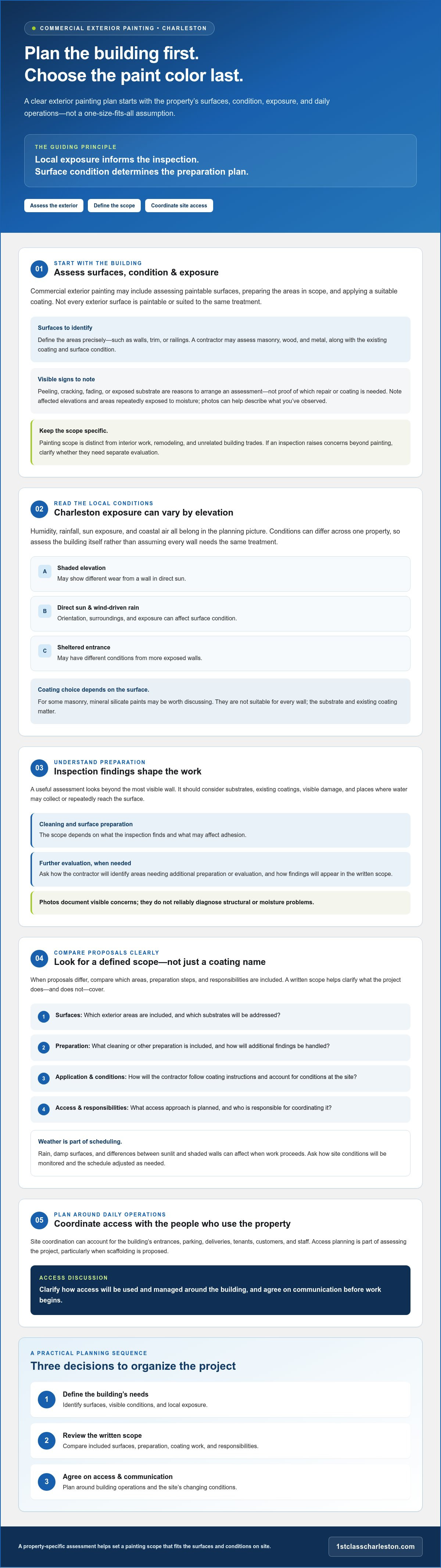
Charleston and the Lowcountry bring humidity, rainfall, sun exposure, and coastal air into the planning process. Conditions can vary across one property: a shaded elevation, a wall in direct sun, and a sheltered entrance may show different types of wear. Assess the building’s actual surfaces and exposure rather than assuming every area needs the same treatment. For some masonry, mineral silicate paints may be worth discussing. They are not suitable for every wall, and the right option depends on the substrate and existing coating.
Keep painting scope distinct from interior work, remodeling, and unrelated building trades. A proposal should identify the exterior areas under consideration and the preparation and coating work included. If an inspection raises concerns beyond that scope—such as roofing or drainage issues typically addressed by exterior contractors like Miller's Home Improvement—clarify whether they need separate evaluation rather than assuming painting will resolve every building issue.
Which commercial properties and exterior surfaces may need painting?
Offices, retail properties, and other business buildings may have exterior areas that need attention, but not every surface is paintable or suited to the same treatment. A contractor may assess masonry, wood, and metal, among other substrates. For specialized surfaces like stucco or plaster, dedicated finishing and painting specialists such as GladStuc emphasize evaluating the substrate's integrity before applying any topcoat. The existing coating, surface condition, and exposure help determine whether painting is appropriate and what preparation may be needed. Define the areas precisely, such as walls, trim, or railings, instead of assuming the whole exterior belongs in one scope.
What signs suggest it is time to assess the exterior?
Peeling, cracking, fading, or exposed substrate are reasons to arrange an assessment, not proof of which repair or coating is needed. Note the elevations where changes appear and whether the affected areas are repeatedly exposed to moisture. Photos and location notes can help explain what you have observed during a site visit. If deterioration looks widespread or the surface condition is uncertain, ask a qualified contractor to assess the exterior before setting the painting scope.
How Charleston Conditions Shape Commercial Exterior Preparation
Charleston weather is one part of the planning picture, but it doesn’t tell the whole story. A building’s orientation, shade, surroundings, and exposure to wind-driven rain can create different conditions across its exterior. For commercial building exterior painting, the assessment should reflect the property itself rather than assume every building in Charleston needs the same preparation.
Local exposure informs the inspection; surface condition determines the preparation plan. Depending on what the inspection finds, preparation may involve cleaning, addressing conditions that could affect adhesion, or identifying areas that need further evaluation. The appropriate scope depends on the substrate, existing coating, visible damage, and how the surface has weathered.
What should a contractor inspect before painting?
A useful assessment looks beyond the most visible wall. The contractor should review the different substrates and existing coatings, note peeling or other visible damage, and look for areas where water may collect or repeatedly reach the surface. Ask how they’ll identify surfaces that need additional preparation or evaluation, and how those findings will be reflected in the written scope. Photos can document visible concerns, but they can’t reliably diagnose structural or moisture problems on their own.
Access is part of the assessment, too. If scaffolding is proposed, ask how it will be used and managed around the building. The Occupational Safety and Health Administration’s OSHA scaffolding safety standards provide the relevant federal reference for scaffolding. The contractor should be able to explain the access approach for your property.
Why do weather and exposure matter during scheduling?
Weather affects more than the day crews can start. Application and drying conditions depend on the coating manufacturer’s instructions and the conditions at the site. Sunlit walls may behave differently from shaded elevations, and rain or damp surfaces can affect when work can proceed. Instead of relying on one general temperature or humidity rule, ask how the contractor will monitor conditions and adjust the schedule when the weather changes.
A useful assessment connects the details: which elevations are most exposed, the condition of their surfaces, and the preparation required for the proposed coating system. If you’re planning work in the Charleston area, discuss your exterior painting project with a local painting provider and ask how the building’s conditions will shape the scope.
How to Compare Commercial Exterior Painting Proposals
A useful proposal lets you compare the work, not just the total. For commercial building exterior painting, check whether each contractor has defined the same surfaces and preparation needs. A quote that simply says “paint the exterior” may leave important questions unanswered.
A clear scope names the surfaces, preparation, and responsibilities; a general promise to paint the exterior does not. Review the proposal to understand what will happen at your property and what may require a separate decision.
Which scope details should every proposal clarify?
Look for specific elevations and features, such as walls, trim, doors, or railings, rather than a broad reference to the whole building. The proposal should describe surface preparation, identify any minor repairs included, explain how nearby areas will be protected, and state what cleanup entails. For historic woodwork, the National Park Service guidelines offer context on paint problems and treatment considerations.
Use this checklist to compare proposals side by side:
| Proposal item | What to check |
|---|---|
| Included surfaces | Are elevations and features such as trim and doors identified? |
| Preparation | Are cleaning and other surface-preparation steps described? |
| Repairs | Are included repairs distinguished from work that may be added? |
| Coatings | Does the proposal identify the coating type and planned application? |
| Access | Does it explain how crews will reach the work areas? |
| Schedule | Are the expected work sequence and scheduling assumptions clear? |
| Cleanup | Does it state how the work area will be left after painting? |
Pay close attention to exclusions and responsibilities. Ask what happens if the crew finds a surface condition that wasn’t apparent during the initial assessment, and how added work or changes to the scope will be discussed and approved. Clear answers help ensure you are comparing equivalent work rather than different assumptions.
What questions help evaluate a painting contractor?
Ask about experience with commercial properties and how the contractor coordinates painting around occupied spaces. Have them explain their proposed process, how they’ll communicate progress, and who will discuss changes with you. If available, references or relevant project examples can help you understand their approach. Compare the clarity and completeness of the answers, not only the confidence of the presentation.
How to Plan Commercial Exterior Painting Around Business Operations
A well-planned project starts with how the property operates each day. For commercial building exterior painting, entrances, parking areas, deliveries, tenants, customers, and staff can all affect crew access and the work sequence. The goal is not to assume operations can continue untouched. It is to identify likely impacts early and agree on a practical plan with the contractor.
Use this sequence to get organized:
- Define your needs: Identify the areas you want assessed and note known access constraints.
- Arrange a site assessment: Walk the property with the contractor and discuss how the building is used.
- Review the scope: Clarify which surfaces and preparation are included before setting expectations.
- Coordinate access: Discuss entrances, parking, delivery routes, and areas that may need temporary changes.
- Agree on communication: Decide who will receive updates and how schedule changes or questions will be handled.
Phased work may help organize a project around active areas, but it is not the right approach for every building. Ask whether sequencing is feasible given the site layout, scope, and access needs. Make any temporary changes clear enough for property staff to communicate them to tenants and visitors.
What should property managers prepare before work begins?
Share operating hours, access limitations, sensitive areas, and any tenant or customer communication needs during planning. Identify one person to coordinate site access and receive schedule updates. Before work starts, ask what the property team should move, protect, or make accessible. This can surface practical issues, such as a delivery area that needs to remain available or an entrance that may need directions if access changes.
How can work continue with less disruption?
Discuss work sequencing, temporary access changes, and protection of active areas in advance. Agree on how the contractor will share updates and how your team should raise questions. The level of disruption depends on the project scope and site layout, so don’t assume operations will be uninterrupted. A clear plan gives staff and occupants a better chance to prepare for changes that do arise.
If you’re planning work at a Charleston commercial property, discuss your painting project and site needs with 1st Class Painting & Restoration.
Choosing a Charleston Commercial Exterior Painting Partner
A good choice comes down to more than a polished estimate. Look for a contractor who can discuss commercial property needs, define the work clearly, explain how preparation will suit the surfaces, and communicate about access and project changes. These details help you judge whether the proposed approach fits your building, not just whether the bid sounds appealing.
For commercial building exterior painting, ask how the contractor will assess the property and turn those observations into a written scope. You should be able to identify the included areas, understand the planned preparation, know how questions or unexpected conditions will be handled, and see how the work will be coordinated with your operations. If the process is unclear, ask for an explanation before making a decision.
What makes a local commercial painting partner a practical fit?
A team serving the Charleston area may be familiar with discussing local site conditions, but you’ll still want to evaluate its approach to your particular property. Notice whether the contractor listens to your concerns, explains the proposed process in plain language, and responds clearly to questions about scope and communication. You should understand what is being proposed and feel comfortable raising concerns as planning moves forward.
1st Class Painting & Restoration is locally owned and operated in the Charleston area and offers exterior and commercial painting. The company is a local option to consider for a commercial exterior painting inquiry. Evaluate its proposed scope and process using the same criteria you would use for any contractor, and ask for relevant project examples or references if available.
What are the next steps for a commercial exterior painting project?
Start with a short property brief. Note the building’s main surfaces, visible areas of concern, entrances and access limitations, and operating or scheduling needs. Photos can help communicate what you have noticed, but an on-site assessment provides a better basis for discussing surface condition and appropriate work.
Then review the proposed scope together. Clarify which areas are included, what preparation is anticipated, how access will be coordinated, and who will communicate updates. Before approving work, make sure you understand the exclusions and how changes will be discussed. A considered conversation at the outset can help align the project with both the building’s needs and the way the property operates.
Ready to talk through your building, surfaces, and operational needs? Discuss your Charleston commercial painting project with 1st Class Painting & Restoration.
Make Your Next Exterior Painting Project a Confident One
A successful commercial building exterior painting project starts with the property, not just a color choice. Assess the surfaces and their exposure, compare proposals by the preparation and work they clearly include, and plan access and communication around your business operations.
These steps can help you choose a scope that suits the building and set practical expectations for the work. Clear conversations with a contractor also make it easier to address questions before the project begins.
1st Class Painting & Restoration is locally owned and operated in the Charleston area, providing commercial and exterior painting services. Share your building’s surfaces, visible concerns, and operational needs with the team to begin discussing a project approach.
Discuss your commercial exterior painting project. With a thoughtful plan and a clear scope, you can take the next step toward a refreshed exterior with confidence.
Frequently Asked Questions
How often should a commercial building exterior be painted?
There’s no single repainting interval that suits every commercial building. Timing depends on the substrate, condition of existing coatings, quality of past preparation, and exposure to sun, rainfall, humidity, and coastal air. Inspect the exterior periodically for peeling, cracking, fading, or exposed surfaces. If you notice changes, arrange an assessment to help determine whether painting is appropriate and what work the building may need.
What is included in commercial building exterior painting?
Commercial building exterior painting typically involves defining the surfaces to be painted, preparing them, and applying an appropriate coating. The scope may include selected walls, trim, doors, or other paintable areas, but the proposal should state what is included. Preparation, repairs, access, protection, and cleanup can vary by project. Review inclusions and exclusions carefully so you understand what the contractor is proposing.
How do contractors prepare a commercial building for exterior painting?
Contractors generally assess the substrate and existing coating, then determine what preparation suits those conditions. The written scope may describe cleaning, removing loose or failing paint, preparing surfaces for adhesion, and addressing agreed-upon repairs. Specific steps depend on the building and should be clarified before work begins. Ask how the contractor will identify areas needing additional preparation and how unexpected conditions or added work will be discussed.
Can a commercial building be painted while the business remains open?
Painting may be planned around an operating business, but whether and how operations can continue depends on the site layout and project scope. Entrances, parking, deliveries, tenants, customers, and staff may be affected by access needs or temporary work areas. Discuss sequencing, protection, and planned access changes with the contractor in advance. Agree on who will share updates with occupants, and don’t assume the work will leave operations entirely uninterrupted.
How long does commercial exterior painting take?
Project duration depends on the building’s size and layout, included surfaces, preparation or repair needs, access arrangements, and weather. Drying and recoating requirements also depend on the selected coating and its instructions. Ask the contractor to explain the proposed sequence and scheduling assumptions after assessing the property. Clarify how weather or newly discovered surface conditions could affect the schedule instead of relying on a generic time estimate.
How does Charleston weather affect commercial exterior painting?
Charleston’s humidity, rainfall, strong sun, and coastal air are important factors, though exposure varies across a building. Weather and surface conditions can affect when coatings are applied and how they dry. Appropriate conditions depend on the coating instructions and the site. Ask how the contractor will monitor the weather, assess exposed and sheltered surfaces, and adjust the work plan when conditions change.
What should I compare in commercial exterior painting proposals?
Compare the defined surfaces and included work, not just the total price. Check how each proposal describes preparation, repairs, coatings, access, schedule, and cleanup. Note exclusions and ask how unexpected conditions or scope changes will be handled. If a proposal uses broad wording, request clarification so you can compare equivalent work. Also ask about commercial property experience, coordination around occupied spaces, and communication about progress and questions.


