
Commercial Interior Painting Cost in Charleston: 2026 Planning Guide
Explore real commercial interior painting cost factors in Charleston. Compare contractor bids accurately and plan your 2026 project with minimal disruption.

What if the lowest commercial interior painting quote ends up costing your business more in disruption or missed details? In Charleston, commercial interior painting cost depends on more than floor area. Surface condition, preparation, paint selection, number of coats, access, and how work fits around daily operations can all shape an estimate.
Quotes can differ even when two spaces seem similar. To compare them, check whether each covers the same rooms and surfaces, preparation, protection, and cleanup. A clear estimate should explain the work behind the price and how the project can be planned around employees, customers, tenants, and your schedule.
This 2026 planning guide explains which project details influence an estimate and how to compare proposals by scope and process, not just the bottom line. You’ll learn what to look for in preparation, materials, and cleanup, and how to plan a refresh around business operations. A well-defined scope gives the project a practical starting point, and 1st Class Painting & Restoration provides commercial painting in the Charleston area.
Key Takeaways
- Commercial interior painting cost reflects the space’s condition, finish goals, preparation needs, and project logistics, not square footage alone.
- Identify the condition of walls, ceilings, trim, and doors so the estimate can account for the right preparation and painting approach.
- Compare written estimates line by line, including surfaces, repairs, materials, protection, cleanup, and work sequencing.
- Consider opening hours, tenant use, customer traffic, and staff needs when planning the project schedule.
- Define your goals and document the space before requesting an estimate to give the project team a clear foundation for planning.
What Determines Commercial Interior Painting Cost in Charleston?
A commercial painting estimate reflects the project’s size, current condition, finish goals, and logistics. That’s why commercial interior painting cost can’t be judged by floor area alone. A useful estimate describes which surfaces will be painted, what preparation they need, and how the work can be carried out in the building.
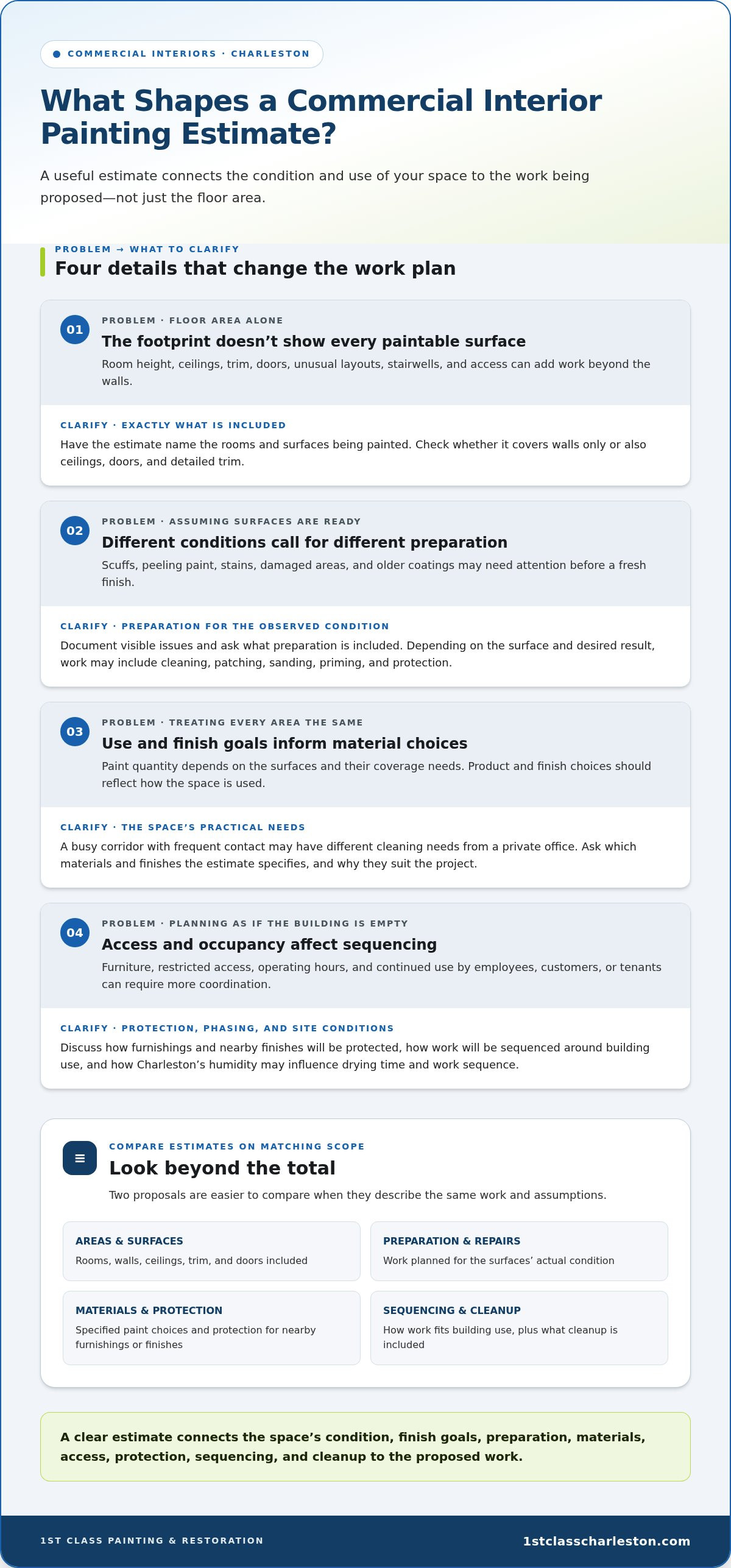
Square footage is a starting point, but it doesn’t show the full amount of paintable surface or the effort needed to reach it. Room height, ceilings, trim, doors, and other details can add work beyond the walls. Access and occupancy matter, too. An office that can be cleared and painted in sequence has different planning needs from a busy Charleston retail space or a shared building where tenants use common areas.
Why square footage does not tell the whole story
Floor area measures a room’s footprint, not the surfaces receiving paint. A tall room may have more wall area than a standard-height room with the same footprint. A scope that includes ceilings, doors, and detailed trim also differs from one covering walls only. Unusual layouts, stairwells, limited access, and furnishings that need protection can affect both labor and how the work is organized.
Surface condition also matters. Scuffed walls, peeling areas, stains, and damaged surfaces may need attention before painting. Ask for the estimate to describe the preparation included for the observed condition rather than assume every surface is ready for a new finish.
Which commercial spaces need different scopes?
An office may need a plan that accounts for work areas and shared rooms. A retail interior may require sequencing that considers customer traffic and the appearance of public-facing spaces. In a shared building, common areas and tenant spaces can have different access needs and priorities. The scope should reflect how each area is used.
Foot traffic and finish goals help shape preparation and material choices. A frequently used corridor may have different practical needs from a quiet back office. Paints vary in composition and intended use, so learning about types of paint can help you ask informed questions about material selection.
Two similarly sized properties can receive different estimates because their surfaces, condition, access, and operating needs differ. A clear scope connects those details to the desired result, helping Charleston businesses plan a refresh that works for both the building and the people who use it.
How Preparation, Paint, and Access Shape the Estimate
The visible coat is only part of the work. Peeling paint, stains, damaged surfaces, and older coatings can change the preparation needed before a commercial interior is ready for a fresh finish. Because preparation and access affect the time and coordination a project requires, they are important parts of understanding commercial interior painting cost.
How surface preparation changes the work involved
Depending on the surface and desired result, preparation may include cleaning, patching, sanding, priming, and protecting nearby furnishings or finishes. A wall with minor scuffs may need a different approach from one with peeling areas, stains, or repairs. Ceilings, trim, and doors can also need different handling because their condition and details vary.
Preparation should match the actual condition, not a one-size-fits-all assumption. Before requesting an estimate, note visible damage, stains, peeling, and previously repaired areas. A written scope that describes these conditions and the planned preparation makes it easier to understand what work is included.
How materials and site logistics affect planning
Paint quantity depends on the surfaces being coated and their coverage needs, while product and finish choices should reflect the space’s goals. For example, a busy corridor with frequent contact may have different cleaning needs from a private office. These considerations inform material selection, but the appropriate choice depends on the project rather than a blanket promise about performance.
Access affects the work plan, too. Furniture may need to be moved or protected, and occupied spaces can call for careful sequencing so employees, customers, or tenants can continue using unaffected areas. Restricted access, phased work, or scheduling around operating hours can require more coordination. Charleston’s humidity can also influence drying time and work sequence, so the project plan should account for site conditions.
Access and preparation shape the effort required, not a fixed rate. A clear estimate connects surface conditions and site logistics to the work plan, including protection, sequencing, and cleanup. For general information about workplace standards, consult OSHA safety regulations as part of understanding the broader considerations involved in planning work on an active site.
For a commercial interior refresh in Charleston, commercial painting in Charleston can be planned around the space, its finish goals, and how it is used.
How to Compare Commercial Interior Painting Estimates
A total alone can’t tell you whether two estimates describe the same project. To compare commercial interior painting cost fairly, line up the proposed work and assumptions. Check that each estimate identifies the areas being painted, preparation, materials, protection, cleanup, and how work will be sequenced around building use.
What a clear painting estimate should describe
A useful estimate identifies the rooms and surfaces in scope, the preparation planned for them, and the expected finish. It should also explain who is responsible for protecting furnishings and nearby areas, along with assumptions about access and work sequence. Construction specifications can organize finish details. The Construction Specifications Institute’s industry standards for commercial painting provide background on how construction work is specified.
| Scope item | Estimate details to review | Why it matters |
|---|---|---|
| Included surfaces | Rooms, walls, ceilings, trim, and doors identified | Clarifies exactly what the quoted work covers. |
| Preparation | Cleaning, sanding, priming, and other planned surface preparation | Surfaces in different condition may need different work before painting. |
| Repairs | Visible damage and included repairs described, with exclusions made clear | Helps distinguish painting from additional surface work. |
| Materials and finish | Paint and finish expectations stated in understandable terms | Connects material choices to the intended appearance and use of the space. |
| Protection and cleanup | Responsibilities for covering, moving, or protecting items, and cleanup tasks | Shows how the building and its contents are considered during the work. |
| Project sequencing | Planned work areas, access assumptions, and sequence described | Helps show how painting may fit around business operations. |
Why the lowest quote may not represent the same project
Estimates can differ because one may include more preparation or repairs, cover additional surfaces, specify different materials, or describe cleanup and sequencing in more detail. Exclusions and assumptions can also change what the written scope covers. Review the tasks and boundaries side by side rather than treating the lowest total as the best comparison.
Check how the estimate describes changes to the agreed scope, since project approaches can differ. A careful comparison helps you understand what each plan sets out to accomplish and whether it fits your property’s needs.
For a locally grounded perspective on planning a commercial refresh, explore commercial painting services in Charleston.
How to Plan a Commercial Painting Budget and Schedule
Advance planning helps shape a painting project around your business. Clear information about the space and its daily use gives 1st Class Painting & Restoration a practical basis for defining the project scope and plan. It also helps you understand how operational needs may influence commercial interior painting cost.
Information to gather before requesting an estimate
Start by listing what you want refreshed and how each area is used. Share floor plans or photos if available, along with access details and preferred timing. Note visible conditions and activities that can’t be interrupted. This information gives the painting team useful context for planning the work.
- Define your goals. Describe the intended appearance and what you want the refresh to accomplish.
- Identify spaces and surfaces. List the rooms and areas involved, noting walls, ceilings, trim, and doors where relevant.
- Document conditions. Record visible damage, peeling, stains, or repairs, and note how each space is currently used.
- Plan access. Share entry restrictions, tenant needs, customer traffic patterns, and spaces that require special coordination.
- Request a scoped estimate. Provide these details so the proposed work can reflect the property, finish goals, and business activities.
Ways to reduce disruption during painting
Opening hours, tenant use, customer traffic, and staff needs all affect how work areas can be arranged. A phased approach may help keep unaffected parts of a building in use. Coordinating access also helps people understand which areas are being worked on and when. The right sequence depends on the project scope and site conditions, so avoid assuming a completion timeline before the space has been assessed.
Be specific about furniture and equipment. Some items may need to be moved, while others may need protection in place. Make responsibilities clear in the project scope so everyone understands how the work area will be prepared and cared for. For example, a reception area with customer traffic may need a different sequence from a private office that can be cleared temporarily.
Thoughtful planning can help a commercial painting project refresh your space while respecting the rhythms of daily business. Share your site details and preferred timing to plan a commercial painting project with 1st Class Painting & Restoration.
Commercial Interior Painting in Charleston: From Estimate to Finished Space
A well-planned commercial refresh starts with a clear picture of the space and the result you want. Define the areas and surfaces to be painted, share relevant site details, compare written estimates by scope, and align the work plan with business operations. These steps turn a broad idea into a practical property improvement.
A useful estimate connects the desired finish with the preparation, materials, access, and sequencing the project requires. That connection makes commercial interior painting cost easier to understand: the estimate describes the work behind the number instead of treating every building as if it were the same.
What to expect from a well-planned painting project
Before work begins, the agreed scope should make clear which areas are included, what preparation is planned, how the work will be sequenced, and how the site will be protected. It should also clarify cleanup expectations; while contractors handle site turnover, facilities often coordinate with professional commercial cleaners like Advance Cleaning Services Inc. for thorough detailing before reopening. Clear communication about work areas and access helps employees, tenants, and other building users know what to expect. If the scope or site conditions change, discuss how those changes will be handled so expectations remain aligned.
A project-specific estimate is a written plan for the surfaces, preparation, materials, and access involved in your space. It gives your business a shared reference for understanding the work before it starts and connects the intended result to day-to-day operations.
Get a commercial painting estimate in Charleston
For business owners and property managers, bring the project details together: your goals, the spaces to be refreshed, visible conditions, access needs, and operating considerations. Comparing written scopes with that information in hand makes it easier to see which plan reflects your property and priorities.
1st Class Painting & Restoration is locally owned in the Charleston area and provides commercial painting with a focus on high-quality workmanship and professional results. Whether you’re planning a refresh for an office, retail space, or shared building, a thoughtful scope can help shape the work around the space and the people who use it.
Ready to discuss your goals and operating needs? Discuss your commercial interior painting project.
Plan Your Charleston Commercial Painting Project with Confidence
A clear scope makes commercial interior painting cost easier to understand. Look beyond floor area to the surfaces, preparation, materials, access, and scheduling needs described in the estimate. Then compare written proposals by what each includes and choose a project plan that works with your business operations.
With your goals and site details in hand, you can move from budgeting to a well-organized refresh. 1st Class Painting & Restoration is locally owned and operated in the Charleston area, providing commercial painting with a focus on high-quality workmanship and professional results.
Ready to discuss your space and plans? Discuss your commercial interior painting project with a local team and take the next step toward a refreshed space for your business.
Frequently Asked Questions
How much does commercial interior painting cost?
Commercial interior painting cost depends on the space and work involved, so one figure can’t accurately represent every Charleston project. An estimate may reflect the surfaces being painted, their condition, preparation and repair needs, paint and finish choices, access, and scheduling. To plan your budget, define the areas and desired result, then review a written estimate that clearly explains its scope and assumptions.
How do painters calculate commercial interior painting costs?
Painters develop an estimate by assessing surfaces, preparation, materials, access, and project logistics. Floor area helps describe the space, but it doesn’t show the full amount of paintable surface or the effort required for ceilings, trim, doors, repairs, or difficult-to-reach areas. In Charleston, occupancy and work sequencing can also shape the plan. A site-specific scope is more useful than relying on square footage alone.
Does commercial painting cost more for occupied spaces?
Painting an occupied space may require additional coordination, protection, or phased work, which can affect the project plan and estimate. For example, a business may need certain rooms or customer areas kept accessible while other sections are painted. The impact depends on the building, access, and operating needs. Share opening hours, tenant use, customer traffic, and staff considerations so the estimate reflects the actual site conditions.
What should a commercial painting estimate include?
A commercial painting estimate should identify the rooms and surfaces included, such as walls, ceilings, trim, and doors. It should describe preparation and repairs, paint and finish expectations, protection responsibilities, cleanup, and the proposed work sequence. Access assumptions and exclusions matter, too. Read the scope carefully to see what the project covers and compare it fairly with other written estimates.
How can I reduce commercial interior painting costs?
You can manage project costs by defining priorities and providing useful site details before an estimate is prepared. Identify essential areas, document visible conditions, and share floor plans, photos, access limitations, and preferred timing. A phased plan may help coordinate work with business operations. Compare complete scopes rather than removing needed preparation or choosing materials based on initial cost alone, since the intended result still matters.
How long does commercial interior painting take?
Project duration depends on the size and condition of the space, preparation and repair needs, surfaces included, access, and work sequence. An open area with straightforward access may be planned differently from a multi-room property that remains occupied. Drying and site conditions can also affect the sequence. Share your operating schedule and priorities so the proposed timing can be planned around the actual scope.
Can commercial interior painting be completed while my business is open?
Painting may be planned around an operating business, depending on the building, work areas, and access requirements. Phased sequencing can help separate active work zones from areas still in use, while clear communication helps staff, customers, and tenants know which spaces are affected. Share activities that can’t be interrupted and any access constraints early. The appropriate plan depends on site conditions and the agreed project scope.
Why do commercial interior painting estimates vary so much?
Estimates can differ because they may cover different surfaces, preparation tasks, repairs, materials, protection, cleanup, or project sequencing. Assumptions about access and occupancy can vary as well. Compare each written scope item by item rather than judging by the total alone. For a Charleston business, a clear estimate should connect the desired finish with the work required and the practical needs of the property.


