
Commercial Kitchen Painting Services in Charleston, SC
Need expert commercial kitchen painting services in Charleston, SC? Refresh your food-service space with minimal disruption to daily operations. Call today!

What makes a commercial kitchen painting project successful often happens before the first coat of paint. Grease, moisture, cleaning residue, and daily activity can wear down painted surfaces, while inadequate preparation can affect the finish. Professional commercial kitchen painting services can refresh suitable surfaces in your Charleston food-service space, with the project planned around the room and how it is used.
It’s understandable to be concerned about disrupting service. You need to know which surfaces may benefit from painting, what preparation involves, and how to plan the work around your operation. This guide explains the main steps in a commercial kitchen painting project and how surface condition, access, and operating schedules shape the plan. 1st Class Painting & Restoration provides commercial painting and kitchen painting in the Charleston area, as well as kitchen remodeling for broader updates.
Key Takeaways
- Scuffs, peeling, and stains can signal it’s time to refresh kitchen surfaces, but painting alone won’t fix underlying damage.
- Commercial kitchen painting works best when assessment, protection, preparation, application, and review are planned in sequence.
- Choose a targeted wall refresh, a broader repaint, or painting within a kitchen update based on your goals, surface condition, and access.
- Plan priorities and work areas around your operation, and tailor the project sequence to the kitchen and business.
- 1st Class Painting & Restoration provides commercial painting in the Charleston area, with the project scope shaped around your goals and space.
When Commercial Kitchen Painting in Charleston Makes Sense
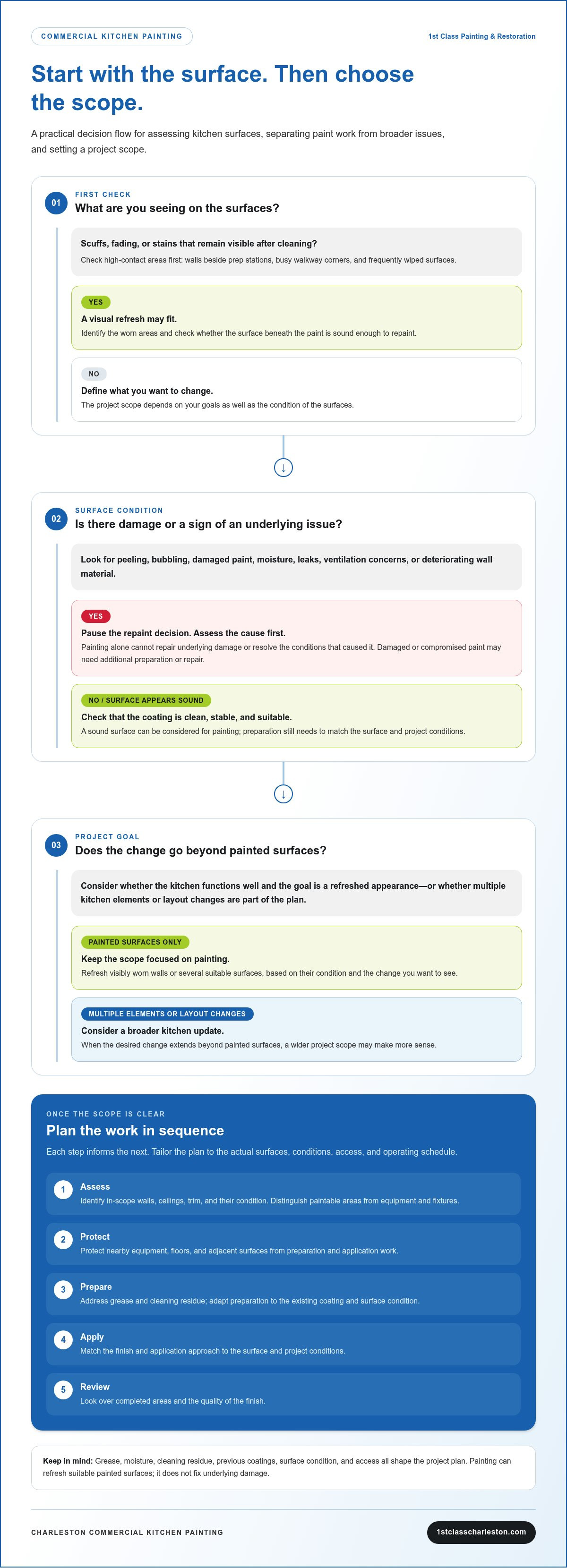
Scuffed walls, peeling patches, and stains that remain visible after cleaning can make a busy Charleston kitchen feel worn. These signs often show up around work areas, traffic paths, and surfaces that are wiped down regularly. Commercial kitchen painting refreshes suitable painted surfaces in a food-service kitchen, typically by preparing and repainting selected walls, ceilings, or other agreed-upon areas. The result depends on choosing the right scope and first understanding the condition of the surfaces.
A commercial kitchen brings together work zones, equipment, and frequent activity. This Commercial kitchen overview offers helpful background on how these spaces function. For painting decisions, focus on where wear is visible and whether the surface beneath the paint is sound enough to repaint.
Which signs suggest a kitchen paint refresh?
Check high-contact areas first: walls beside prep stations, corners along busy walkways, and surfaces that are wiped down often. Scuffs and fading may call for a visual refresh. Stains can also affect the room’s appearance, but it’s important to consider their cause. Peeling, bubbling, or damaged paint needs assessment before repainting, since covering it may not address why it failed.
Moisture, leaks, ventilation concerns, or deteriorating wall material need attention beyond paint. Painting can improve suitable surfaces, but it can’t repair underlying damage or resolve the conditions that caused it. A careful review helps distinguish ordinary wear from a larger issue and keeps the project focused on what the space needs.
Painting or a broader kitchen update?
If the kitchen functions well and the goal is a cleaner, more refreshed appearance, a painting-focused project may be a practical fit. The scope could cover visibly worn walls or several suitable surfaces, depending on their condition and the change you want to see. This keeps the project focused on the finish rather than expanding it without a clear need.
If the desired change extends beyond painted surfaces, a broader update may make more sense. Work involving multiple kitchen elements or layout changes can call for a wider project scope. 1st Class Painting & Restoration also provides kitchen remodeling for updates that go beyond painting. Defining the difference early helps set a useful scope and gives planning a clear starting point.
How Commercial Kitchen Painting Preparation Supports a Better Finish
A professional-looking result starts well before paint is applied. In a commercial kitchen, grease, cleaning residue, moisture, and previous coatings can all affect surface preparation. Preparation matters because paint can create a sound, even finish only when the surface beneath it is clean, stable, and suitable for the selected approach.
A well-planned project follows a sequence: assess the surfaces, protect the work area, prepare the paintable surfaces, apply a finish selected for the project, and review the completed work. Each step informs the next. Commercial kitchen painting should be tailored to the actual surfaces and conditions, rather than treated as a one-size-fits-all repaint.
Assessing walls, ceilings, trim, and other paintable surfaces
Start by identifying the areas in scope and examining their condition. Walls, ceilings, and trim may show stains, peeling, poor adhesion, or visible damage. These signs help determine whether a surface needs additional preparation or repair before painting. The existing coating matters too: a new finish may not adhere well if the layer beneath it is loose or compromised.
Not everything in a kitchen is a paintable surface. Equipment, fixtures, and nearby items need to be distinguished from the walls and other areas in the painting scope, then handled appropriately. Persistent moisture or deterioration may point to an issue beyond painting. Assessing those concerns first helps avoid treating a surface symptom as the whole problem.
Cleaning, protecting, and preparing the work area
Kitchen residue needs attention before painting begins. Grease and other buildup can interfere with a clean, consistent application, so preparation should reflect what’s present and the condition of the existing coating. Once the paintable areas are identified, nearby equipment, floors, and adjacent surfaces should be protected from preparation and application work.
The finish and application approach can then be matched to the surface and project conditions. A wall with a sound, clean coating has different preparation needs from one with peeling paint or visible damage. At the end, a review provides an opportunity to look over the completed areas and the quality of the finish.
Ventilation is also part of planning painting work, but requirements vary by context. The linked eCFR ventilation provision applies to manufactured-home standards, so it shouldn’t be treated as a universal commercial-kitchen rule. For a project planned around your Charleston kitchen and its intended use, explore Charleston commercial painting from 1st Class Painting & Restoration.
Choosing a Commercial Kitchen Painting Scope for Your Charleston Business
The right painting scope depends on more than how much wall space looks worn. Consider what you want to change, which surfaces are suitable for painting, and how workers can access the area while your kitchen operates. A focused refresh may be enough for a contained visual update. Wear or planned changes across several parts of the kitchen may call for a broader project.
Use this comparison to frame the scope of your commercial kitchen painting project. The final plan should reflect the condition of the space and your business’s priorities, not a preset package.
| Scope | Suitable situation | Planning considerations |
|---|---|---|
| Targeted wall refresh | Selected paintable areas have visible wear, while the rest of the kitchen meets your needs. | Identify the specific surfaces and consider access around equipment and daily activity. |
| Multi-surface repaint | Several suitable surfaces, such as walls, ceilings, or trim, need attention for a more consistent appearance. | Review each surface’s condition and how the work area can be protected and accessed. |
| Painting within a broader kitchen update | Planned changes extend beyond paint to multiple kitchen elements or the layout. | Coordinate the painting scope with the wider project so it fits the overall goals and sequence. |
When is a targeted repaint enough?
A targeted repaint may suit a business seeking a focused visual refresh in a defined area, such as a worn wall or section of trim. Keeping the scope limited helps prioritize the areas that matter most without including surfaces already in good condition. The decision still depends on the condition of each surface: damage, poor adhesion, or other issues may affect whether it’s ready to repaint.
When should painting be part of a larger kitchen update?
If several kitchen elements need attention or a layout change is part of the plan, painting may fit more naturally into a coordinated update than a standalone project. Looking at the full scope helps clarify which painted surfaces to include and how the work relates to other changes. 1st Class Painting & Restoration also offers kitchen remodeling for broader updates. Explore the company’s kitchen and bathroom remodeling services as you consider how painting could fit into your plans.
For a Charleston food-service business, access matters as much as appearance. Which areas can be made available, and what needs to remain accessible for daily work? Answering these questions helps shape a practical scope and connect the painting plan to your operation.
How to Plan Commercial Kitchen Painting Around Daily Operations
A kitchen can’t always pause work for a repaint, and painting can affect access to areas your team relies on. Careful planning helps you understand the work involved and coordinate it with your operation, without assuming the project will be disruption-free. Commercial kitchen painting should be sequenced around the surfaces, preparation needs, and access available in your space.
Set priorities and coordinate access
Start by identifying the areas that need attention most, along with busy periods and access constraints. A wall beside a frequently used work area may need different coordination from a section that’s easier to make available. Share which spaces are essential to daily work so the scope and sequence can account for how your kitchen operates.
Next, discuss which work areas can be accessed and how they relate to one another. A phased approach may be worth considering when access is limited, but the right sequence depends on the surfaces and the project. Avoid assuming a fixed duration: preparation needs, scope, and operating patterns all affect scheduling.
Prepare the kitchen and coordinate the work
Before painting begins, plan how equipment and movable items will be handled, and identify floors, fixtures, or adjacent surfaces that need protection. Clarify which areas must remain accessible and which can be set aside for preparation and painting. These details turn a general goal, such as refreshing worn walls, into a more workable plan.
Surface preparation also affects the sequence. Grease, residue, peeling paint, or other surface conditions may call for additional preparation before application, so the work plan should reflect the condition of each area. Discuss how preparation, application, and review fit with your operating priorities instead of choosing a schedule based on assumptions.
Finally, coordinate reopening around the completed work and the project-specific plan. Make sure responsibilities for access and area readiness are clear, and align the return to normal use with the progress of the work. This doesn’t promise there will be no disruption, but it gives your team a clearer basis for managing it.
1st Class Painting & Restoration plans commercial painting projects with the space and its intended use in mind. To discuss a plan for your Charleston kitchen, Discuss a commercial painting project.
Commercial Kitchen Painting Services in Charleston: What to Expect Next
A clear project begins with a conversation about the space, the surfaces you want to refresh, and the result you’re aiming for. From there, the scope can take shape around the areas involved, their condition, and how your business uses the kitchen. This provides a practical starting point for planning instead of relying on a one-size-fits-all approach.
What information helps shape a project plan?
To make the first discussion useful, gather a few details about the kitchen and your priorities:
- Layout and surfaces: Describe the work areas and identify the walls, ceilings, trim, or other paintable surfaces you’d like considered.
- Areas of concern: Note visible wear, stains, peeling, or damage so those areas can be included in the conversation.
- Desired result: Share whether you want a focused refresh or a more consistent appearance across several surfaces.
- Operating needs: Explain busy periods, access constraints, and which areas are important to keep available for daily work.
These details help the team understand the space and tailor the scope to the surfaces and work requested. They also make it easier to discuss preparation and sequencing in terms of your kitchen’s actual conditions, rather than assumptions about access or scheduling.
Refresh the kitchen with a locally owned Charleston team
1st Class Painting & Restoration is locally owned and operated in the Charleston area and provides commercial painting for businesses. With the goals and scope clearly discussed, the team can plan the work around the kitchen’s intended use and the surfaces included in the project. A considered painting refresh can improve the appearance of suitable areas, but paint alone won’t address broader damage or other kitchen needs.
If your plans extend beyond painted surfaces, kitchen remodeling can support a wider transformation. Painting can also be considered within a broader kitchen update, with the project scope reflecting the work requested. Make the distinction early: are you aiming to refresh the appearance, or are several parts of the kitchen changing?
Ready to talk through your Charleston kitchen, priorities, and possible next steps? Talk with 1st Class Painting & Restoration about commercial kitchen painting services tailored to your space.
Plan a Kitchen Refresh That Fits Your Charleston Business
A refreshed kitchen starts with the right scope. Assess the condition of the surfaces, distinguish a focused paint refresh from a broader update, and plan access and sequencing around your operation. Careful preparation supports a professional finish, while clear priorities make it easier to shape the work around your space.
1st Class Painting & Restoration is locally owned and operated in the Charleston area, offering commercial painting and kitchen painting. If your plans reach beyond painted surfaces, kitchen remodeling can support a wider transformation. The right path depends on what you want to change and the condition of your kitchen.
Ready to discuss commercial kitchen painting services for your space? Talk with 1st Class Painting & Restoration about your commercial kitchen painting project. A thoughtful refresh can be a positive next step for your business.
Frequently Asked Questions
Can a commercial kitchen stay open while it is being painted?
Possibly, but whether a kitchen can remain open depends on the work area, access, preparation needs, and project sequence. Painting may require some areas to be temporarily unavailable, so discuss busy periods and essential work zones before planning. A phased approach may suit some projects, but it can’t guarantee zero disruption. For a Charleston kitchen, coordinate the work plan with your team’s operating needs and the surfaces involved.
What paint is best for a commercial kitchen?
There isn’t one best paint for every commercial kitchen surface. The appropriate finish depends on the surface material, its existing coating and condition, and how the area is used and cleaned. A product intended for one surface may not suit another, so choices should follow an assessment of the project rather than a general recommendation. When defining a commercial kitchen painting project in Charleston, discuss the surfaces in scope and their intended use.
How do you prepare a commercial kitchen for painting?
Preparation typically starts with assessing paintable surfaces for stains, damage, peeling, and the condition of the existing coating. The work area is then organized, with nearby equipment, floors, and adjacent surfaces protected as needed. Grease and other residue must be addressed before painting, and the specific preparation depends on the surface. Identify the areas to be painted and discuss access needs so the plan reflects the kitchen and project.
How long does commercial kitchen painting take?
There’s no single timeline for every commercial kitchen painting project. Duration depends on the scope, the number and condition of surfaces, preparation needs, access, and how work is sequenced around business operations. A repaint of selected areas differs from a project covering multiple surfaces. Share your priorities and operating constraints early so the plan accounts for the work involved, without relying on an assumed standard duration.
Can you paint a commercial kitchen without removing equipment?
Sometimes equipment can remain in place, but it depends on the surfaces being painted, available clearance, and how the work area can be protected. Items may need to be moved or made accessible for proper preparation and application. Include fixed and movable equipment when defining the scope. The project plan should identify areas that need access and how nearby equipment and surfaces will be handled during painting.
How often should a commercial kitchen be repainted?
There isn’t a universal repainting interval for commercial kitchens. Timing depends on visible wear, surface condition, cleaning routines, moisture exposure, and the needs of the business. Instead of relying on a fixed calendar, watch for scuffs, stains, peeling, or a worn appearance, and assess the cause of paint failure before repainting. Charleston businesses can use those observations to decide whether a focused refresh or a wider project makes sense.
Does commercial kitchen painting include remodeling?
Painting and remodeling are different project scopes. Commercial kitchen painting focuses on refreshing suitable painted surfaces, while remodeling may address a broader kitchen update. 1st Class Painting & Restoration provides commercial painting in the Charleston area and also offers kitchen remodeling for wider transformations. If your broader renovations include upgrading facility flooring to durable resin or epoxy finishes, click here to learn more about commercial flooring solutions. The right scope depends on what you want to change. If plans extend beyond paint, discuss the broader goals so the project can be framed around the requested work.


