
Expert Commercial Building Painters in South Carolina: Protecting Your Lowcountry Investment
Protect your Lowcountry property with commercial building painters South Carolina trusts. Learn how proper prep and weather-ready coatings preserve value.

What if a fresh coat of paint could do more than improve curb appeal? In the Lowcountry, commercial building painters South Carolina businesses rely on need to account for humidity, salt air, and strong sun, conditions that can wear down exterior finishes and contribute to peeling. For property owners and managers, that means choosing a finish for more than its first impression.
A well-planned commercial painting project should protect your investment, support your brand image, and fit the way people use the building. Preparation, scheduling, and clear communication all matter, especially when tenants, customers, or staff need to continue using the property.
This article explains how commercial painting can help maintain a property in South Carolina’s coastal climate, what to consider for high-traffic spaces, and how pickleball court painting can enhance an amenity for resorts and HOAs. Locally owned 1st Class Painting & Restoration provides commercial interior and exterior painting in the Charleston area, along with specialized pickleball court painting. Here’s how to plan for a polished finish that suits the property and its day-to-day needs.
Key Takeaways
- South Carolina’s humidity, salt air, and sun can challenge paint adhesion and durability, so project planning should account for local conditions.
- Choose preparation and coatings suited to the building’s surfaces, including stucco, brick, and metal.
- Commercial building painters South Carolina property owners hire should understand how local climate and building materials affect the work.
- Clear scheduling and communication help property managers coordinate painting and limit disruption for tenants, customers, and staff.
- Commercial painting and specialized pickleball court painting can refresh a property and its amenities.
The Challenges of Commercial Painting in South Carolina
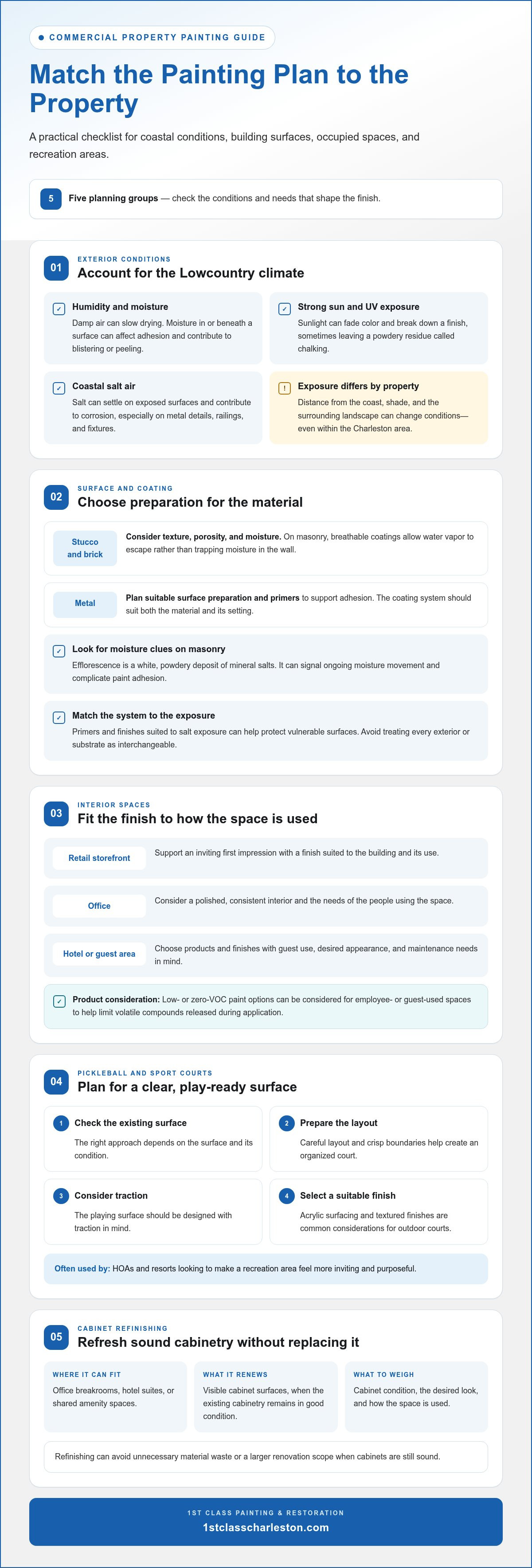
A commercial exterior in the South Carolina Lowcountry faces more than ordinary wear. Humid air, intense sun, frequent moisture, and coastal salt can shorten a coating’s useful life when preparation and material selection don’t suit the building. Even within the Charleston area, exposure varies with distance from the coast, shade, and the surrounding landscape.
That’s why commercial painting here involves more than applying a fresh color. Paint needs a properly prepared surface, suitable conditions for drying, and a coating system that works with the material beneath it. If those details are overlooked, a finish that looks polished at first may fade, blister, peel, or chalk sooner than expected.
The Impact of Humidity and UV Exposure
Warm, damp air can slow drying and leave a painted surface vulnerable before its coating has fully cured. Moisture in the substrate, or moisture trapped beneath a coating, can affect adhesion and contribute to blistering or peeling. Strong sunlight presents another challenge: ultraviolet exposure can fade colors and break down a finish, sometimes leaving a powdery residue called chalking.
On masonry, breathable coatings allow water vapor to escape rather than trapping moisture in the wall. Efflorescence is a white, powdery deposit of mineral salts left on masonry when moisture carries salts to the surface and evaporates. It can signal ongoing moisture movement and complicate paint adhesion, so it should be considered when assessing the surface.
Coastal Salt Air and Material Degradation
Salt carried in coastal air can settle on exposed surfaces and contribute to corrosion, particularly on metal details, railings, and fixtures. Commercial properties near the water also contend with sun and damp conditions that can stress exterior finishes. Primers and finishes suited to salt exposure can help protect vulnerable surfaces, but the coating system needs to match both the material and its setting.
1st Class Painting & Restoration brings Lowcountry experience to commercial painting projects, with material choices considered in relation to the building’s surfaces and exposure. That local perspective helps avoid treating every exterior as interchangeable.
A finish should support the property’s identity as well as protect its surfaces. A clean, well-maintained exterior contributes to a welcoming impression, much like other forms of commercial art communicate a business’s image. Color and finish choices still need to perform in the conditions surrounding the building.
A one-size-fits-all approach can overlook differences between properties. A standard schedule or coating choice may not account for Charleston’s humidity, salt exposure, or the needs of a particular substrate. Local knowledge helps identify those variables and shape the painting plan accordingly. For property owners comparing commercial building painters South Carolina, climate-aware preparation and material choices are central to a refined finish that suits coastal conditions.
Specialized Commercial Painting Services for SC Properties
Commercial properties have different priorities. A retail storefront needs an inviting first impression, an office benefits from a polished, consistent interior, and a hotel needs guest spaces that feel cared for. Professional interior and exterior painting can refresh these environments while protecting the surfaces beneath the finish. A sound plan considers how each space is used, what it’s made of, and the impression the business wants to create.
Preparation and coating choices should suit the substrate. Stucco, brick, and metal don’t all behave alike. Masonry may need attention to its texture and porosity, while metal surfaces call for suitable preparation and primers to support adhesion. A thoughtful approach avoids treating different materials with one generic system. Matching the work to the building is an important part of a clean, durable result.
Commercial painting also involves practical product decisions. For spaces used by employees or guests, low- or zero-VOC paint options can be considered to help limit the amount of volatile compounds released during application. The right finish depends on the room and its use, so product selection should suit both the desired appearance and maintenance needs. Beyond standard paint applications, businesses looking to create standout feature walls or distinctive branding can explore Commercial Wall Murals to complement their interior aesthetic.
Pickleball and Sport Court Painting
For HOAs and resorts, a well-presented pickleball court can make a recreation area feel more inviting and purposeful. Court painting calls for careful layout, crisp boundaries, and a playing surface designed with traction in mind. Acrylic surfacing and textured finishes are common considerations for outdoor courts, while the right approach depends on the existing surface and its condition.
1st Class Painting & Restoration provides specialized pickleball court painting, with attention to layout, color placement, and surface preparation. Careful work on these details supports a finished court that looks organized and ready for play.
Interior Commercial Refinishing and Cabinetry
Cabinet refinishing can refresh an office breakroom, hotel suite, or shared amenity space without replacing cabinetry that remains in good condition. Rather than removing and replacing sound cabinets, refinishing renews their visible surfaces and can avoid unnecessary material waste or a larger renovation scope.
For property managers, the decision depends on cabinet condition, the desired look, and how the space is used. A coordinated finish can make a dated room feel more polished while preserving existing cabinetry. For occupied interiors, low-VOC options may also be considered as part of the project plan.
Commercial projects call for craftsmanship and clear planning. Property owners can find state contractor licensing information through the South Carolina Contractor's Licensing Board. Learn more about 1st Class commercial and court painting.
Local Expertise vs. National Painting Franchises
A commercial painting plan should fit the property, not just follow a template. Charleston’s historic streets, coastal exposure, and changeable weather create local considerations that a Lowcountry-based team understands firsthand. 1st Class Painting & Restoration is locally owned and brings that regional perspective to commercial work.
National franchises can offer a familiar process, but standardization alone doesn’t address every property’s needs. A locally attentive team can tailor preparation, material choices, and scheduling to the building and its site conditions. That distinction matters when weather affects an exterior work window or a property’s architectural character calls for a considered finish. South Carolina’s changing conditions are part of the wider South Carolina climate challenges property owners need to account for.
Navigating Local Regulations and Historic Standards
In Charleston’s designated historic districts, exterior changes may be subject to review by the Board of Architectural Review (BAR). The applicable process depends on the property and the proposed work. Before choosing a palette, consider the building’s architectural details and any requirements that apply to its location. 1st Class Painting & Restoration brings careful preparation and application to projects where preserving a property’s character matters.
Historic color choices aren’t simply a matter of picking a shade that looks appealing on a sample. The age and style of a façade, its trim, and the surrounding streetscape all affect how a finished palette will look. A thoughtful painting plan respects these visual relationships while giving the property a refreshed, cared-for appearance. Local context helps guide the design, while review requirements remain specific to each property.
Accountability and Community Connection
Commercial painting is also a working relationship. Clear communication, attention to the property’s priorities, and care with finishing details help build confidence throughout a project. A neighborly approach means treating each space as part of the community, whether it’s a storefront, office, or shared property, rather than reducing the work to a transaction.
That relationship can matter beyond a single repaint. Regular attention to a property’s appearance helps owners plan maintenance and address visible wear. A locally owned team is part of the same regional community as the businesses and property managers it serves. 1st Class Painting & Restoration brings a Lowcountry perspective and attentive commercial painting to Charleston-area projects.
- Local context: Consider climate, building materials, and architectural character together.
- Historic properties: Determine whether BAR review or other location-specific requirements apply before settling on exterior changes.
- Project relationship: Prioritize clear communication and careful workmanship alongside the finished appearance.
For owners comparing commercial building painters South Carolina, local knowledge and personal accountability can help turn a routine repaint into a considered investment in the property.
The Property Manager’s Guide to a Seamless Project
A well-run commercial painting project starts before the first surface is prepared. Property managers need a plan that accounts for how people use the building, which areas can be temporarily restricted, and how updates will reach tenants and stakeholders. Clear expectations at the estimate stage help everyone understand the proposed scope, sequence, access needs, and next steps.
Start by mapping the property. Identify customer entrances, busy corridors, tenant spaces, loading areas, and rooms that can be taken out of use. Share operating hours and known events with the painting team so the work plan reflects the building’s rhythms. A phased approach might keep a retail entrance accessible while another area is painted, or allow an office team to continue working in unaffected rooms.
Strategic Scheduling and Phasing
Agree on work zones and the order they’ll be completed in, then share that sequence with tenants and staff. Off-hours or weekend work may suit a property where daytime painting would interfere with business, but scheduling should also allow for proper preparation and drying conditions. Post “wet paint” signs near active areas and notify tenants ahead of affected work so they can plan routes and avoid freshly coated surfaces.
Keep communication practical and consistent. Designate a property contact, decide how schedule changes will be shared, and provide updates as work moves from one zone to the next. Tenants need to know which entrances or rooms may be affected, when access is restricted, and where to walk instead. This reduces confusion and gives people time to adjust.
Safety, Insurance, and Professional Standards
Before work begins, align on site access, areas that must remain clear, and how the work zone will be separated from occupants. Property managers can document applicable insurance requirements, including workers’ compensation and general liability coverage, as part of project coordination. Safety planning should also account for applicable OSHA standards, appropriate access equipment, and tidy storage of tools and materials.
Cleanliness matters throughout the job, not only at the end. A professional crew keeps work areas orderly, protects nearby surfaces, and removes project debris as agreed. These details help the building remain welcoming during painting and make it easier for tenants to move through unaffected areas.
At the final walk-through, review completed surfaces in good light. Look for even coverage, clean edges, consistent color, and missed spots around trim, corners, and fixtures. Record any touch-ups and clarify how remaining items will be handled. A thoughtful closeout confirms that the finished work matches the agreed scope and leaves the property ready for everyday use.
1st Class Painting & Restoration brings careful attention to commercial painting projects in the Lowcountry. Explore how to plan your commercial painting project around clear communication and an orderly worksite.
1St Class Painting & Restoration: Your South Carolina Partner
A commercial property should feel cared for, from its public-facing exterior to the rooms employees and guests use every day. 1st Class Painting & Restoration is a locally owned Charleston business providing painting and remodeling services in the area. Its regional perspective informs a detail-focused approach to commercial painting, with attention to a property’s appearance, surfaces, and project needs.
As commercial building painters South Carolina property owners can turn to for interior and exterior work, the team brings a “1st Class” standard to each project: careful preparation, an even finish, and attention to the details that shape the final impression. A refreshed storefront, polished office interior, or renewed shared space can help a property feel more welcoming and support the image a business wants to present.
Beyond Painting: Restoration and Remodeling
A property refresh can extend beyond walls. Kitchen and bathroom updates, along with cabinet refinishing, can help renew commercial breakrooms, guest suites, and other shared spaces. Including related improvements in one project plan can make it easier to coordinate the work and create a cohesive look across rooms.
For example, refinished cabinetry and freshly painted walls can give a breakroom a more unified appearance without automatically replacing cabinets that remain suitable for use. The right scope depends on the space’s condition and the owner’s goals. A considered approach can reduce avoidable material replacement and simplify coordination while creating a more polished environment.
Request Your Commercial Estimate Today
A clear estimate gives property owners a practical starting point. It should explain the proposed scope, identify the surfaces and areas involved, and outline the expected sequence so managers can plan around tenants, staff, and guests. Sharing priorities early, such as refreshing a reception area or updating a commercial kitchen, helps shape a proposal around the property rather than a one-size-fits-all plan.
With a locally owned team, the project conversation can be personal and grounded in the Charleston area. Bring your goals and property priorities to the discussion, then consider how a coordinated painting or update project could bring them together. Transform your property with 1st Class Painting & Restoration and take the first step toward a more inviting, carefully finished commercial space.
Make Your Next Property Upgrade Count
Every commercial property has a next opportunity: a more welcoming entrance, a refreshed customer space, or an amenity that better serves the people who use it. Start by identifying the outcome that matters most to your business, then turn that priority into a focused project plan. A clear first step can make it easier to move from “we should update this” to a space that feels cared for and reflects your standards.
Choosing commercial building painters South Carolina property owners can rely on means looking beyond a quick visual change. A well-planned project should support how your property works today while helping it make a confident impression. 1st Class Painting & Restoration offers commercial painting and remodeling services in the Charleston area, with careful workmanship and neighborly service.
Ready to plan your project? Request Your Professional Commercial Painting Estimate and take the first step toward a more inviting commercial space.
Frequently Asked Questions
How long does a typical commercial painting project take in South Carolina?
Project duration depends on the property’s size, surface condition, preparation needs, and how many areas can be painted at once. Weather and drying conditions can also affect the schedule. A small office refresh may need a different plan from a multi-building property. A project estimate should outline the proposed sequence and identify factors that could affect timing.
What is the best time of year to paint a commercial building in the Lowcountry?
Milder periods with less rain and manageable humidity can offer favorable conditions for exterior painting, but there isn’t one ideal season for every Lowcountry property. Surface temperature, shade, moisture, and the forecast all affect how a coating can be applied and dry. A shaded exterior wall may behave differently from a sun-exposed façade on the same building. Plan around actual site and weather conditions, not the calendar alone.
Do you provide specialized coatings for pickleball or tennis courts?
1st Class Painting & Restoration provides specialized pickleball court painting for commercial properties, resorts, and HOAs. A successful court finish depends on surface condition, careful layout, and distinct, clearly applied playing lines. The surface also needs to suit active use, so preparation and coating choices matter as much as color. Assessing existing surface wear and the intended layout helps shape a precise, attractive result.
How do you handle painting for businesses that need to remain open?
Painting can be planned in phases so a business can keep essential areas accessible while work proceeds elsewhere. For example, work may be scheduled by entrance, hallway, floor, or tenant space, with clear routes around active work zones. Managers can help by sharing operating hours, busy periods, special events, and access restrictions early. Regular progress updates also help employees and visitors know which areas are available.
Are you licensed and insured for large-scale commercial painting in SC?
Licensing and insurance requirements should be addressed as part of planning a large commercial project. Property managers can document applicable contractor licensing requirements and insurance requirements, including workers’ compensation and general liability coverage, before work begins. Keep relevant records with the project file alongside the agreed scope and site requirements. This gives the property team a clear reference as the work is coordinated.
What kind of prep work is required for coastal commercial buildings?
Preparation depends on the building materials and the condition of each surface. An assessment typically looks for loose or peeling paint, dirt, salt residue, failing caulk, and damaged areas that may need attention before coating. Metal, masonry, and previously painted surfaces can require different preparation methods. Cleaning and allowing surfaces to dry fully are important, since applying paint over contaminants or lingering moisture can interfere with adhesion.
Can you help with color selection for historic properties in Charleston?
Yes. 1st Class Painting & Restoration can help consider colors in relation to a property’s architectural features, existing finishes, and overall character. Look at trim, doors, masonry, and neighboring structures together rather than choosing a wall color in isolation. If the property is in a regulated historic area, account for applicable review requirements before finalizing exterior colors. This helps align the proposed palette with the building and its setting.


