
Expert Trim and Ceiling Painting in Charleston: The Finishing Touches Your Home Deserves
Refresh your home with expert trim and ceiling painting Charleston services. Discover how crisp edges, ideal sheens, and clean lines transform your interiors.

What if the details you barely notice are the very things keeping your home from feeling finished? Yellowing trim, visible brush marks, and a ceiling that looks patchy can distract from Charleston’s graceful architecture. It’s understandable to hesitate before tackling the ceilings and baseboards: ceiling work can make a mess, and DIY trim can leave frustrating “holidays,” or missed spots. With professional trim and ceiling painting Charleston homeowners can refresh these surfaces with crisp edges and a brighter, more cohesive look.
Trim and ceilings do more than complete a paint job. They frame each room, highlight its character, and help light move through the space. In this guide, you’ll discover how careful preparation and precise application create clean lines, a uniform ceiling, and durable finishes suited to the Lowcountry’s humid climate. We’ll also explore how to choose a white that feels right for a classic Charleston home, rather than defaulting to a stark shade. With 23 years of local experience, 1st Class Painting & Restoration understands the value of thoughtful interior finishes and the care it takes to get them right.
Key Takeaways
- See how freshly painted trim and ceilings can highlight your home’s architecture and make rooms feel brighter.
- Learn why sanding and filling imperfections before painting helps create a smoother, more polished trim finish.
- Explore how sheen and color choices can shape the look of trim and ceilings in a Charleston home.
- Discover what to consider when updating a textured ceiling, including options for achieving a smoother appearance.
- Find out how humidity can affect paint drying and why local experience matters when planning trim and ceiling painting Charleston.
The Architectural Frame: Why Trim and Ceiling Painting Define Your Charleston Home
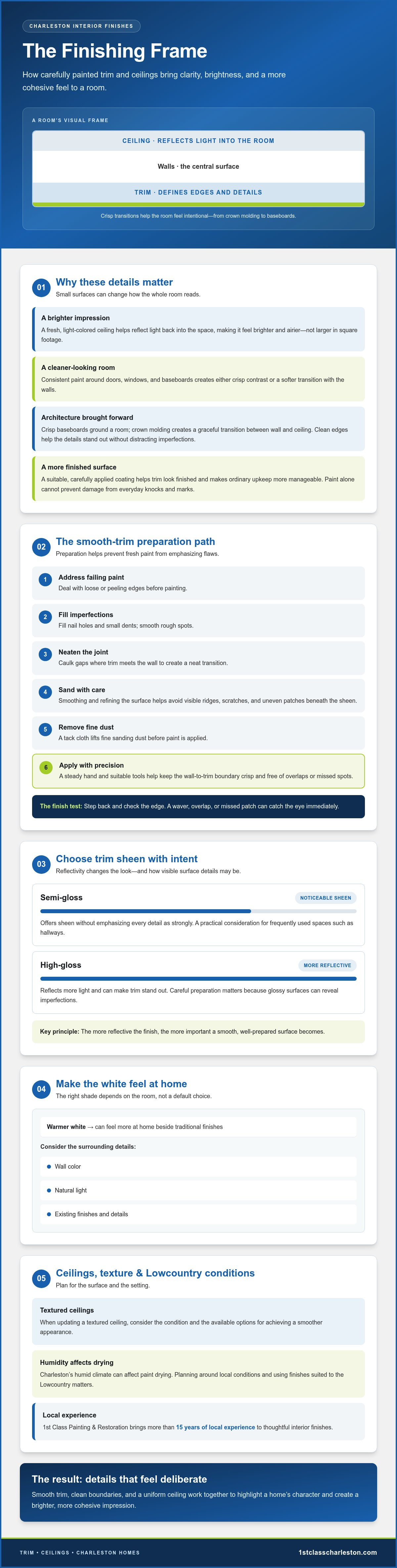
Walls draw the eye, but trim and ceilings give a room its definition. Think of them as an architectural frame: the visual borders that connect the wall color to the room’s details and make the whole space feel considered. Crisp baseboards can ground a room, while crown molding creates a graceful transition between walls and ceiling. These details suit Charleston homes across eras, from historic interiors with decorative profiles to modern rooms with simpler lines. For an overview of the history of architectural molding, it’s easy to see how trim has long helped shape a room’s character.
That’s why trim and ceiling painting Charleston homeowners invest in should be treated as more than an afterthought to the walls. A precise edge between two colors makes each surface look intentional. On trim, even small imperfections stand out: a stray brush mark or missed patch can interrupt a clean line and draw attention away from the room itself.
The “Clean Room” Illusion
Ceilings have a quiet influence. A dingy or uneven ceiling can absorb the room’s light visually, making otherwise tidy walls and furnishings seem dull. A fresh, light-colored ceiling helps reflect light back into the space, creating a brighter, more open impression. The change doesn’t add square footage, but it can make a room feel airier.
Trim has a similar effect on how clean a room appears. Fresh, consistent paint around doors, windows, and baseboards creates a crisp contrast or a soft, coordinated transition with the walls. That visual order can make the entire room feel cared for. Choosing the right white matters, too: a warmer white may feel more at home beside traditional finishes, while the exact choice depends on the wall color, natural light, and existing details.
Protecting Your Investment
Baseboards and lower trim meet everyday wear up close. Vacuums bump them, shoes scuff them, and pets brush against them. Painted wood molding also needs a sound, well-prepared finish to help shield its surface from routine knocks and marks. The paint alone can’t prevent damage, but a suitable, carefully applied coating helps keep trim looking finished and makes ordinary upkeep more manageable.
Good results begin before the brush comes out. Filling nail holes, smoothing rough spots, and preparing the surface help create an even finish that follows the molding’s shape instead of emphasizing flaws. That preparation is especially visible on detailed profiles, where light catches every edge. A bright ceiling and well-finished trim work together to bring out the room’s architecture, whether the style is ornate or understated. It’s a small-area transformation with an outsized effect on how the whole home feels.
Expert Trim Refinishing: Achieving That Flawless High-Gloss Finish
A polished trim finish starts long before the final coat. Nail holes, small dents, peeling edges, and gaps can all show through fresh paint, especially on glossy surfaces that reflect light. Careful preparation is what gives trim a smooth, even appearance instead of highlighting every flaw.
The Prep Work Secret
First, loose or failing paint is addressed and surface imperfections are filled. Gaps where trim meets the wall can be caulked to create a neat transition and help prevent dark-looking lines from interrupting the finish. Then comes sanding, often in stages: smoothing the surface, refining filled areas, and preparing the trim for paint. Skipping steps can leave ridges, scratches, or uneven patches visible beneath the sheen.
A tack cloth is a lightly adhesive cloth used to lift fine sanding dust from a surface before painting. Removing that dust helps keep the finish smooth and clean.
Then there’s the “straight line” test. Stand back and look at the edge where the wall meets the trim: a waver, paint overlap, or missed spot can catch the eye immediately. Keeping that boundary crisp takes a steady hand, suitable tools, and a methodical approach. The precision gained through 1st Class Painting & Restoration’s cabinet refinishing work carries naturally into trim painting, where smooth preparation and careful application matter just as much.
Sheen Selection for Durability
Semi-gloss and high-gloss both create a more reflective finish than flatter paints, but they make different visual statements. Semi-gloss offers noticeable sheen without emphasizing every detail as strongly, making it a practical consideration for frequently used spaces such as hallways. High-gloss reflects more light and can make trim stand out, but that reflection may also reveal surface imperfections. The right choice depends on the trim’s condition, the room’s use, and the look you want.
Light changes the effect. On broad, simple baseboards, a strong sheen can create a distinct highlight; on ornate molding, reflected light traces the profile and draws attention to its details. Historic homes may feature distinctive profiles, as illustrated in this overview of historic wood molding profiles. Consider viewing a paint sample in the room before deciding, since natural and artificial light can alter how the sheen reads.
For homeowners considering trim and ceiling painting Charleston, a finish should balance appearance with everyday upkeep. In busy hallways, choose a paint finish suitable for routine cleaning, and follow the paint maker’s care guidance once it has cured. With 23 years of local experience, 1st Class Painting & Restoration brings a careful eye to interior details. Explore interior painting services to learn more about the work involved in refreshing your home’s finishes.
Ceiling Painting Mastery: From Popcorn Removal to Smooth Finishes
A ceiling makeover is about more than covering an old texture. The surface needs to be assessed, prepared, and finished so the new paint looks even across the full span. In a Charleston home, that work can mean addressing dated popcorn texture, selecting a finish that suits the room, and taking care to protect everything below. The right approach makes the ceiling feel like a considered part of the interior, not an afterthought.
Smooth Ceiling Conversion
Turning a textured ceiling into a smooth one takes several careful stages. When removal is suitable, the texture is scraped away, imperfections are skimmed with a thin layer of compound, and the surface is sanded smooth before primer and paint. Rushing any stage can leave ridges or uneven patches that become obvious once light crosses the ceiling.
Smooth ceilings are often chosen in restorations because they create a quieter, more streamlined surface and let architectural details stand out. Texture scatters light unevenly; a smooth, evenly painted ceiling helps light travel more consistently through the room. In older Charleston homes, however, the condition of the existing ceiling should guide the plan. For homes built before 1978, homeowners should review the EPA's Renovation, Repair and Painting (RRP) Rule and verify that contractors meet applicable lead-safe requirements before work that disturbs painted surfaces.
The “Flat White” Standard
Flat ceiling paint is commonly chosen because its low sheen reflects less light than satin, helping disguise minor surface variations across a broad span. Satin reflects more light and can be easier to wipe, but that added reflection may make unevenness more noticeable. The best finish depends on the ceiling’s condition and the room’s needs, not just a rule that every ceiling must be one way.
Color matters, too. Bright white can give a clean, crisp impression, while off-white or a softer white may feel more harmonious with warm wall colors, woodwork, and Lowcountry interiors. View samples in the room’s natural light before choosing; a shade can look quite different overhead than it does on a small swatch.
Bathrooms call for special consideration because moisture can affect painted surfaces. Choose a ceiling paint labeled for bathroom or moisture-prone use, and support it with appropriate ventilation. For any ceiling project, careful masking and covering help protect furniture and flooring from dust and drips. High ceilings also call for stable access equipment and safe work practices; don’t stretch from a ladder or improvise a platform. A local painting team such as 1st Class Painting & Restoration can help homeowners think through the preparation and finish that suit their interior.
Navigating Charleston’s Climate: Durability and Curing in the Lowcountry
Charleston’s humidity can affect how interior paint dries and develops its final durability. A surface may feel dry to the touch before the coating has fully cured, the longer process in which it hardens and becomes more resistant to everyday wear. Applying another coat too soon or putting fresh trim straight back into heavy use can compromise the finish. That’s why timing, airflow, and the paint maker’s directions matter for trim and ceiling painting Charleston homes.
Humidity and Curing
Warm, damp air can slow evaporation, while limited ventilation may keep moisture lingering in rooms such as bathrooms. In some conditions, moisture-soluble ingredients can rise to the paint surface and leave shiny or sticky streaks, a problem known as surfactant leaching. Give each coat the recommended drying time, maintain appropriate ventilation, and avoid closing up a damp room or exposing fresh paint to condensation.
Homeowners can help protect a new finish by keeping rooms ventilated and following the product’s guidance before cleaning or placing objects against painted trim. Choose interior paint labeled for the surface and conditions, and ask the painting professional how humidity may affect the project schedule. Thoughtful timing is more reliable than rushing to meet an arbitrary finish date.
The Historic Aesthetic
Charleston’s architectural character calls for color choices that respect the home’s details without making the interior feel stuck in the past. Haint blue is a familiar regional choice for porch ceilings, and some homeowners also consider a soft blue overhead indoors. For trim, 2026 interiors are leaning toward warmer, creamier whites rather than stark, cool whites. Limestone and oyster tones, along with muted greens, can also complement traditional woodwork when chosen in harmony with the walls and natural light.
Older homes may have distinctive trim profiles and layers of existing paint, so assess the surface and its condition before settling on a finish. On a historic property, preserving the character of the molding while refreshing its appearance takes a measured hand. 1st Class Painting & Restoration is locally owned in Charleston and brings 23 years of local experience to interior finishes. For a thoughtful approach to painting details in your home, explore interior painting services.
Choosing 1st Class: Our Precision Approach to Your Interior Details
The difference is in the details, and in how carefully a home is treated along the way. Ceiling and trim work calls for attention to surfaces that are easy to overlook but hard to ignore once they’re freshly painted. A tidy workspace, thoughtful protection for furniture and flooring, and clear expectations can make a project feel more comfortable from start to finish.
As a locally owned Charleston business, 1st Class Painting & Restoration brings 23 years of local experience to interior finishes. That experience matters on detailed surfaces: clean transitions, consistent coverage, and careful preparation all contribute to a polished result. The team’s cabinet refinishing expertise also reflects the value of precision on surfaces where smoothness and finish quality are especially noticeable.
A Seamless Customer Experience
Before work begins, ask for a clear estimate that explains the surfaces included, preparation, paint finish, and any areas that may need special attention. Discuss how furniture and floors will be protected, how the work area will be kept orderly, and what to expect as the project progresses. At the end, a walkthrough gives you the chance to review the completed work and raise any questions.
That kind of straightforward communication helps build trust. As you compare providers for trim and ceiling painting Charleston, look beyond the promise of a fresh coat. Consider whether the team listens to your priorities, explains the process in plain language, and treats your home with the care a neighbor would expect. If you’re reviewing project photos, pay close attention to trim edges, ceiling uniformity, and how the finishes work with the room’s character. For homeowners planning broader property renovations or managing projects in other regions, established contracting teams like The Martinez Company exemplify the value of thorough project management and dedicated craftsmanship.
Ready for a Transformation?
Think beyond the walls. Fresh trim and a brighter ceiling can refresh a room, while coordinated cabinet refinishing or a kitchen or bathroom update can carry a more cohesive look into other parts of the home. 1st Class Painting & Restoration offers interior painting, cabinet refinishing, and kitchen and bathroom updates, so homeowners can consider how these improvements might complement one another.
Every home has its own character, from traditional molding to clean, modern lines. A considered plan can respect those details while giving the rooms a renewed, well-cared-for feel. To discuss your interior painting project with a local team, contact 1st Class Painting & Restoration.
Bring the Finishing Touches Together
Thoughtful trim and ceiling painting Charleston homeowners choose can help a room feel brighter, more balanced, and true to the character of the home. The difference lies in details: well-prepared surfaces, clean transitions, and finishes selected to suit both the room and the Lowcountry climate.
Choosing an experienced local team means you can look beyond the walls and consider how interior painting, cabinet refinishing, and kitchen or bathroom updates might work together for a more cohesive refresh. Locally owned and operated, 1st Class Painting & Restoration brings 23 years of Charleston experience to painting and full remodeling projects, with care for the details that make a home feel like yours.
Ready to explore what a thoughtful interior refresh could look like? Discuss your interior painting project with Charleston’s experts. Your home’s character deserves a finish that feels every bit as special.
Frequently Asked Questions
How long does it take to paint the trim and ceilings in a standard room?
There isn’t one reliable timeline for every room; the amount of trim, ceiling condition, preparation, and drying conditions all affect the schedule. A room with smooth surfaces and little repair work will generally take less time than one needing nail-hole filling, extensive sanding, or textured-ceiling work. For trim and ceiling painting Charleston homes, humidity can also extend drying between coats. Ask for a project-specific estimate and clarify what preparation is included.
Do I need to move all my furniture before the painters arrive?
You may not need to remove every piece, but clearing smaller items and anything fragile helps prepare the room. Move what you can out of the work area, and make a plan for larger furniture that’s difficult to relocate. Before work begins, confirm how remaining furniture and flooring will be protected, and identify any items that need special handling. A clear conversation ahead of time helps avoid surprises on painting day.
Why does my white trim look yellow after a few years?
White trim can look yellow because of aging paint, accumulated grime, or changes in the room’s lighting. Some older oil-based paints may also amber over time, particularly in areas with limited natural light. First, clean a small inconspicuous area gently to see whether the color comes off. If the yellowing remains, repainting may be the best refresh. The right preparation and paint choice help create a consistent new appearance.
Can you paint over popcorn ceilings, or should they always be removed?
Popcorn ceilings don’t always need to be removed; if the texture is sound and you’re comfortable keeping its appearance, painting may be an option. Removal or covering may be considered when you want a smoother, more modern look, but the ceiling’s condition should guide the decision. Avoid scraping an older ceiling if you’re unsure what the texture or existing coatings contain. Have it assessed before disturbing the surface.
What is the best paint sheen for baseboards in a high-traffic home?
Semi-gloss is a common choice for baseboards in busy homes because it has a noticeable sheen and is generally easier to wipe than a flat finish. High-gloss reflects more light and can make trim stand out, but it may also reveal dents or uneven preparation. Consider the condition and profile of your trim, along with how often it needs cleaning. Always check the paint label for care guidance.
Is it better to paint the walls or the trim first?
Many painters complete the ceiling first, then paint the trim before finishing the walls, since wall paint can cover small overlaps along trim edges. However, the best order can vary with the project, paint type, and masking approach. What matters most is allowing coats to dry as directed and creating a clean boundary between surfaces. Ask your painting professional to explain the sequence planned for your room.
How does Charleston humidity affect the interior painting process?
Charleston’s humidity can slow paint drying, so coats may need more time before recoating or regular use. Dry-to-touch doesn’t always mean fully cured, either. Follow the product’s directions for drying and curing, and keep appropriate ventilation in moisture-prone rooms. In humid conditions, rushing coats or trapping moisture can affect the finish. A local painter can account for indoor conditions when planning the work and recommend suitable paint for each surface.
Do you offer color consultations for historic Charleston homes?
A dedicated color consultation service isn’t confirmed in the available business information, so ask 1st Class Painting & Restoration directly about color guidance for your project. For a historic Charleston home, consider the trim profile, existing finishes, wall color, and how daylight changes throughout the room. Testing paint samples in place can help you compare warm and cool whites before committing. Share reference photos and preservation priorities when discussing your interior painting plans.


