
How to Hire a Painter for a Small Job: A Practical Guide
Wondering how to hire a painter for a small job? Learn how to define project scope, compare detailed quotes fairly, and find the right pro for minor painting.

A small painting job deserves a clear scope, not a rushed hire. Whether you need a bathroom refreshed, a few interior walls repainted, or another focused update, figuring out how to hire a painter for a small job can take more thought than expected. Some painters prioritize larger projects or have minimum job sizes, and a vague description can make it hard to get an estimate that reflects the work you actually need.
That doesn’t mean your project is too minor to handle professionally. A little preparation can help you find out early whether a painter is a good fit and avoid surprises about surface preparation, materials, or cleanup. The key is to describe the work clearly and compare written scopes, not just bottom-line estimates.
This guide walks you through defining your project, asking the right questions, and evaluating painters before you choose. You’ll learn what to include in your request, how to compare quotes fairly, and what to confirm before work begins. If you’re in the Charleston area, 1st Class Painting & Restoration is one local option to ask about project fit and availability.
Key Takeaways
- To learn how to hire a painter for a small job, start by describing the exact area and task, then ask whether the painter takes on projects of that size.
- Look for recent examples that match your specific painting task, and clarify who will complete the work.
- Compare estimates by checking preparation, coats, materials, cleanup, timing, and exclusions, not just the total.
- Share clear photos, measurements, and relevant site details to help painters understand the project; an onsite assessment may still be needed.
- Weigh task complexity, surface condition, desired finish, and available time when deciding between DIY and professional help.
How to Hire a Painter for a Small Job Without Wasting Time
A single room, ceiling, door, or patch may take up less space, but it still deserves careful preparation and a polished finish. The challenge is finding a painter whose schedule and services fit the task. Some contractors set minimum project sizes, so ask whether they take on your type of job before spending time requesting a detailed estimate.
Fit depends on more than square footage. The kind of painting, the property’s location, scheduling, access to the area, and the preparation required can all affect whether a painter can take the work on. A Charleston homeowner, for example, should describe the project location and any access considerations, then confirm current service coverage and availability. For a general overview of what a professional painter does, consider how the trade involves more than applying paint: the task and the surface condition matter, too.
What counts as a small painting job?
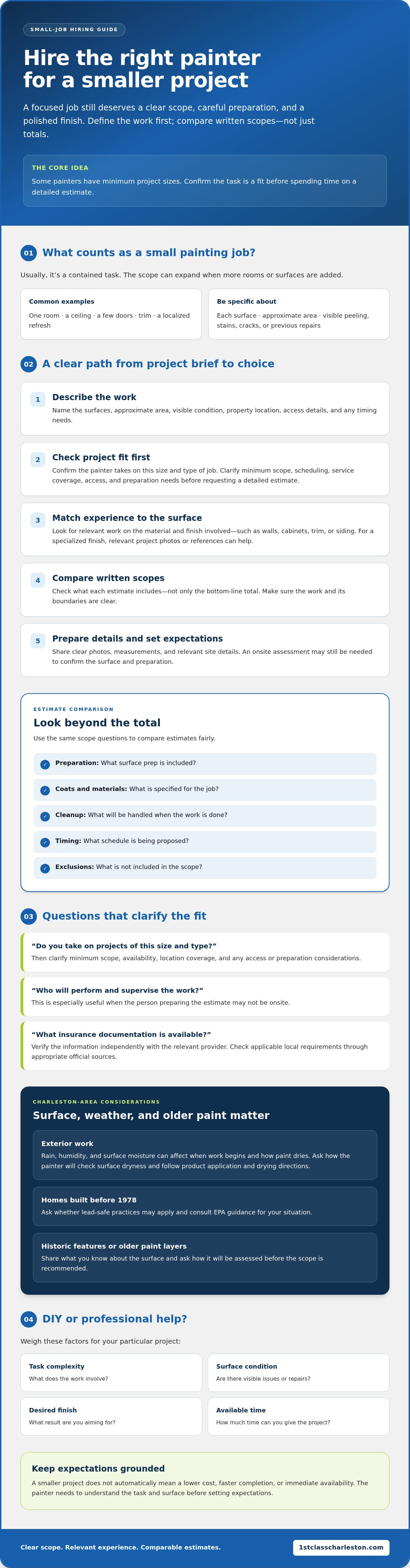
A small job is usually a contained task, such as painting one room, a ceiling, a few doors, or trim, or refreshing paint in a localized area. A request can grow beyond that scope if it includes several rooms or additional surfaces. Describe exactly what you want painted, and share any visible peeling, stains, cracks, or previous repairs. The painter may need to assess the surface before confirming the work and preparation involved.
Will a professional painter take a small project?
Ask directly: “Do you take on projects of this size and type?” If the answer is yes, follow up before requesting a detailed estimate. Confirm whether there’s a minimum scope, what scheduling options are available, and whether access or preparation needs could affect the job’s fit. Don’t assume a smaller project will automatically cost less, finish faster, or be available right away. A painter needs to understand the work before setting expectations.
To make that first conversation useful, prepare a brief description covering:
- The task: Name each surface you want painted and the approximate area.
- The condition: Mention visible damage, peeling, or old paint that may affect preparation.
- The logistics: Share the property location, access details, and any timing needs.
Then contact painters whose listed services match the work. For example, a room or ceiling may align with interior painting, while a cabinet project calls for experience with cabinet refinishing. 1st Class Painting & Restoration is a locally owned Charleston-area option; describe your project and confirm its fit and availability. Define the work first, then ask the right painters whether they can take it on.
What to Check Before Hiring a Painter in Charleston
A painter’s general experience is a starting point, not proof they’re suited to your particular task. The skills and preparation for interior walls may differ from those needed for cabinets, trim, or exterior siding. As you consider how to hire a painter for a small job, focus on experience with the surface and finish you want, then check that the person who’ll do the work has handled comparable projects.
Match the painter’s experience to your surface
Be specific about the material and its condition. Ask about experience painting the surface in question, such as interior walls, cabinets, trim, or siding. For a specialized finish, request photos of relevant completed work or references you can contact. If the property has historic features or layers of older paint, explain what you know and ask how the painter would assess the surface before recommending a scope.
For exterior painting, ask how the contractor plans around Charleston’s weather. Rain, humidity, and surface moisture can affect when work can begin and how paint dries. A careful painter should explain how they’ll check that surfaces are sufficiently dry and follow the product’s application and drying directions, rather than promise a schedule without considering conditions.
Ask practical questions before requesting an estimate
Confirm that the painter serves your location, has potential availability, and accepts the project’s scope. Ask who will perform and supervise the work, especially if the person preparing the estimate won’t be on site. You can also ask what insurance documentation is available, then verify the information independently with the relevant provider. Check any applicable local requirements through appropriate official sources rather than relying on assumptions.
Older painted surfaces deserve an extra question. If the home was built before 1978, ask whether lead-safe practices may apply and consult EPA guidance to understand what may be required for your situation. Don’t assume the age or appearance of paint tells the whole story.
Professional standards matter, too. The Painting Contractors Association describes its focus on skill, honor, and integrity; its overview of industry standards for painters can help you think beyond a low estimate when evaluating a contractor. Look for clear answers, relevant examples, and a thoughtful explanation of the work. If you’re considering a Charleston-area project, you can ask 1st Class Painting & Restoration about project fit, including service-area coverage and availability for your specific job.
How to Compare Painter Estimates for a Small Job
Two estimates can describe the same room and still cover different work. One may include filling small holes and protecting nearby surfaces; another may assume those areas are already ready for paint. Compare the written scope and exclusions before comparing totals. That’s the clearest way to understand what each painter is proposing and spot gaps before work begins.
What should a small-job painting estimate include?
Look for a description of each surface and area, the preparation planned, the finish, and the expected number of coats. Check whether the estimate includes paint and other materials, protection for floors or nearby items, moving furniture, surface repairs, and cleanup. It should also explain the proposed schedule, payment terms, and how any changes to the agreed scope will be discussed and approved.
Broad phrases can hide important differences. “Paint area” doesn’t tell you which surfaces are included, and “touch-up” could mean anything from a few small spots to more extensive coverage. Ask the painter to clarify the wording in writing. If repairs or materials are excluded, ask what that means for your project so you can compare the bids on equal terms.
How can you compare bids fairly?
Put each estimate side by side and review the same details in each. A simple checklist helps reveal where the scopes differ:
- Preparation: What cleaning, sanding, patching, or protection is included?
- Coats and finish: What coat plan and finish does the estimate describe?
- Materials: Is paint included, and are any material choices or limits specified?
- Cleanup and access: Who handles cleanup and furniture movement?
- Timing and changes: What schedule is proposed, and how will added work be approved?
- Exclusions: What repairs, surfaces, or tasks aren’t part of the estimate?
Then ask each painter the same follow-up questions. Differences in surface repairs or included materials can explain why one estimate covers more work than another. If a quote is vague, treat that as a reason to request clarification, not automatic proof of poor workmanship. A clear response helps you understand what you’re choosing.
As you decide how to hire a painter for a small job, prioritize a written scope that reflects the actual task and spells out expectations. The most useful comparison isn’t simply which estimate is lowest. It’s which one makes the preparation, materials, timing, and responsibilities easiest to understand before anyone starts.
How to Prepare Your Small Painting Project for a Smooth Hire
A clear description makes it easier for a painter to understand what you need and decide whether the project is a fit. Before reaching out, move through a simple sequence: define the task, document the area, share site details, compare written scopes, and confirm the terms. This preparation helps prevent missed details, especially when a small request involves more than one surface or has visible damage.
Describe the work clearly when you make contact
Name each surface and give its approximate size. For example, say that you want one bedroom’s walls painted, describe any peeling or patched areas, and share the finish you hope to achieve. Take clear photos in good light from a few angles, including close-ups of known damage or previous paint issues. Measurements and photos help explain the job, but they may not show everything a painter needs to assess.
Share practical details early, too. Mention narrow access, stairs, parking or entry arrangements, and whether the room will remain occupied during the work. Let the painter know about pets, furniture that will stay in place, and any areas that need to remain accessible. An onsite assessment may still be needed to check surface condition, clarify preparation, and confirm the scope.
Confirm the agreement before work begins
Once you’ve compared proposals, make sure the final written agreement reflects what you discussed. It should identify the surfaces included, preparation and materials, schedule, exclusions, and cleanup expectations. Confirm how additional repairs or other changes will be reviewed and approved before they’re added. Also ask whom to contact with questions and how you and the painter will review the finished work together.
Keep your notes, photos, estimate, and final agreement together. Before signing off, check that the same project details appear consistently across the documents. If anything is unclear, ask for a specific explanation in writing rather than relying on a verbal assumption. These steps make it easier to see whether each proposal addresses the same task and to understand what happens if the painter discovers a condition that wasn’t visible in your photos.
Good preparation turns how to hire a painter for a small job into a manageable process: explain the work plainly, share the conditions that could affect it, and confirm expectations before the first day. If you’re planning painting in the Charleston area, ask 1st Class Painting & Restoration about your project and confirm its fit, service-area coverage, and availability.
Choosing a Charleston Painter: Make the Right Next Move
The right choice isn’t automatically the lowest estimate or the first painter who replies. Look for someone who confirms that your project’s size and type are a fit, understands the surface involved, and provides a written scope that clearly describes the work. In Charleston, confirm directly that your address is within the painter’s current service area and ask whether they’re available for your project timeframe.
When does hiring a professional make sense?
Consider professional help if the job involves extensive preparation, surface repairs, difficult access, or a finish that needs to look consistent across visible areas. A small section of damaged wall, for instance, may need more than paint if the surrounding surface has issues. The painter should assess those conditions before setting expectations about the work.
DIY can be a sensible option for straightforward painting if you have the skills, tools, and time to prepare the surface and complete the finish you want. Think through the trade-offs: Is the surface in good condition? Can you reach it safely? Are you comfortable with the preparation and cleanup? Would a less-than-perfect finish bother you? Your answers can help clarify whether doing it yourself is practical or whether you’d rather have a professional assess the job.
What should you do before selecting a painter?
Shortlist painters who confirm they consider projects like yours. Then weigh the whole experience, not just the estimate: Does the scope match your needs? Has the painter handled similar surfaces? Are the communication and scheduling expectations clear? If details remain uncertain, ask questions before making a decision instead of assuming they’ll be resolved once work begins.
A small project still deserves a thoughtful choice. The process of how to hire a painter for a small job comes down to confirming fit, understanding the proposed work, and choosing the professional whose approach makes sense for your surface and expectations. 1st Class Painting & Restoration is a locally owned Charleston-area painting company; its team can confirm whether your project and location are a fit and discuss availability.
Ready to take the next step? Contact 1st Class Painting & Restoration with a short description of the surfaces and work you have in mind, and ask whether the team can consider your project.
Take the Next Step Toward a Well-Handled Painting Project
A small painting job can make a noticeable difference, and a clear plan helps set it up for success. Define the surfaces and their condition, then look for a painter whose experience matches the task. Before choosing, compare written scopes, preparation, materials, and cleanup expectations so you know what each estimate includes.
That’s the practical approach to how to hire a painter for a small job: confirm project fit and availability, ask questions about anything unclear, and get the agreed scope in writing. 1st Class Painting & Restoration is locally owned and operated in the Charleston area, with services that include interior and exterior painting, cabinet refinishing, and commercial painting. Share your project details and ask whether the team is a fit for the work and location.
Tell 1st Class Painting & Restoration about your project. A thoughtful first conversation can help you move forward with confidence and bring fresh life to your space.
Frequently Asked Questions
Will a painter take a small job?
Yes, some painters take on small projects, but acceptance depends on the job and the contractor’s schedule. Before requesting a detailed estimate, describe the task, location, and approximate size, then ask whether they consider projects like yours. Check for a minimum project scope, current availability, and any access or preparation factors that could affect fit. A direct first question can save time for both you and the painter.
How do I find a painter for one room or a small repair?
To figure out how to hire a painter for a small job, start by listing the exact surfaces and describing their condition. Ask painters serving Charleston whether they take on a single-room project or localized repair, and look for examples of similar work. Share clear photos and approximate measurements, but understand that an onsite assessment may still be needed to confirm preparation and scope. Compare written descriptions before choosing.
What should a painter's estimate include for a small job?
A useful estimate describes the areas and surfaces to be painted, preparation steps, finish, and expected coats. It should clarify whether paint, surface protection, furniture movement, repairs, and cleanup are included or excluded. Check for the proposed schedule, payment terms, and how changes to the scope will be reviewed and approved. If wording like “touch-up” or “paint area” is unclear, ask the painter to define it in writing.
Is it worth hiring a professional painter for a small job?
It can be worthwhile if the task involves careful preparation, surface damage, difficult access, or a finish you want to look consistent. A professional can assess the surface and explain the work involved before you decide. Straightforward painting may suit DIY if you have the necessary skills, tools, and time. Consider the condition of the area, the finish you expect, and whether you’re comfortable managing preparation and cleanup yourself.
Why might a painter decline a small project?
A painter may have a minimum project size, a full schedule, or limited availability for your location or requested timing. The task may also require preparation, access, or specialized experience that doesn’t fit the contractor’s work. Ask whether a particular factor is affecting project fit rather than assuming the job is too minor. If the painter can’t take it on, request a clear answer so you can contact other suitable professionals.
What questions should I ask before hiring a painter?
Ask whether the painter accepts your project’s size and type, has experience with the specific surface, and who will perform or supervise the work. Confirm service-area coverage, availability, any minimum scope, and what preparation and cleanup are included. You can also ask what insurance documentation is available and verify details independently. For older painted surfaces, ask whether lead-safe practices may apply and consult EPA guidance for your situation.
Do I need a written estimate for a small painting job?
A written estimate is a helpful way to make expectations clear, even for a small project. It lets you review the work areas, preparation, coats, materials, cleanup, schedule, and exclusions before agreeing to proceed. Ask for unclear terms to be explained and confirm how added repairs or scope changes will be handled. Comparing written scopes helps you understand what each painter is proposing, rather than judging estimates by their totals alone.


