
Mistakes to Avoid When Hiring a Painter: A Charleston Homeowner’s Guide
Discover key mistakes to avoid when hiring a painter in Charleston. Compare proposals, prep work, and surface needs to ensure beautiful, lasting results.

What if the painter with the lowest estimate isn’t the best fit for your home? The biggest mistakes to avoid when hiring a painter often start with judging the promise instead of the plan. A vague proposal or little detail about preparation can make it hard to know what the finished work will involve.
It’s natural to compare prices and focus on the final color. But clear scope, careful preparation, and experience that fits your project matter just as much. In Charleston, humidity and salt air can affect exterior surfaces, so it’s worth looking closely at how the work will be planned.
This guide covers common hiring pitfalls, how to compare painting proposals, and what to clarify before work begins. Whether you’re planning interior or exterior painting, refreshing cabinets, or updating a kitchen or bathroom, these steps can help you plan with confidence.
Key Takeaways
- Clarify the surfaces, scope, and desired result before comparing painters so everyone is discussing the same project.
- One of the key mistakes to avoid when hiring a painter is choosing based on reputation alone; consider whether the painter’s experience fits your project type.
- Compare proposals by scope, materials, preparation, cleanup, and exclusions, not just the total.
- Set expectations for access, priorities, communication, colors, and finishes to prevent avoidable surprises.
- Use project fit and proposal clarity to guide your decision, including when considering a locally owned Charleston-area company such as 1st Class Painting & Restoration.
Mistakes to Avoid When Hiring a Painter: Start With the Project
Cost matters, as does the disruption of having rooms or parts of your property out of use. One of the most common mistakes to avoid when hiring a painter is choosing a person or proposal before defining what the project includes.
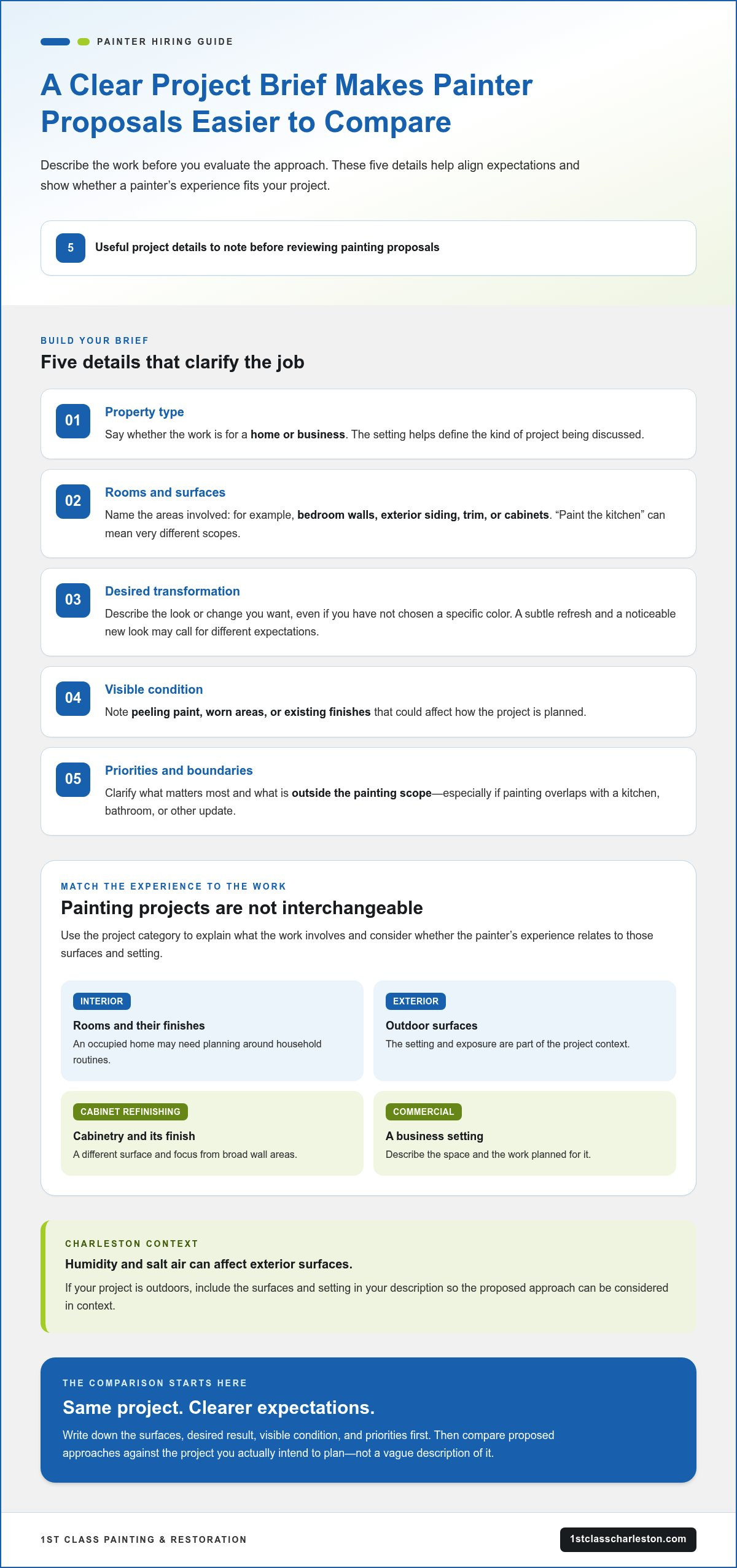
Start with the work itself: Which rooms, surfaces, or features need attention, and what should they look like when the job is complete? Painting bedroom walls is a different project from repainting exterior siding or refinishing kitchen cabinets. Clear goals give you a practical basis for judging whether a proposed approach fits.
A well-scoped painting project names the surfaces, goals, and expectations before work begins.
Why a vague painting project can lead to mismatched expectations
“Paint the kitchen” could mean walls and ceiling, trim and doors, or cabinets. “Refresh the exterior” might refer to siding, shutters, or other visible surfaces. If those details aren’t specified, you and the painter may picture different jobs. Finish goals matter, too: someone looking for a subtle change may have a different idea of success from someone who wants a noticeable new look.
Before discussing the project, write down the spaces and surfaces you have in mind. Note your color or finish direction, if you know it, and identify anything outside the painting scope. This is especially helpful if you’re also planning repairs or a kitchen or bathroom update. Painting and remodeling can overlap in a larger project, but they aren’t automatically the same work. Define each part so the scope reflects what you intend to plan.
Match the painter’s work to the type of project
Experience is most relevant when it relates to the surfaces and setting involved. Interior work centers on rooms and their finishes; exterior painting covers the outside of a home or business; cabinet refinishing focuses on cabinetry; and commercial painting takes place in a business setting. Each has different priorities, so a general reputation alone may not show how closely a painter’s experience aligns with your project.
A Charleston homeowner refreshing living-room walls has a different project from a business repainting its interior. Cabinets also call for a different focus than exterior siding. Identify the category that best describes your work, then use it to evaluate project fit. 1st Class Painting & Restoration serves residential and commercial painting projects, including interior and exterior painting and cabinet refinishing.
Painting includes a broad range of approaches and techniques. For background on the craft, Wikipedia offers an overview of the history and techniques of painting. For hiring, the practical step is to define your surfaces and desired result, then look for a project approach that makes sense for them.
Avoid Hiring a Painter Whose Experience Does Not Fit Your Project
A strong reputation can be reassuring, but it doesn’t automatically mean a painter’s experience aligns with your property’s needs. Interior rooms, outdoor surfaces, cabinets, and commercial spaces each have different conditions and priorities. One mistake to avoid when hiring a painter is treating all painting projects as interchangeable instead of considering the work and setting involved.
Project fit isn’t a judgment about who is good or bad. It’s about identifying the kind of work involved and choosing an approach suited to it. Refreshing interior walls has different considerations from a commercial painting project. The same is true of exterior painting and cabinet refinishing: both can transform a space, but they involve different surfaces and goals.
Different painting projects call for different considerations
An occupied interior may require planning around household routines. Exterior projects involve outdoor surfaces and exposure to local conditions. Commercial spaces bring their own considerations, while cabinet refinishing focuses on cabinetry rather than broad wall areas. These distinctions help you describe the work accurately and evaluate whether a painter’s experience relates to it.
1st Class Painting & Restoration works on residential and commercial interior and exterior painting, as well as cabinet refinishing. That range serves the varied needs of Charleston-area homes and businesses, from refreshing a home’s interior to updating a commercial space or cabinets. For background on how quality is discussed in the coatings industry, AMPP introduces Master Painters Institute (MPI) standards for quality painting. Use industry information as context while keeping your property’s specific needs at the center of your decision.
How to describe your project clearly
A concise project description makes it easier to judge whether an approach fits your plans. Before reviewing proposals, note:
- Property type: Say whether the work is for a home or business.
- Rooms and surfaces: Identify areas such as bedroom walls, exterior siding, trim, or cabinets.
- Desired transformation: Describe the look or change you want, even if you haven’t chosen a specific color.
- Visible condition: Note peeling paint, worn areas, or existing finishes that may affect planning.
- Priorities: Clarify what matters most, such as refreshing a particular space or coordinating painting with a kitchen or bathroom update.
These notes separate painting goals from broader remodeling expectations and give proposals a meaningful point of comparison. If your plans include painting as part of a larger home or business improvement, 1st Class Painting & Restoration’s Charleston-area painting services may be a relevant place to explore project fit.
A Lower Painting Estimate Is Not Always the Better Choice
A lower total can look appealing, but it doesn’t show whether two painting proposals cover the same work. One may include several surfaces and preparation steps, while another may describe a narrower scope or leave important details unstated. Comparing only the bottom line can make different projects seem equivalent.
One mistake to avoid when hiring a painter is assuming the lowest estimate is the best value, or that a higher total automatically signals better work. Compare the details instead: what’s included, what’s excluded, and whether each proposal describes the same finished result.
What to compare in painting proposals
Use this checklist to see whether proposals describe comparable work and where their scopes differ:
| Proposal detail | What to compare |
|---|---|
| Scope | Rooms, surfaces, and project stages covered, such as walls, trim, or cabinets. |
| Materials | Any materials identified and whether the proposals describe the same general finish goals. |
| Preparation | What preparation is included and which surfaces or areas it applies to. |
| Cleanup | What the proposal says about cleanup and the condition of the work area at completion. |
| Exclusions | Work not included, assumptions, or items that could change the stated scope. |
A useful proposal names the surfaces and work rather than relying on broad phrases such as “paint the interior.” If a detail isn’t described, mark it as unclear instead of assuming it matches another estimate. That gives you a more accurate, like-for-like comparison.
Why the lowest total may not reflect the same work
Imagine one proposal clearly includes preparation for named surfaces, while another lists painting those surfaces but doesn’t specify the preparation involved. Those descriptions may not represent the same scope. The difference doesn’t prove either painter’s work is better or worse; it shows why the headline total isn’t enough to judge value.
Compare the written scope, materials, preparation, finish, cleanup, and exclusions before weighing totals. If proposals describe different work, identify the differences and decide which scope best matches your priorities. A fair comparison is about understanding what each plan includes, not treating price as proof of quality.
For a clearer sense of how a painting project can fit your property, explore 1st Class painting services for residential and commercial interior and exterior painting, as well as cabinet refinishing.
Prevent Painting Project Surprises With Clear Expectations
A well-planned painting project depends on more than choosing a color. Clarify which rooms are involved, how the household will use them, and how decisions will be shared. This helps align the planned work with your priorities.
Unsettled choices can complicate planning. If the color or finish is undecided, or a room needs to stay available for daily use, discuss that early. Timing depends on project-specific details, so don’t assume every job follows the same schedule. Share practical constraints and make sure they’re reflected in the agreed scope.
Prepare the home and clarify priorities
Before work begins, consider how the space will be used. Think about access, rooms that need to remain in use, and household routines that may affect where work can take place. Decide on color and finish goals as early as you reasonably can, so the project isn’t held up by a choice you could have settled in advance.
Distinguish your own preparations from tasks assigned to the painting team. You might identify personal items you plan to move and point out areas that need special consideration. Don’t assume preparation, moving belongings, or other work is included unless it’s part of the agreed scope. A clear division of responsibilities reduces last-minute uncertainty.
Keep communication focused on the agreed scope
Use a simple sequence to keep expectations clear:
- Confirm the scope: Review the rooms and surfaces included, along with the intended finish.
- Share access needs: Explain which spaces are occupied, restricted, or needed for everyday use.
- Set priorities: Identify what matters most, such as completing a particular room or coordinating work with a broader update.
- Agree on communication: Choose one household point of contact to keep messages consistent.
- Record changes: Note any agreed change to rooms, surfaces, or priorities so everyone has the same understanding.
A single point of contact can limit crossed messages, especially when more than one household member has input. If priorities change, write down what’s different and clarify how it affects the agreed work. A conversation can resolve a detail, while a written note helps keep the updated plan clear.
Another mistake to avoid when hiring a painter is treating new requests as if they automatically fit the original plan. Adding a room or changing the focus may affect scope and timing. Discuss changes before assumptions take hold, so the project stays aligned with what you want from the finished space.
For painting plans shaped around your property and priorities, explore 1st Class painting services.
Hiring a Charleston Painter: A Confident Next Step With 1st Class
Use a clear framework to make your painting decision: choose an approach suited to your project, define the work, compare proposals using the same details, and set expectations before work begins. This keeps the focus on what matters for your property, not reputation or a headline estimate alone.
1st Class Painting & Restoration is a locally owned Charleston-area painting company serving residential and commercial projects. Its painting services include interior and exterior painting, cabinet refinishing, and commercial painting. Identifying which category fits your needs can help turn an early idea into a focused project plan.
Choose a painting solution that fits your property
A home’s interior, exterior surfaces, kitchen cabinets, and a commercial space each have their own setting and desired result. Refreshing a living room may call for a different scope from exterior work or cabinet refinishing. Name the surface and the change you want to keep the conversation specific and evaluate whether the proposed work matches your project.
Move from comparison to a clear project plan
Before taking the next step, gather a few notes about the property and the outcome you want. A useful project summary can include:
- Property and spaces: Identify whether the project is residential or commercial, and name the rooms or areas involved.
- Surfaces: Specify what you want painted or refinished, such as interior walls, exterior surfaces, or cabinets.
- Current condition: Describe visible wear or existing finishes that may be relevant to planning.
- Desired result: Note your color or finish direction and the change you want the space to make.
- Priorities: Share access needs, rooms that must remain in use, or decisions that matter most to you.
With this information in hand, compare proposal scope, preparation, materials, cleanup, and exclusions consistently. Resolve unclear details before committing rather than relying on assumptions. If plans evolve, keep changes to surfaces or priorities visible so the project discussion stays anchored to the result you want.
The mistakes to avoid when hiring a painter often come down to moving ahead without a shared understanding of the project. A clear plan connects your property, priorities, and expectations to the work being considered.
Ready to explore a local option for your painting project? Explore painting services in Charleston and take the next step toward a plan that fits your property.
Give Your Painting Project a Thoughtful Start
Decisions made before work begins can shape how smoothly a project fits into everyday life. Picture how you want the space to feel, then let that vision guide the planning conversation. A considered plan can turn a daunting to-do into a welcome change for your home or business.
The mistakes to avoid when hiring a painter are easier to sidestep when you focus on what matters: a clear plan, a fitting approach, and a result you’ll enjoy living or working with. You don’t need every detail settled at once. Start by exploring painting options that align with your plans.
Explore 1st Class Painting & Restoration’s painting services and take a confident step toward a refreshed space.
Frequently Asked Questions
How many estimates should I get before hiring a painter?
There’s no set number of estimates that works for every project. Gather enough proposals to understand the likely scope and compare approaches, but prioritize clarity over quantity. If one estimate covers only living-room walls and another includes ceilings and trim, they aren’t a fair comparison. A defined project brief helps you review estimates consistently and decide which plan suits your Charleston property.
Is it normal for painting estimates to differ?
Yes. Estimates can differ because they may be based on different assumptions about the project. Room size, ceiling height, surface condition, access, materials, and the finish you want can all affect what’s included. One proposal might cover ceilings while another addresses walls only. Check whether each estimate reflects the same rooms and details before judging the difference. A variation doesn’t automatically mean one proposal is better or worse.
Can I hire a painter to work in an occupied home?
Yes, painting can be planned for an occupied home, though household routines may affect how you prepare and use each space. Consider where people need to pass, which rooms are essential for meals or sleep, and whether children or pets need to stay clear of the work area. Share these practical needs during planning so they can be considered.
Should I buy paint before hiring a painter?
Usually, settle the project scope and paint choices before buying supplies. The amount and product can depend on the surfaces, finish, and colors involved, so buying early could leave you with paint that doesn’t suit the final plan. If you already have paint, keep its label and product information available. It can help inform the project discussion without assuming it’s the right fit.
How long does it take to paint a house?
There isn’t one reliable timeline for every house. Duration depends on the areas included, surface condition, preparation, project size, and whether the work is interior or exterior. For exterior painting in Charleston, weather conditions can also affect scheduling. A useful estimate should reflect the specific home and agreed scope, not a general timeline for a different property.
Can a painter handle both interior and exterior painting?
Yes, some painting companies work on both interior and exterior projects, though each setting has different needs. 1st Class Painting & Restoration provides interior and exterior painting for residential and commercial properties in the Charleston area. If your plans include both, describe each part separately, such as interior rooms and the exterior surfaces you want painted.
What should I do if the painting project scope changes?
Pause and document the proposed change before treating it as part of the original project. Note what’s being added, removed, or altered, then clarify how it affects the work, materials, and expected timing. For example, adding a hallway after planning bedroom painting may change the areas involved. Recording the updated scope in writing helps prevent misunderstandings and gives everyone a shared reference for the revised plan.


