Humidity Resistant Paint for Bathrooms: How to Choose
Humidity resistant paint for bathrooms needs mold and mildew inhibitors and a satin or semi-gloss finish. Learn how ventilation helps prevent peeling.
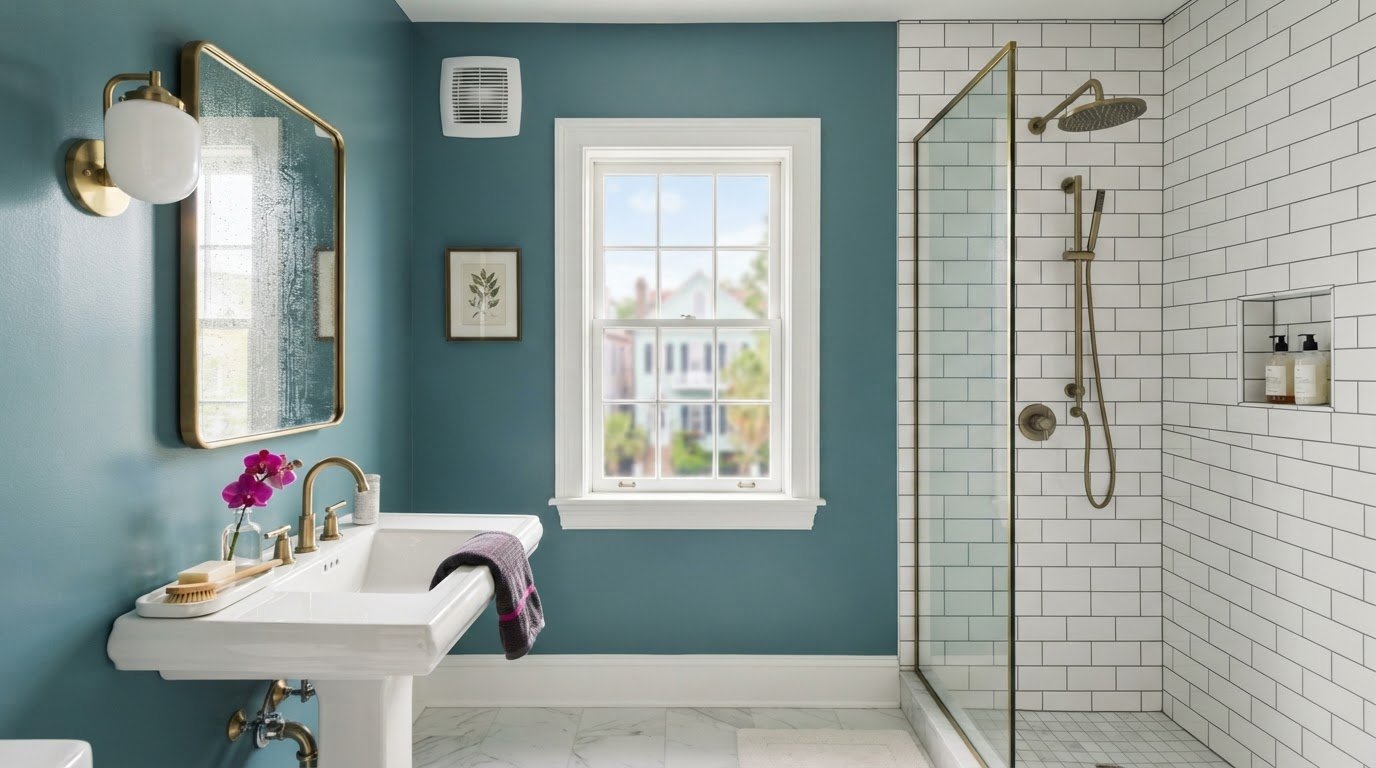
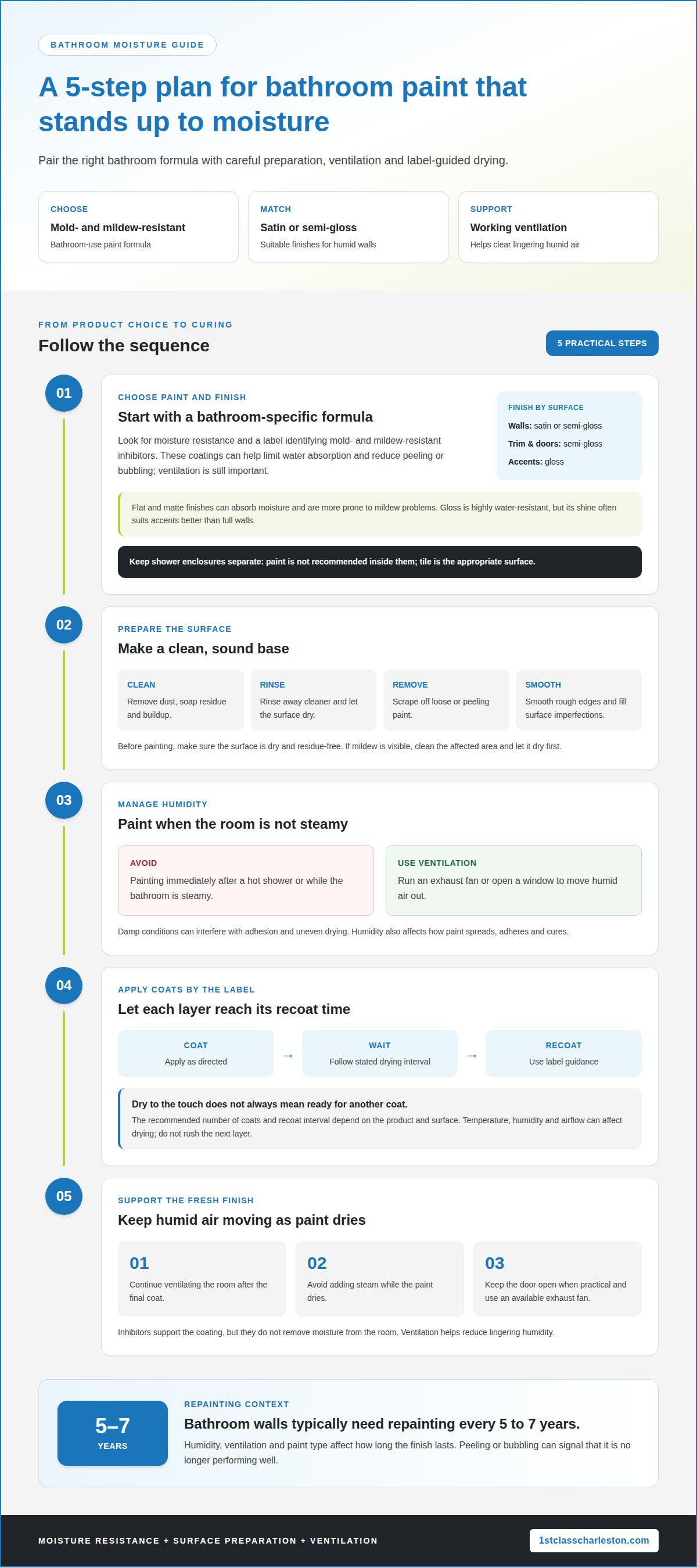
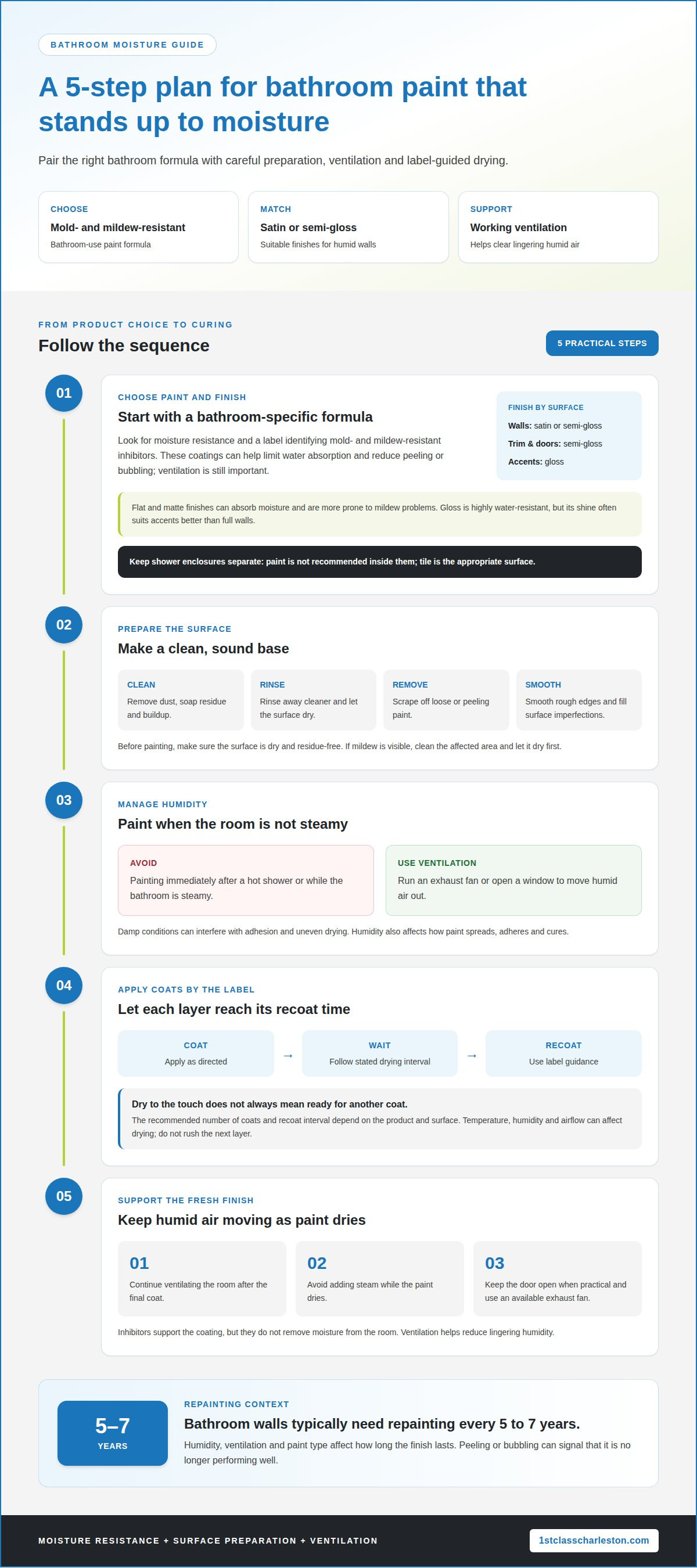
Choose humidity resistant paint for bathrooms that contains mold- and mildew-resistant inhibitors, with a satin or semi-gloss finish. These finishes handle humid conditions and are easier to clean than flat or matte paint. Don’t use paint inside a shower enclosure, where tile is the appropriate surface.
A bathroom finish should look fresh and stand up to daily moisture. The right paint can help limit peeling and bubbling, but it works best with good ventilation, which reduces the damp conditions that encourage mold and mildew.
This guide explains what to look for in bathroom paint, how inhibitors help protect painted surfaces, and why areas around showers, tubs, trim, and ceilings need different considerations. You’ll learn how to choose a suitable finish and when painting can help protect your bathroom walls.
Key Takeaways
- Choose a bathroom-specific formula designed to limit water absorption and help reduce peeling or bubbling.
- Consider how humidity affects paint adhesion and curing when planning the work and ventilation.
- Match the finish to the surface, with glossier options often better suited to trim and accents than full walls.
- Bathroom walls typically need repainting every 5 to 7 years, depending on humidity, ventilation, and paint type.
What Is The Best Paint for High-Moisture Areas Like Bathrooms?
For a humid bathroom, choose paint formulated for moisture resistance and labeled with mold and mildew inhibitors, in a satin or semi-gloss finish. Moisture-resistant paint limits water absorption, helping reduce peeling and bubbling as bathroom humidity rises. Regular interior paint isn’t designed for these conditions and may fail sooner. A suitable formula gives walls a finish better suited to everyday steam and splashes.
Finish matters, too. Satin and semi-gloss finishes resist moisture and are easier to clean than flat or matte paint. Semi-gloss offers greater durability and moisture resistance, making it a common choice for trim and doors. Gloss is the most water-resistant finish, but its shine often suits trim and accents better than full walls. Flat and matte finishes can absorb moisture and are more prone to mildew problems.
Consider the ceiling as well as the walls. Bathroom ceilings face condensation and moisture buildup, so they also need appropriate paint. Humidity affects how paint adheres, cures, and performs over time. A moisture-resistant formula can help, but lingering dampness still matters. Pairing suitable paint with proper ventilation supports a better result.
How much does moisture-resistant bathroom paint cost per gallon? There’s no single price: costs vary by formula, finish, and container size. Compare products by their intended bathroom use and finish, rather than choosing solely by price per gallon.
When should bathroom paint be replaced or repainted? Bathroom walls typically need repainting every 5 to 7 years. Humidity, ventilation, and paint type affect how long the finish lasts, while peeling or bubbling can signal that it’s no longer performing well.
For a practical selection, match the finish to the surface: satin or semi-gloss for humid walls, semi-gloss for trim and doors, and gloss for accents. Avoid flat or matte finishes where moisture and mildew are concerns. Keep shower-enclosure surfaces separate from painted walls, since paint isn’t recommended inside those enclosures.
Need Help Choosing or Applying the Right Bathroom Paint?
Humidity affects how bathroom paint spreads, adheres, and cures, so room conditions matter during application. Prepare the surface first, then follow the paint label’s application and drying instructions.
Before painting, clean walls to remove dust, soap residue, and other buildup. Rinse away cleaner and let the surface dry. Scrape off loose or peeling paint, then smooth rough edges and fill surface imperfections. For example, flaking paint needs attention before a fresh coat can adhere evenly. Make sure the surface is dry and residue-free before applying paint.
Humidity During Application and Curing
Humidity affects paint application and curing by changing how quickly moisture leaves the fresh coating. A surface that stays damp can interfere with adhesion and leave the finish vulnerable to uneven drying. Avoid painting while the bathroom is steamy, such as immediately after a hot shower. Use ventilation to clear humid air, and keep it running as the coating dries.
Paint Coats and Drying Time
Each coat is a separate layer of paint, and the product label sets the application and drying intervals. The recommended number of coats depends on the product and the surface, so follow its instructions rather than assuming one coat will cover. Let each layer dry for the stated time before recoating. Rushing can disturb the first layer and affect the finished appearance.
Dry to the touch doesn’t always mean ready for another coat. Check the label’s recoat guidance for the appropriate waiting period. Temperature, humidity, and airflow can affect drying, so a damp bathroom may need more time than a well-ventilated room. For example, don’t start a second coat just because the wall feels dry if the listed recoat interval hasn’t passed.
After applying the final coat, continue ventilating the room and avoid adding steam while the paint dries. Keep the bathroom door open when practical, and use an available exhaust fan to move humid air out. These steps support proper curing and help the fresh finish settle evenly across the walls.
Mold and mildew inhibitors
Mold- and mildew-resistant paint is designed to help discourage growth on painted bathroom surfaces. Its inhibitors support the coating, but they don’t remove moisture from the room. Paint alone, for example, can’t address persistent dampness around a wall or ceiling. Pair paint with ventilation to reduce lingering humidity and support a cleaner-looking finish.
Choose a bathroom paint labeled as resistant to mold and mildew. Pair it with a satin or semi-gloss finish, both suitable for humid bathrooms and easier to clean than flat or matte options. The right combination gives walls a suitable coating and makes routine surface care more manageable.
- Read the label: Look for a bathroom-use formula that names mold and mildew resistance.
- Match the finish: Choose satin or semi-gloss for bathroom walls.
- Support ventilation: Use an exhaust fan or open a window to move humid air out.
Inhibitors work best as one part of moisture management, not as a substitute for it. After a shower, ventilation helps clear humid air instead of letting it linger on painted walls. If condensation repeatedly collects on a ceiling, address the damp conditions as well as choosing suitable paint. Otherwise, moisture can continue to challenge the finish, even when the coating is intended for bathroom use.
Surface condition matters before applying a new coating. If old paint is peeling or bubbling, applying an inhibitor formula over it won’t create a sound surface. Remove loose paint and clean away residue before repainting. For visible mildew, clean the affected area and let it dry before painting, or consult professional inspection services like MouldMen if the contamination is extensive. Apply a fresh topcoat to a properly prepared surface, not to conceal an unresolved moisture problem.
Think of the choice as a combination: mold- and mildew-resistant paint, a satin or semi-gloss finish, and working ventilation. Each element supports the others. Together, they give bathroom walls a finish suited to humid conditions, without relying on paint alone to solve ongoing dampness.
Paint around showers and tubs
Paint belongs on bathroom walls and nearby trim, not inside a shower enclosure. Tile is the appropriate surface inside the enclosure, where water repeatedly hits the walls. Keep that boundary clear when planning a refresh: a painted wall beside a tub is different from a surface directly exposed to shower spray.
Can humidity-resistant paint be used on bathroom ceilings, trim, and shower areas? It can be used on ceilings and trim, but not inside shower enclosures. Bathroom ceilings face condensation and moisture buildup, while semi-gloss is commonly used on trim and doors. Gloss paint is more water-resistant and often suits trim or accents better than full walls.
For a tub area, identify which surfaces are painted and which form the tub surround. A painted wall above or beside a surround still needs a bathroom-appropriate coating, but the enclosure itself should remain tile. This distinction matters because paint cannot make an exposed shower surface equivalent to tile.
- Ceilings: Include them in the plan because condensation can collect overhead.
- Trim and doors: Consider semi-gloss for a durable, moisture-resistant finish.
- Shower enclosure: Use tile rather than paint on its interior surfaces.
Before choosing paint near a tub, note where splashes land and where the painted surface begins. The painted wall beyond a tiled surround, for instance, is different from the tile directly behind the showerhead. Keep finishes consistent across nearby painted areas, while choosing a suitable surface for the enclosure itself.
Thoughtful boundaries help the room feel cohesive without treating every surface alike. A fresh ceiling, painted trim, and bathroom walls can work together, while tile handles the enclosure. For help refreshing bathroom walls and trim with the right surface distinctions, explore professional bathroom painting.
1St Class Painting & Restoration: Interior Painting
1st Class Painting & Restoration offers interior painting, including kitchen and bathroom painting, for rooms that need a carefully refreshed finish. Turn to the team when bathroom walls or trim need repainting and you want the surface preparation, finish choice, and application handled as part of one project.
A bathroom repaint involves more than choosing a moisture-resistant coating. Painted surfaces need preparation, and the finish should suit each area, including walls, ceilings, and trim. Tile remains the appropriate surface for shower enclosures. Keeping these distinctions in view helps create a cohesive bathroom update suited to the room.
If you’re planning a bathroom painting project, contact 1st Class Painting & Restoration to discuss your space and goals.
Make Your Bathroom Refresh the Right Fit
A bathroom refresh is a chance to make the space feel considered, not simply freshly painted. Think about the look you want and how the room is used, then choose humidity resistant paint for bathrooms that suits your priorities. For homeowners planning broader apartment upgrades alongside new wall finishes, comprehensive renovation teams like ft2.com.sg demonstrate how thoughtful layouts and moisture-resilient materials work together. A well-planned finish can make the room feel cohesive, from the walls to the surrounding details.
If you’d like a professional hand bringing that vision together, 1st Class Painting & Restoration offers kitchen and bathroom painting, alongside interior and exterior painting. Whether your project is focused on one bathroom or part of a broader home update, the team can help shape the painting work around your space.
Take the next step at a pace that feels right for you. Contact 1st Class Painting & Restoration to talk about your painting plans and create a bathroom that feels welcoming and thoughtfully finished.
Frequently Asked Questions
What paint finish is best for humid bathrooms: satin, semi-gloss, or gloss?
Satin suits bathroom walls when you want a softer sheen, while semi-gloss is a practical choice for trim and doors. Gloss can work for smaller accents, though its reflective surface may draw attention to wall flaws. Consider the wall condition and the look you prefer before choosing. The best finish balances the surface’s use with the appearance you want.
Which bathroom paints resist moisture, mildew, and peeling best?
A suitable humidity-resistant paint for bathrooms is labeled for moisture resistance and mold and mildew inhibitors. Check that the product is intended for the surface you’re painting, whether walls, ceilings, or trim. Peeling can also relate to the condition beneath the coating, so paint selection alone won’t fix loose or damaged paint. A sound surface supports better adhesion.
What are the best humidity-resistant bathroom paints in the United States?
Look for bathroom-specific paints labeled for humid conditions and containing mold and mildew inhibitors. Rather than choosing by brand name alone, compare the intended surface, finish, and directions on the container. A product meant for bathroom walls, for example, may not suit every surface. Follow the label’s application and recoat guidance for the paint you choose.
Is mildew-resistant paint safe, and does it prevent mold growth?
Mildew-resistant paint is designed to help resist growth on painted surfaces, but it doesn’t prevent all mold in a bathroom. The term also isn’t a substitute for reading the product’s safety and use directions. Follow the label for application and room use, and keep moisture from lingering. If dampness continues behind a coating, paint alone won’t resolve the underlying condition.
Do bathroom walls need primer before moisture-resistant paint?
Whether you need primer depends on the wall’s condition and the paint manufacturer’s directions. A wall with bare patches, repairs, or a different underlying surface may need a primer suited to that substrate. A sound, previously painted wall may have different preparation needs. Read the paint label and choose compatible products so the primer and topcoat work together as intended.
Does bathroom ventilation affect paint durability and mold risk?
Yes. Ventilation helps clear humid air, supporting paint performance and reducing conditions that encourage mold and mildew. Use the exhaust fan during bathing and afterward, or open a window when practical. Pay attention to corners and the ceiling, where damp air and condensation can linger. If the room stays humid despite airflow, the painted finish may continue to face moisture stress.