Kitchen Cabinet Refinishing Near You: Compare Renewal Options
Compare kitchen cabinet refinishing near me with painting, refacing, and replacement. Learn what affects timing and choose the right update for your kitchen.
The quickest cabinet update isn’t always the right fit. Kitchen cabinet refinishing near me can take different amounts of time depending on cabinet condition, preparation, and project scope. Refinishing renews existing cabinet surfaces, while refacing, painting, replacement, and simpler updates change different parts of the kitchen.
Want a refreshed kitchen without committing to a full remodel? First, understand what each option changes and what can affect the schedule. That makes it easier to choose a practical next step.
This guide compares cabinet renewal options, explains what affects the timeline, and helps you decide when a surface refresh may be enough or when a broader kitchen update makes more sense.
Key Takeaways
- Plan the project around preparation, cabinet condition, and finish work, not just the time spent applying paint.
- Compare painting with refacing by deciding whether you want to change the cabinet surfaces or their visible exterior components.
- Use cabinet condition and layout to weigh renewal against full replacement; the right scope depends on what needs to change.
- Match a basic refresh to the scale of the update you want, then explore professional cabinet refinishing when a more complete surface transformation is needed.
Project duration
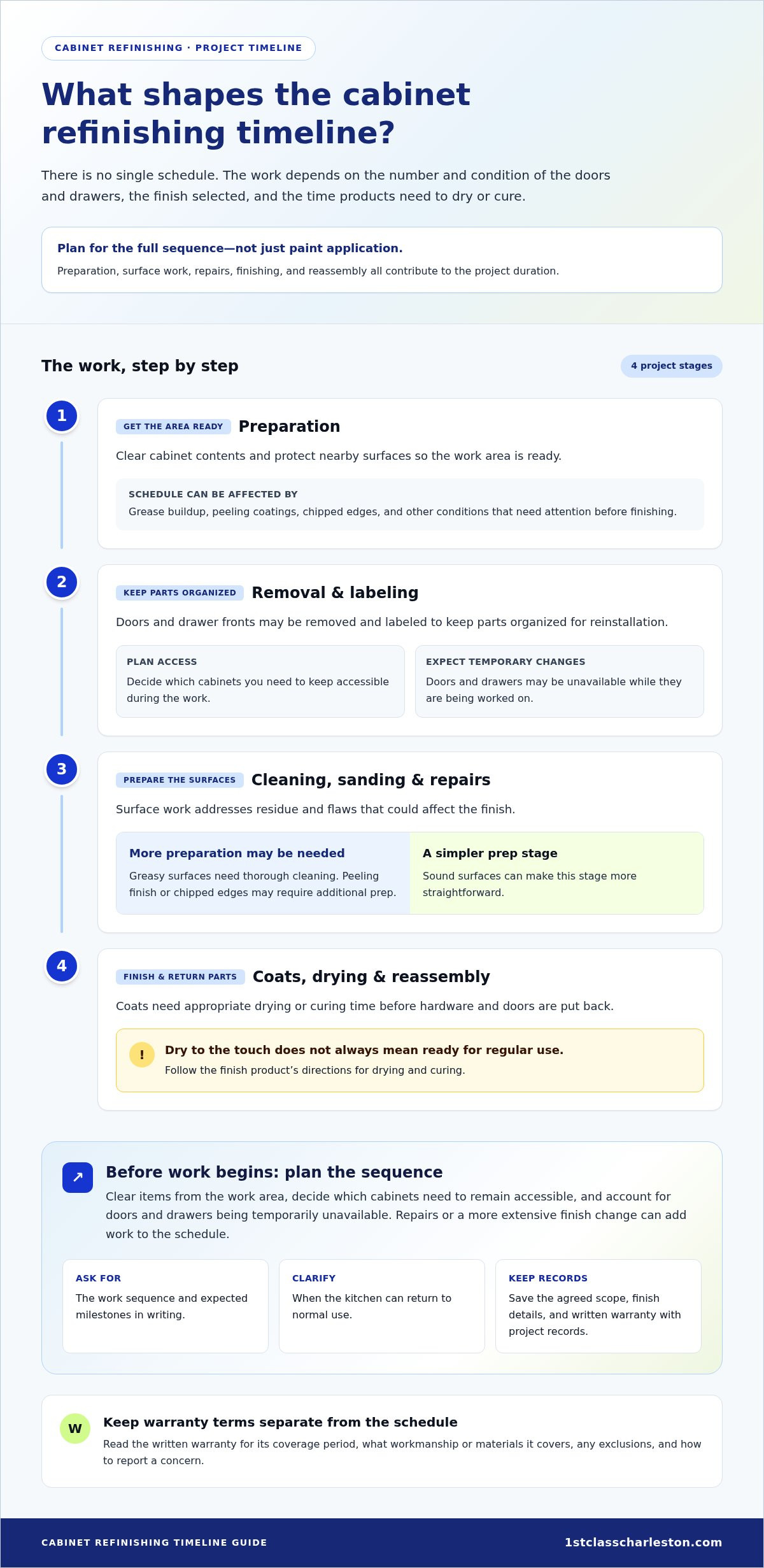
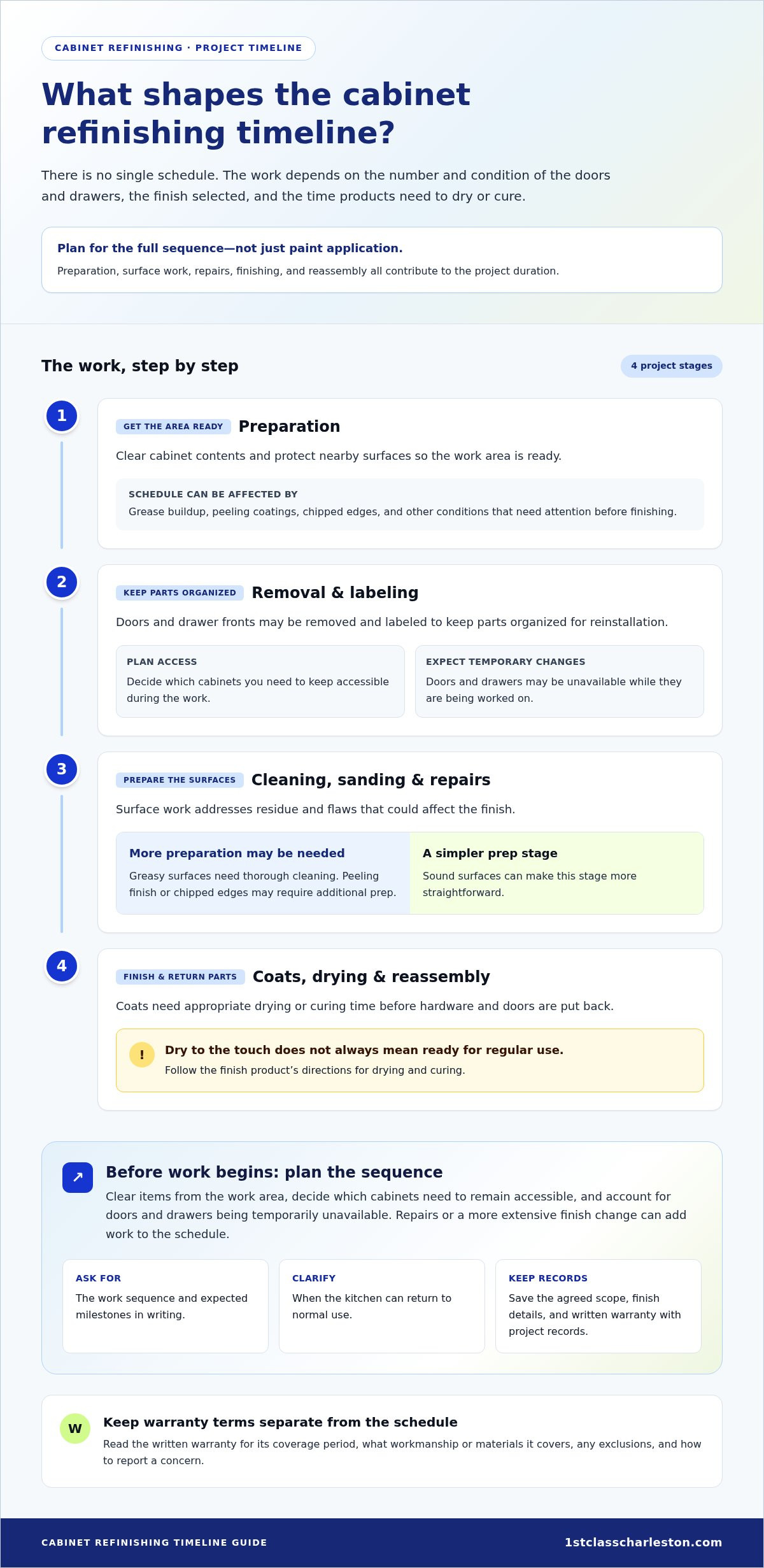
There is no single timeline for cabinet refinishing. The schedule depends on the number of doors and drawers, their condition, the finish selected, and the time products need to dry or cure. A small set of sound doors may need less work than cabinets with peeling coatings, grease buildup, or damaged areas. Allow for preparation and finish time, not just the hours spent applying paint.
The work generally moves through distinct stages, each of which affects the overall duration:
- Preparation: Clear cabinet contents and protect nearby surfaces so the work area is ready.
- Removal and labeling: Doors and drawer fronts may be removed and labeled to keep parts organized for reinstallation.
- Surface work: Cleaning, sanding, and repairs address residue and flaws that could affect the finish.
- Finishing and reassembly: Coats need appropriate drying or curing time before hardware and doors are put back.
Cabinet condition can change the work sequence. Greasy surfaces, for example, need thorough cleaning before refinishing. Peeling finish or chipped edges may require more preparation, while sound surfaces can make this stage more straightforward. Follow the finish product’s directions for drying and curing. A surface may feel dry before it is ready for regular use.
Before work begins, plan around the project stages. Decide which cabinets you need to keep accessible, clear items from the work area, and account for doors and drawers being temporarily unavailable. Repairs or a more extensive finish change can add work to the schedule. Ask for the sequence and expected milestones in writing, including when the kitchen can return to normal use.
Warranty terms are separate from the project schedule. Read the written warranty to understand its coverage period, what workmanship or materials it covers, any exclusions, and how to report a concern. Keep it with your project records, agreed scope, and finish details. These specifics clarify what protection applies once the cabinets are back in everyday use.
Refacing versus cabinet painting
Cabinet painting changes the visible finish while keeping the existing doors, drawer fronts, and cabinet boxes. Refacing changes more of the exterior, often by replacing doors and drawer fronts and applying a new surface to the frames. Choose according to what you want to change: paint can refresh sound, dated cabinets, while refacing gives the fronts a different look.
Start with a close inspection. If the doors fit well and the cabinet structure is sound, painting can update the color without replacing those parts. If you want a different door style or the existing fronts are damaged, refacing addresses those visible components. Neither option fixes a poor layout or damaged cabinet boxes.
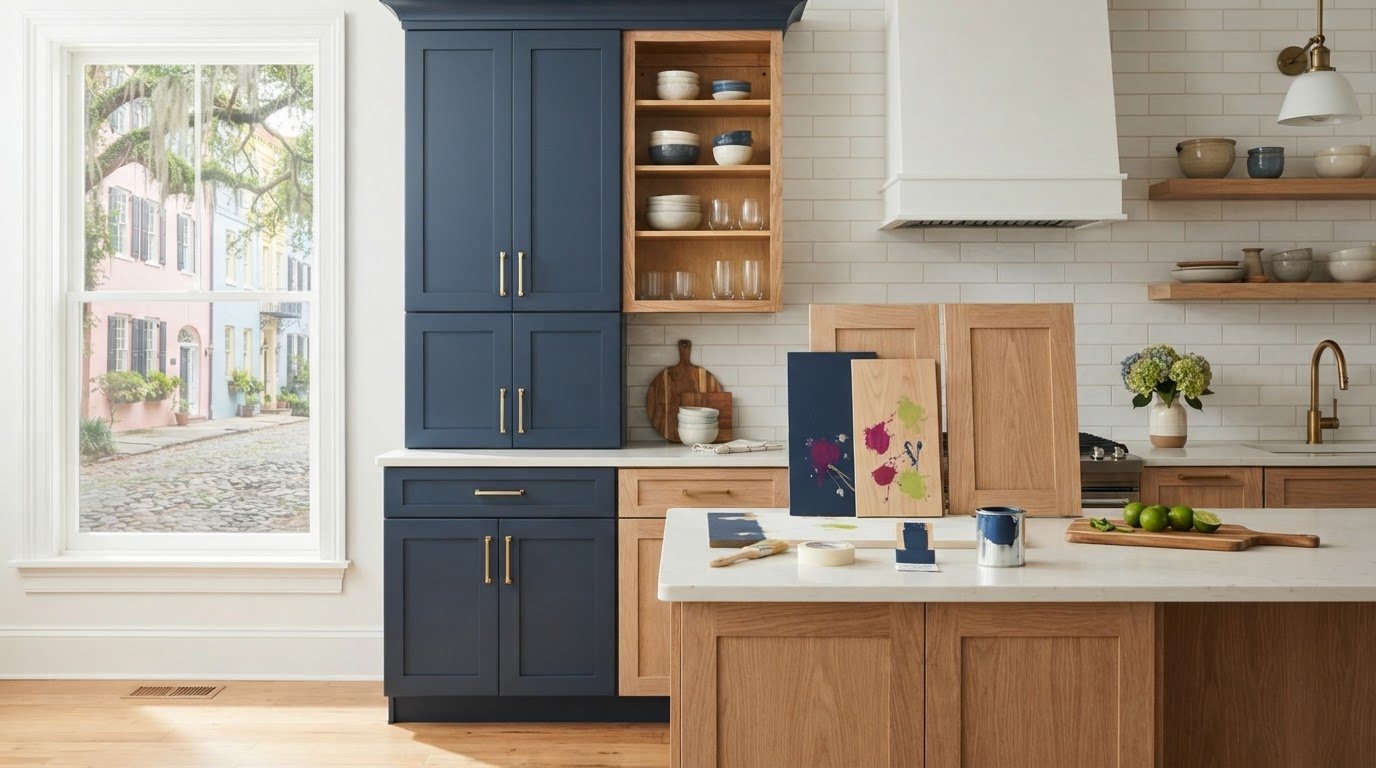
Custom-painted finishes offer another design option. You might choose one color for perimeter cabinets and a contrasting shade for an island, or a muted tone to soften a bright kitchen. The final appearance depends on color, preparation, and consistent application. View finish samples in your kitchen’s lighting before settling on a shade.
When comparing contractor reviews and quotes, match the written scope line by line: preparation, repairs, doors, frames, finish, and reinstallation. Look for reviews that describe completed cabinet projects, communication, and cleanup, rather than relying on star ratings alone.
Permit requirements depend on local rules and project scope. Surface painting differs from work that changes a kitchen’s layout or building systems, so define the planned work before determining which requirements apply.
Average cost per cabinet or linear foot depends on cabinet condition, preparation, repairs, finish choice, and the work included. The price depends on the project and is provided after a quote request.
For kitchen cabinet refinishing near me in Charleston, look for painting contractors whose services include cabinet refinishing, surface preparation, and painted finishes. Compare the stated scope and cabinet-work examples, rather than assuming general interior painting experience covers the same specialty.
For a clearer sense of how a painted finish can transform existing cabinets, explore cabinet finish options as you weigh painting against refacing.
Refacing versus full cabinet replacement
Refacing changes the visible cabinet exterior while keeping the boxes in place. Full replacement removes the existing cabinets and installs new units. This distinction matters: refacing can suit a kitchen with sturdy boxes and a layout that works, while replacement can address damaged boxes, storage needs, or a layout you want to change.
Inspect the cabinet interiors before choosing. Look for loose shelves, water damage, sagging bottoms, and frames that no longer hold doors securely. A new exterior cannot fix problems with the cabinet structure. If the boxes are sound but the finish looks dated, refacing may offer a less extensive transformation. If the cabinets are damaged or the kitchen needs a different arrangement, replacement addresses more than appearance—homeowners planning a full renovation can visit theblackbearbuilds.com to see how general contracting projects are planned and managed.
Replacing cabinet doors can be a middle option. Keep the cabinet boxes and replace the doors, and sometimes the drawer fronts, to change the kitchen’s visible style. Before choosing new fronts, compare their dimensions and hinge placement with the existing cabinets. Mismatches may require additional adjustments, while compatible fronts keep the scope focused. Painting or refinishing exposed surfaces can help create a coordinated look.
- Keep the layout: Consider refacing or new doors when storage and cabinet placement work well.
- Change the appearance: Compare door styles, drawer fronts, and exposed frame finishes as one visual plan.
- Address structural concerns: Inspect box condition and attachment points before committing to an exterior-only update.
- Change the kitchen’s function: Consider replacement when the current arrangement cannot meet your storage or workflow needs.
Before comparing scopes, write down what should stay and what should change. Note whether you want to keep the current layout, replace only worn doors, or alter storage. This clarifies the choices: refacing refreshes existing cabinet exteriors, door replacement changes selected fronts, and full replacement changes the cabinets themselves. Match the project to the cabinets’ condition and the function you need, not appearance alone. For broader projects that involve custom joinery and structural redesign rather than a simple surface update, comprehensive design-build firms like Projeco Contracting LLC | Villa Construction | Apartment Interiors Fit Out demonstrate how full-scale interior transformations are planned and executed.
Basic cabinet renewal
A basic update might mean cleaning cabinet surfaces, replacing worn hardware, or refreshing the existing finish. It suits cabinets with sound doors and boxes when you want a lighter update, not a new layout. New pulls can change the look of plain doors, while a fresh finish makes a broader visual change.
Professional cabinet refinishing typically includes protecting nearby surfaces, cleaning and preparing cabinet components, addressing surface flaws, applying a new finish, and reinstalling removed doors or hardware. The work depends on cabinet condition and the agreed scope. Clarify whether the plan covers doors, drawer fronts, frames, exposed end panels, and hardware so the finished kitchen looks cohesive.
Choose the level of renewal by identifying what looks worn and what still works. If the finish is tired but the cabinet structure is sound, refinishing can refresh the visible surfaces. New pulls or knobs can complement the change if the hardware looks dated. If only one area needs attention, such as a scuffed island, a focused update may leave cabinets that already look good untouched.
- Clean and maintain: Remove everyday residue with a suitable cleaner and soft cloth, following the cabinet finish’s care directions.
- Refresh hardware: Compare the existing hole placement with new knobs or pulls before choosing replacements.
- Renew the finish: Include proper surface preparation and all intended cabinet areas in the written scope.
- Review the result: Inspect door edges, corners, and areas around handles for consistent coverage.
Before starting, empty the cabinets and label hardware or doors if they’ll be removed. Keep a record of the selected finish and care instructions; abrasive cleaners or rough pads can mark a renewed surface. For a more complete change than basic upkeep, explore cabinet refinishing for your kitchen and consider which surfaces belong in the project scope.
1St Class Painting & Restoration: Interior Painting
1st Class Painting & Restoration can help when your cabinets need a renewed finish or your kitchen calls for a broader visual update. Its cabinet refinishing service refreshes existing cabinet surfaces, while kitchen and bathroom painting can bring surrounding painted areas into a more coordinated look. If your plans extend beyond finishes, kitchen remodeling may suit a larger change.
Set the scope around what you want to improve. For sound cabinets with a dated appearance, refinishing can update the surfaces without replacing the whole kitchen. If walls, trim, or other interior spaces also need attention, interior painting can help create a cohesive result. Clear priorities help shape a project around the room you want to enjoy.
Contact 1st Class Painting & Restoration to discuss the right approach for your kitchen.
Make your kitchen’s next chapter your own
The right renewal choice should support how you want to use your kitchen, not just change its appearance. Before moving ahead, decide what matters most: a calmer color, a refreshed finish, or a broader room update. A clear priority gives the project direction and keeps decisions focused.
If you’re weighing whether kitchen cabinet refinishing near me is the right next step, consider how the existing cabinets fit your plans for the room. 1st Class Painting & Restoration offers painting services that can help bring a more cohesive look to your home, including interior, exterior, and kitchen and bathroom painting.
Ready to talk through a kitchen update? Contact 1st Class Painting & Restoration and take the next step toward a space that feels more like yours.
Frequently Asked Questions
How long does kitchen cabinet refinishing take?
The timeline varies with kitchen size, cabinet condition, and project scope. If you’re considering kitchen cabinet refinishing near me in Charleston, ask for a schedule with key milestones, such as work-area preparation, finish application, and when the cabinets can return to regular use. This helps you plan meals, storage, and access to nearby rooms while work is underway.
Is cabinet refinishing or cabinet painting better for my kitchen?
Choose based on the result you want and the condition of the existing surfaces. Painting changes the visible color, while refinishing renews existing cabinet surfaces. People may use these terms differently, so compare the work included instead of relying on the label. For example, check whether the plan addresses worn edges, exposed frames, and the cabinet doors you want to keep.
Can my existing kitchen cabinets be refinished, or do they need replacing?
Cabinets may be suitable for refinishing when their boxes, doors, and frames remain fit for continued use. For kitchen cabinet refinishing near me in Charleston, check for swelling, loose joints, broken hinges, or areas that no longer hold hardware securely. Surface wear alone doesn’t necessarily mean the cabinets need replacement. If structural damage or a layout problem affects how the kitchen works, a surface renewal won’t fix the underlying issue.
What finishes and colors are available for kitchen cabinet refinishing?
Finish and color choices depend on the desired appearance and the products selected for the project. A soft neutral can create a quieter backdrop, while a deeper shade can make an island stand out. Ask to review samples in the kitchen, because daylight and artificial lighting can change how a color appears. 1st Class Painting & Restoration offers eco-friendly paint options and finishes designed for durability.
What should I do to prepare my kitchen for cabinet refinishing?
Clear food, dishes, and small appliances from the work area, then plan where to keep items you’ll need during the project. Keep counters available for preparation only if they’re outside the protected work zone. Set aside an alternate spot for everyday essentials, such as mugs or cooking utensils. Keep children and pets away from the active work area, and follow the project’s access instructions.
What are the risks, fumes, and warranty terms for cabinet refinishing?
Refinishing involves surface preparation and coating products, so follow product-specific instructions for ventilation, handling, and when treated surfaces can be used. Keep food and personal items away from the work area. Warranty coverage depends on the written project terms; review the coverage, exclusions, duration, and process for reporting an issue. Keep the warranty with the agreed scope and finish details.