Moving Furniture for Painters: A Room-by-Room Prep Guide
Learn smart tips for moving furniture for painters with this prep guide. Protect your belongings, clear space efficiently, and get your home paint-ready.
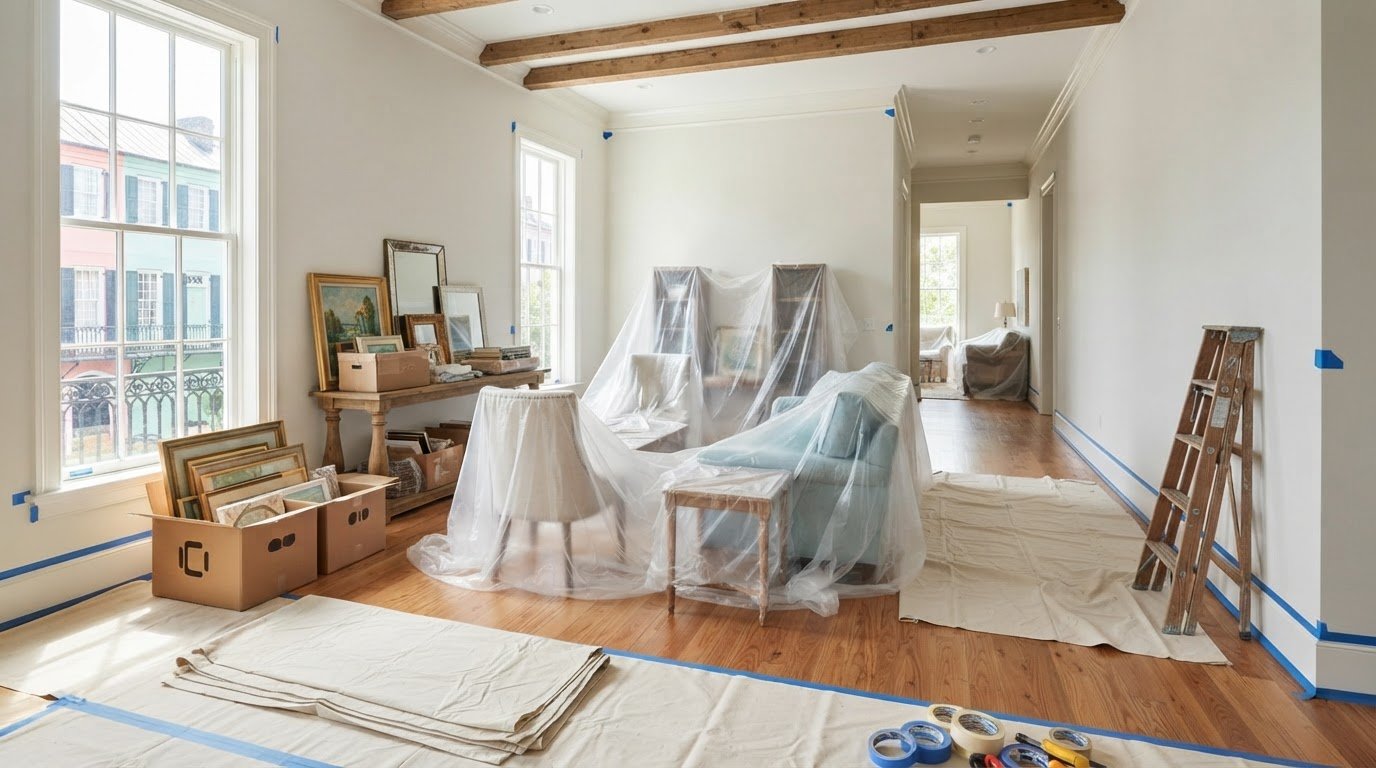
What if the best way to help painters get started isn’t pushing every piece of furniture into the middle of the room? Moving furniture for painters takes a little more planning: some items need to leave, others need careful protection, and fragile belongings are safest out of the way. It’s understandable to feel unsure where everything should go, especially when storage space is limited and you want to avoid scuffs, spills, or breakage.
A clear plan can make preparation manageable and help an interior painting project begin with fewer delays. This room-by-room guide explains what to move, what can stay with protection, and how to safeguard floors, furniture, and personal items before work begins. You’ll also find practical ways to use nearby space when large pieces can’t leave the home. From bedrooms and living areas to kitchens and bathrooms, thoughtful preparation helps create the access painters need while keeping your belongings in mind.
Key Takeaways
- Make a room paint-ready by clearing safe access to the walls and other surfaces included in the project.
- For moving furniture for painters, sort belongings first: remove fragile, valuable, and frequently used items before deciding what to do with larger pieces.
- Compare clearing the room, grouping furniture, or protecting selected pieces in place to find an approach that fits your space and access needs.
- Prepare one room at a time with a simple checklist, from clearing small items to reviewing pathways and protecting floors and furniture.
- Plan around the rooms being painted, and keep medications, valuables, and daily essentials accessible elsewhere.
Why Moving Furniture for Painters Makes a Difference
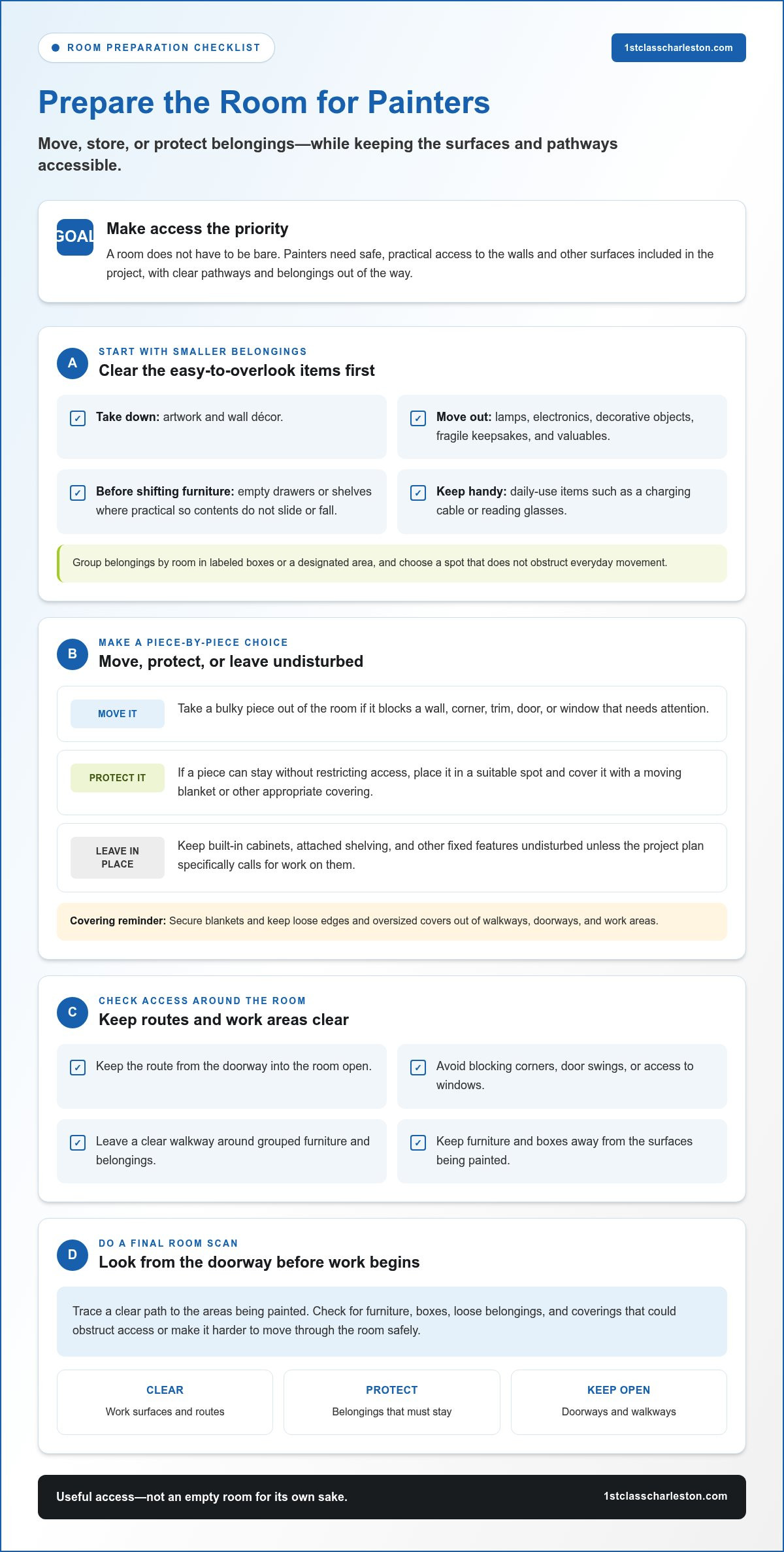
A room doesn’t have to be bare to be ready for painting. It does need to give the painting team safe, practical access to the surfaces included in the project. Thoughtful furniture placement keeps walls and trim reachable, pathways open, and household belongings away from areas where they could be bumped or exposed.
A paint-ready room is a space where painters can safely reach the surfaces being painted without furniture, belongings, or blocked walkways getting in the way.
That’s the goal of moving furniture for painters: create useful access, not an empty room for its own sake. Freestanding chairs, lamps, side tables, and décor can usually be moved or gathered elsewhere. Built-in cabinets, attached shelving, and other fixed features are different. Leave them undisturbed unless the project plan specifically calls for work on them.
Which parts of the room need clear access?
Think beyond the middle of each wall. Depending on the work, painters may need access to corners, trim, doors, and windows, as well as the wall area behind a sofa or cabinet. A general overview of house painting preparation also highlights the role preparation plays in the work. In your room, the practical test is whether people and equipment can reach the surfaces without squeezing past obstacles.
- Keep the route from the doorway into the room open.
- Avoid placing furniture where it blocks corners, door swings, or access to windows.
- Leave a clear walkway around grouped items so people can move through the room safely.
Access around the room matters more than achieving a perfectly empty space. If a large piece must stay, position it so more of the room remains reachable and pathways stay clear.
What can go wrong when preparation is rushed?
Last-minute shifting can leave a chair or stack of boxes in the area that needs attention. Small belongings may be left exposed, and crowded walkways can make it harder to move around carefully. A rushed lift can also strain the person handling a heavy piece or lead to a dropped or fragile item being damaged. Planning reduces avoidable obstacles, though it can’t remove every project risk.
- Blocked work areas may need to be cleared before painting can proceed in that spot.
- Unprotected belongings can be vulnerable to bumps, dust, or accidental contact.
- Hurrying to move heavy or awkward furniture can put people and nearby household items at risk.
Look at the room from the doorway and trace a clear path to the areas being painted. That simple check can reveal furniture, boxes, or loose items that need attention before work begins. The result is a more organized space and a smoother start for your Charleston interior painting project, without requiring every possession to leave the room.
Decide What to Move, Store, or Protect Before Painting
Start with the belongings that are easy to overlook, not the heaviest furniture. Small objects can be fragile, valuable, or important to your daily routine, so setting them aside first gives you time to choose a safe place for each. Then decide whether larger pieces can leave the room, go into temporary storage nearby, or stay covered without blocking access.
Before moving larger furniture, remove artwork, lamps, electronics, décor, valuables, and loose items from the room.
Which belongings should leave the room first?
Take down artwork and move lamps, electronics, and decorative objects to a secure spot outside the work area. Empty drawers or shelves before shifting a piece, where practical, so contents don’t slide or fall. Group items by room in labeled boxes or a designated area. Keeping belongings together makes it easier to find essentials and return things when painting is complete.
- Move elsewhere: fragile keepsakes, valuables, small décor, and electronics.
- Set aside nearby: daily-use items you’ll want easy access to, such as a charging cable or reading glasses.
- Protect temporarily: belongings that can’t leave the room but can be safely grouped away from active work areas.
Keep exits and walking routes open as you sort. A pile of boxes just outside the doorway can create a new obstacle, so choose a storage spot that doesn’t interfere with everyday movement through the home.
How should larger furniture be protected?
Moving a bulky piece out of the room may be more practical if it blocks a wall, corner, trim, door, or window that needs attention. If it can remain without restricting access, move it to a suitable spot and cover it with a moving blanket or other appropriate covering. The covering protects the piece, but it doesn’t replace the space needed to work around it safely.
Keep blankets and coverings secure and clear of walkways. Loose edges can become tripping hazards, and an oversized cover can spill into a doorway or work area. If you’re painting a piece of furniture, preparation is different; furniture painting best practices include steps such as cleaning and removing hardware. For room painting, focus on protecting belongings from accidental contact and preserving access to the surfaces.
For moving furniture for painters, make the decision piece by piece: remove it if it prevents access, protect it in place if it can stay safely out of the way, and avoid stacking belongings where they obstruct a route. A well-sorted room is easier to manage as part of a Charleston interior painting project.
Compare Three Ways to Handle Furniture During Painting
There isn’t one right arrangement for every room. Clearing everything, grouping pieces together, or leaving selected furniture covered each involves a different balance of space, effort, access, and protection. The best fit depends on the room’s layout, the size and number of its furnishings, and where you can temporarily place items. Consider those trade-offs before shifting bulky pieces, especially if a narrow doorway or crowded hallway complicates the route.
| Approach | Space needed | Effort | Access | Protection considerations |
|---|---|---|---|---|
| Clear the room | More space outside the room | Can be higher if furniture is bulky | Opens up more of the room | Items moved elsewhere still need a safe, suitable place |
| Consolidate furniture | Some open floor space in the room | Requires planning and careful repositioning | Depends on whether grouped pieces leave surfaces reachable | Cover grouped items, and keep coverings out of walkways |
| Protect selected pieces in place | Little or no extra storage space | Less moving, but coverings must be arranged carefully | May be limited around furniture that remains near work areas | Coverings reduce exposure but don’t eliminate the risk of damage |
When does clearing the room make sense?
Clearing the room can make sense when there are only a few manageable pieces and you have a suitable place to put them temporarily. With furniture out of the way, walls and trim are more straightforward to reach, and there’s less to work around. Plan first for heavy or awkward items: check the route, avoid rushed lifting, and arrange help if needed to move them safely.
When can furniture be consolidated or protected in place?
Grouping pieces can be useful when there’s no convenient storage space elsewhere. Move them together only if the arrangement still allows access to the surfaces included in the project. Cover selected pieces that can remain safely out of the way, but keep material clear of doorways and walking routes. This is a practical compromise, not a guarantee against every scuff, spill, or accidental contact.
Before choosing, picture the room in its planned arrangement and consider the actual work area. A wide living room with spare space may suit consolidation, while a compact bedroom with a wall-to-wall painting scope may call for moving more items out. For moving furniture for painters, prioritize usable access and safe movement over a rule that every piece must go or stay. The approach that fits both the room and your available space makes preparation more manageable.
Follow These Steps to Prepare Furniture Room by Room
A simple sequence keeps preparation from turning into a house-wide shuffle. Work on one room at a time, and finish its checklist before moving on. That makes it easier to see what’s ready, keep belongings organized, and avoid spreading boxes or furniture into hallways you still need to use.
A simple preparation sequence for any room
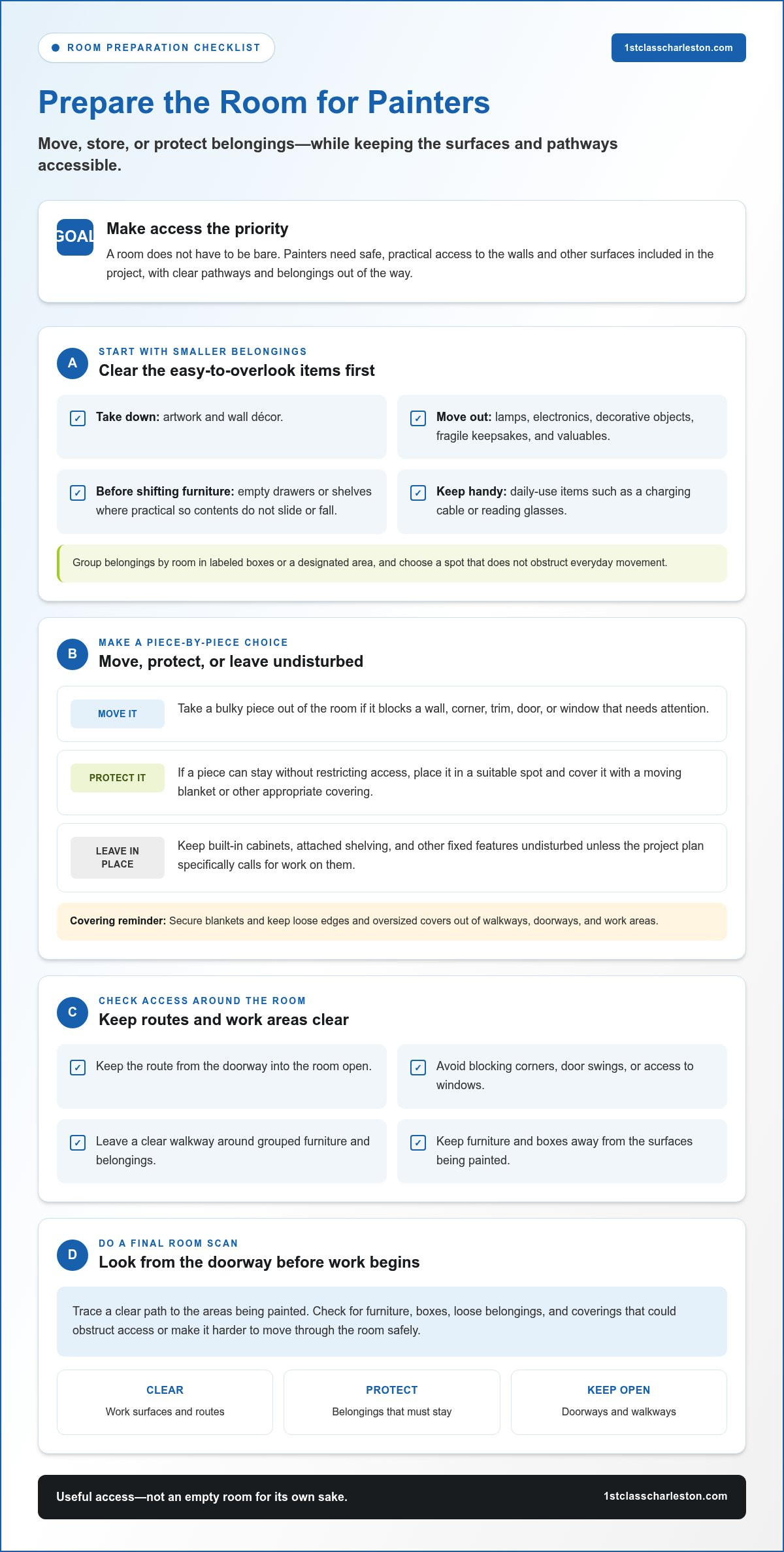
Start by identifying the walls, trim, doors, or other areas included in the painting project. Then choose a temporary spot for belongings that won’t stay in the room. Follow these steps in order:
- Sort belongings. Set aside items to remove, store elsewhere, or protect in place.
- Clear small and fragile items. Take down artwork and remove lamps, electronics, décor, and loose objects before shifting larger pieces. Keep valuables in a separate, secure location.
- Plan for large furniture. Decide which pieces can leave the room and which can be grouped or covered without blocking access.
- Protect what remains. Use suitable coverings on furniture that stays, and arrange them so they don’t trail into walkways.
- Review the room. Walk through from the doorway and check that paths are open, belongings are protected, and the surfaces being painted are reachable.
Once a room passes that final check, move to the next one. This steady rhythm is easier to track than moving items back and forth throughout the home, and it keeps prepared areas distinct from rooms that still need attention.
Plan carefully for heavy or delicate pieces
Take a moment before lifting. Check that a large piece can pass through doorways and along the route to its temporary location, accounting for tight turns and nearby items. Don’t try to lift heavy furniture alone if doing so feels unsafe. Arrange appropriate help, or leave the piece in a position that preserves access rather than risking an awkward move.
Keep fragile or valuable belongings apart from furniture being shifted. A small, secure spot away from the route makes it less likely that a keepsake or electronic item will be knocked over during preparation. If a piece needs to remain in the room, make sure its covering is secure and doesn’t create an obstacle underfoot.
Before calling the room ready, do one last walkthrough. Look for a blocked doorway, a narrow passage, an uncovered item, or furniture still in front of a surface that needs painting. Moving furniture for painters is easier to manage when each room has a clear plan, a safe route, and a quick final review.
Preparing thoughtfully can help your Charleston interior painting project begin in a more organized space. Explore professional interior painting in Charleston with 1st Class Painting & Restoration.
Plan Furniture Preparation Around Your Charleston Painting Project
Preparation works best when it follows the project’s scope. A room receiving a full refresh may need a different furniture plan than one where only selected surfaces are being painted. Before you start moving items, make a simple room-by-room list of the areas included and note what must be cleared, what can stay accessible, and where displaced belongings can go. This keeps the household plan practical instead of turning every room into a storage area.
Make a clear plan before painting begins
Match each room’s preparation to the surfaces involved. If walls are included, consider how furnishings near them affect access; if trim, doors, or windows are part of the work, account for those areas too. Then decide where furniture and boxes can go without taking over a hallway or another room you rely on each day. A realistic plan can be adjusted to suit your home’s available space and routine.
- List the rooms and surfaces: Note which rooms are part of the project and the areas that need to remain reachable.
- Separate essentials: Set aside medications, valuables, chargers, keys, and other daily-use items somewhere secure and easy to access.
- Choose temporary locations: Place relocated belongings where they won’t block household routes or make another room difficult to use.
- Keep the plan manageable: Prepare in stages that fit your schedule and available space, rather than moving everything throughout the home at once.
Coordination matters especially in rooms used every day. If a bathroom is being painted, for example, keep necessary personal items accessible in another convenient spot. For a living area, preserve a clear route between the rooms your household still needs to use.
What to do after the room is ready
Do one final review from the perspective of the people living in the home. Check that valuables and medications are safely stored outside the work area, essentials can be reached, and household members can move through the home without navigating furniture obstacles. Look at the route between rooms as well as the prepared space itself. Moving furniture for painters should support both access to the planned surfaces and the household’s everyday needs.
Clear preparation helps set the stage for a more organized painting project. 1st Class Painting & Restoration is a locally owned painting and restoration company serving the Charleston area, providing professional interior painting for residential and commercial properties. If you’re considering an interior refresh, explore 1st Class Painting & Restoration and its Charleston painting services.
Take the Next Step Toward a Refreshed Space
A painting project is also a chance to rethink how you want your home to feel. As you decide what comes next, consider which room would make the biggest difference to your everyday routine and what kind of atmosphere you hope to create there. That focus can help turn preparation into the first step toward a space that feels more like yours.
With your priorities in mind, you can move from planning to exploring the right interior painting option for your Charleston home. 1st Class Painting & Restoration is locally owned and operated in the Charleston area, providing professional interior painting for residential and commercial properties.
Ready to picture what a fresh finish could bring to your space? Explore professional interior painting with 1st Class Painting & Restoration. Thoughtful moving furniture for painters preparation has helped set the stage; now you can look ahead to a room renewed with care and confidence.
Frequently Asked Questions
Should I move all furniture out of a room before painters arrive?
No, you don’t always need to empty the entire room. Base the decision on which surfaces are included and whether furniture would obstruct them. For example, if only one wall is being painted, you may be able to move furnishings away from that side while keeping usable space elsewhere. Consider where items can go without crowding another room, and avoid leaving possessions in a spot that must also be accessed during the project.
Can furniture stay in a room while it is being painted?
Yes, selected furniture can stay if it’s positioned so the surfaces being painted remain reachable and the room’s routes are usable. A dining table might be grouped away from the walls, while a large bookcase could prevent access to a section behind it. Covering furniture can help protect it, but doesn’t make an obstructed area accessible or eliminate the chance of accidental contact.
How far should furniture be moved from the walls for painting?
There isn’t one fixed distance that works for every room. Move each piece far enough that the painting area is reachable and people can work around it without squeezing through a tight gap. The amount depends on the furniture’s depth, the room layout, and which surfaces are included. Check corners and wall sections behind furniture rather than judging clearance only from the center of the room.
Should I empty drawers and cabinets before moving furniture?
Empty drawers and removable shelves before moving a dresser or cabinet whenever practical. Loose contents can shift during movement, making the piece harder to handle and risking damage to items inside. Built-in cabinets generally aren’t treated like freestanding furniture; don’t unload or move fixed cabinetry unless it’s part of the planned work. Keep removed contents together, and set aside anything you’ll need during the painting project.
What should I do with wall art, curtains, and electronics before painting?
Take wall art down and place it somewhere stable, away from the movement route. Remove curtains if the nearby walls, trim, or window areas are included, and keep rods and hardware together so they’re easier to reinstall. Unplug electronics before relocating them, and gather cords with each device rather than leaving them stretched across a walkway. Store delicate items away from the room being worked on.
How can I protect floors while moving furniture for painters?
Clear loose objects from the route first, then use a clean, suitable floor covering where furniture will travel or rest. Keep the covering flat and secure so it doesn’t bunch up beneath feet or furniture. Lift or move pieces carefully instead of dragging them across the floor, which can leave marks or scratches. Check the route for thresholds, rugs, and tight turns before shifting bulky items.
What should I do if a piece of furniture is too heavy to move safely?
Don’t try to lift or force it by yourself if the weight or shape feels unsafe. First check whether the piece can remain in place without blocking the surfaces included in the painting work. If it needs to move, arrange capable help and clear a route before attempting it. Keep fragile objects nearby out of the way, and don’t dismantle a piece unless you can do so safely.