New Construction Painting in Charleston, SC: Quotes and Costs
New construction painting Charleston SC: get a clear quote and learn what affects costs, preparation, finishes, and interior or exterior project scope.
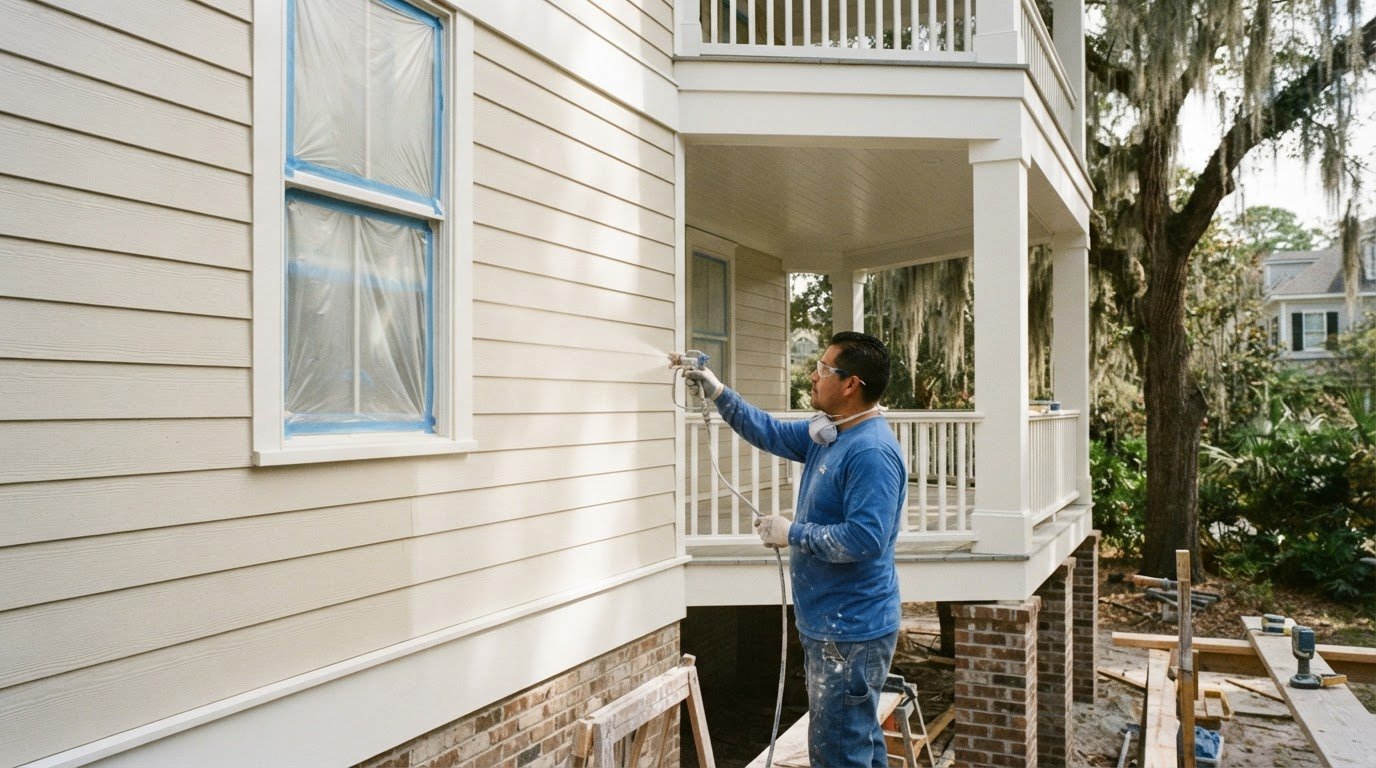
A new build can look finished before its surfaces are ready for paint. For new construction painting in Charleston, SC, a clear written quote should define the areas to be painted, the preparation involved, and the work included so you can plan the project and budget with confidence.
It’s natural to want a dependable cost early, but the price depends on the project’s scope, surface materials, preparation needs, and selected finishes. Pressure washing and careful surface preparation can also shape the work, especially on exterior surfaces, so they should be addressed in the project plan rather than treated as an afterthought. The price is provided after a quote request.
This guide explains what painting can cover across Charleston and the Lowcountry, what to look for in an estimate, and which details affect project planning. You’ll also see how pressure washing and surface preparation fit into a new build, from construction to a polished finish.
Key Takeaways
- Match the painting scope to your new home’s surfaces and spaces, from interior rooms to exterior siding and trim.
- A detailed written quote helps clarify which areas, preparation steps, and finishes are included before the project begins.
- Budgeting depends on the home’s size, surface materials, project scope, and preparation needs, so clear planning matters.
- Pressure washing and surface preparation help create a sound starting point for paint and should be considered in the project plan.
Painting services across Charleston neighborhoods
New construction painting in Charleston, SC, starts with matching the work to each home’s surfaces and rooms. Interior Painting covers walls, ceilings, doors, and trim, while Exterior Painting may include siding, stucco, brick, and exterior trim. A new home in downtown Charleston can have different surface needs from one in a newer subdivision. Listing each surface and area helps define a practical scope and the finish you want.
Charleston and the Lowcountry include distinct communities, but a contractor’s service area can vary. An address in Mount Pleasant, Summerville, or downtown Charleston helps establish whether a project fits a contractor’s coverage. Include the property location, home type, and requested work when discussing the scope. That step clarifies whether the estimate covers the full property or selected areas, such as interior rooms or exterior siding. It also helps distinguish a Charleston-area service boundary from a broader Lowcountry claim.
Surface type matters as much as location. Unpainted brick and stucco in Charleston typically require two to three coats of product. A project plan should identify which masonry surfaces need coating and whether trim or other materials are included. For example, a stucco exterior and wood trim call for separate scope details, even when both belong to one home. Naming each surface makes the proposed work easier to understand and compare.
Builder-grade painting usually follows a standardized finish and scope set during construction. An independent painting project can define work around the home’s surfaces, preparation, chosen colors, and areas needing attention. A builder’s package follows established specifications, while a separate project can address requests such as additional rooms or more detailed exterior work. Clear written scope details make the distinction concrete.
Consultations, written quotes, and project process
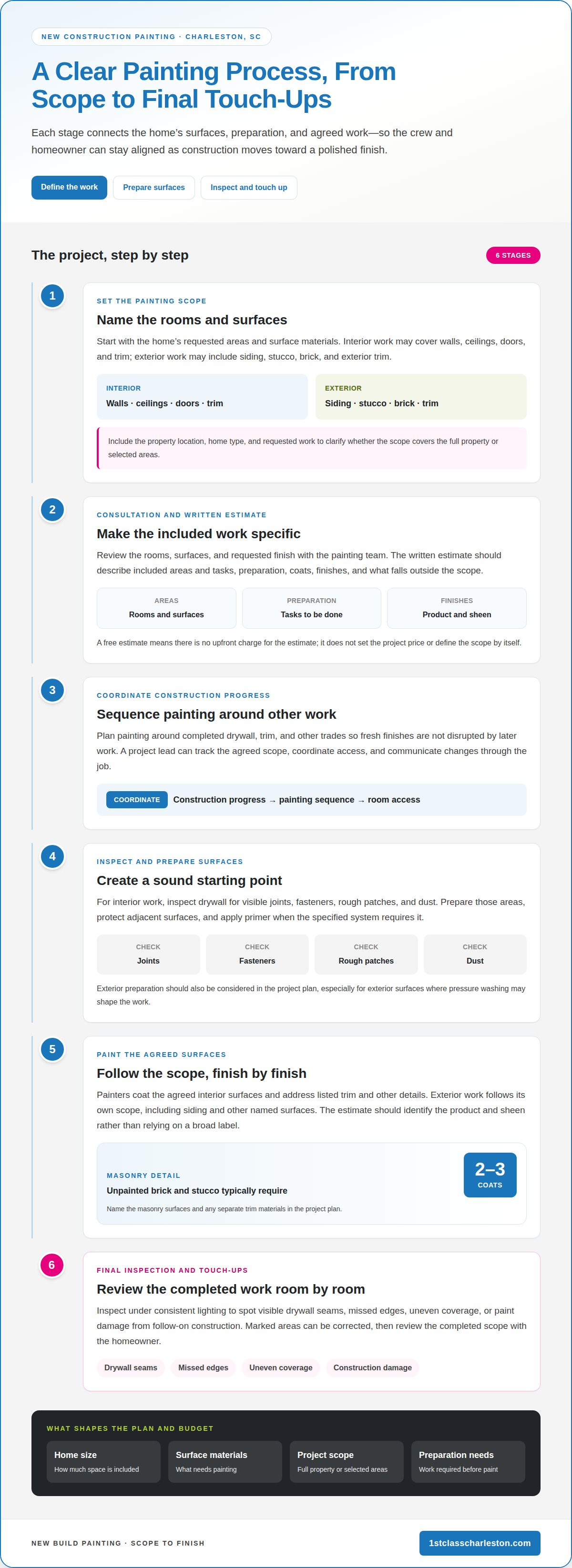
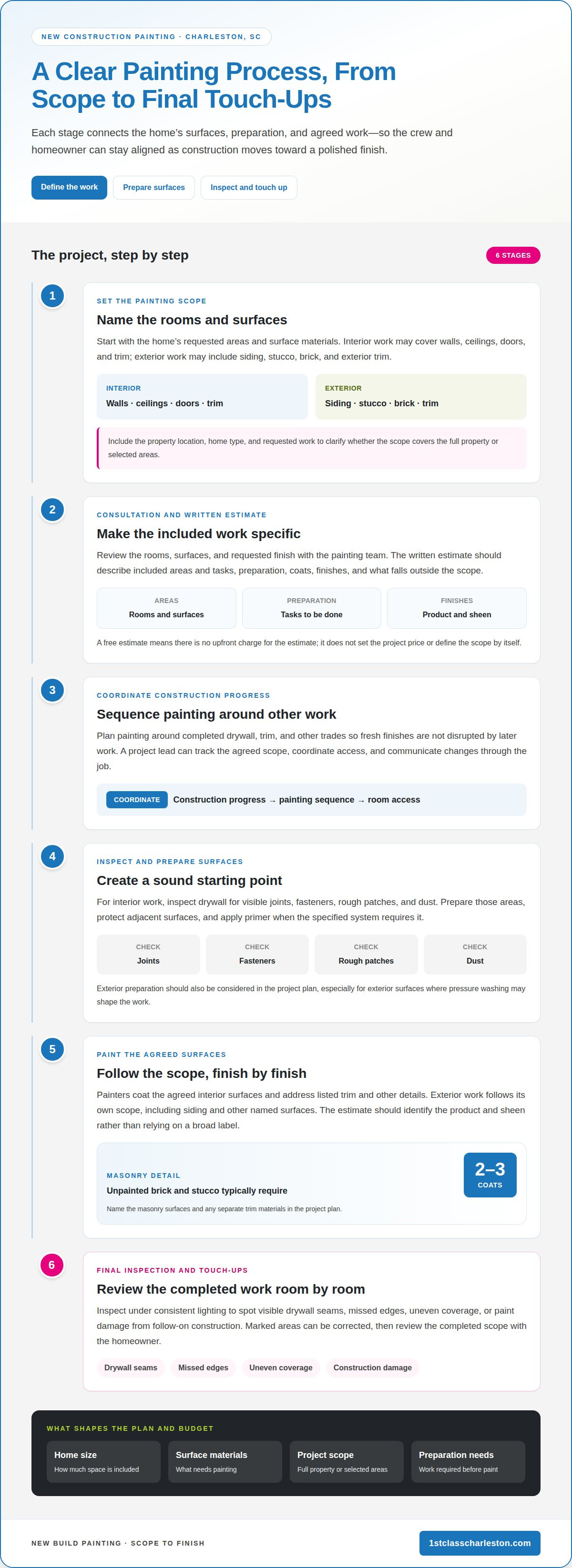
A clear scope connects the consultation, written estimate, work sequence, and final inspection. Each stage helps keep Interior Painting and exterior details aligned.
Consultations and Written Quotes
During a consultation, the painting team reviews the rooms, surfaces, and requested finish. A written estimate should identify the included areas, such as bedroom walls, ceilings, doors, or siding, and describe the preparation and painting tasks. It should also state what falls outside the scope. Specific details help prevent confusion if construction changes affect the surfaces or spaces being painted.
Project management starts with coordinating painting around the home’s construction progress. The sequence should account for completed drywall, trim, and other trades, so fresh finishes aren’t disrupted by later work. A project lead can track the agreed scope and communicate changes through the job. That keeps decisions visible and helps the crew focus on the correct rooms and surfaces.
Drywall Preparation Through Final Touch-Ups
The process begins with inspecting drywall for visible joints, fasteners, rough patches, and dust. The crew prepares those areas, protects adjacent surfaces, and applies primer when the specified system requires it. Painters then coat the agreed interior surfaces and address listed trim and other details. Exterior work follows its own scope, including siding and other named surfaces.
Common quality issues include visible drywall seams, missed edges, uneven coverage, and paint damage from follow-on construction. A room-by-room inspection under consistent lighting can reveal defects before final touch-ups. Painters can correct marked areas and review the completed scope with the homeowner. A clear walkthrough helps capture concerns while the team is still focused on the project.
Training and supervision matter because preparation, neat application, and careful touch-ups require consistent execution. A project manager can coordinate access, sequence rooms, and record requested changes, while painters follow the agreed scope. To discuss the details of your build, request a painting consultation.
Painting estimates and budgeting
A useful painting estimate translates the home’s surfaces, chosen finishes, and preparation needs into a clear project scope. For planning, focus on what changes the amount of work rather than unsupported price comparisons.
Color Selection and Estimates
Color choices can affect the scope when different rooms, trim, or exterior surfaces need separate finishes. For example, choosing one color for interior walls and another for doors gives the estimate distinct areas to describe. Ask for the written scope to name surfaces and finishes, so a later color decision doesn’t leave the included work unclear.
No single paint brand or finish is best for every Charleston home. Choose products suited to the intended interior or exterior surface, and have the estimate name the agreed product and sheen rather than relying on a broad label such as “premium.”
Free Painting Estimates
A free estimate means there is no upfront charge for the estimate; it doesn’t define the project price or scope. A useful written estimate identifies the surfaces, preparation, coats, and finishes included. For example, an Exterior Painting estimate should distinguish siding from trim rather than describing the whole job only as “exterior.”
Budget decisions depend on measurable project details: the home’s size, surface materials, areas included, and preparation required. A locally owned contractor may know Charleston-area building styles, while “licensed” is a separate credential claim, not a description of the quote’s detail. Compare scopes, not labels, and keep requested changes documented.
For a smooth planning process, group decisions before work begins: define rooms and exterior areas, settle color choices, and record the specified finishes. If construction changes add a wall or alter siding, the revised scope should show how that affects the work. This makes budgeting more transparent without treating an estimate as a fixed price for a different project.
Pressure washing and surface preparation
Preparation gives paint a cleaner, more even surface to grip. On a new home, the right approach depends on the material and whether construction dust, residue, or other debris remains.
Pressure washing is mainly an exterior cleaning step, not a substitute for interior preparation. Before washing, the painting team assesses siding and nearby surfaces and chooses a method suited to the material. Pressure and spray direction matter because excessive force can damage some surfaces or drive water into openings. The goal is to remove loose dirt without harming the surface.
After washing, surfaces need time to dry before coating. The crew can then inspect for loose material, rough patches, exposed fasteners, or construction marks. Siding with dust may need cleaning, while a small damaged area may need repair before painting. Each surface calls for preparation suited to its condition, rather than one process applied everywhere.
Interior preparation follows a different sequence. Painters remove drywall dust, smooth rough joints and patches, and protect floors, windows, and hardware. A close inspection under good lighting can reveal ridges or pinholes that might show through a smooth finish. Addressing these defects before painting helps create a consistent appearance across adjoining walls.
Priming follows surface preparation when the chosen paint system or substrate requires it. Primer helps create an appropriate base for the finish coat, but it doesn’t replace cleaning or repairs. The project scope should identify which surfaces need primer and where repairs or extra preparation are included. That makes the work plan clearer for drywall, trim, and exterior siding.
For a pleasant, well-organized project, the preparation plan should name the surfaces, cleaning method, repairs, and priming steps. Discuss your painting project and its surface preparation needs.
1St Class Painting & Restoration
1st Class Painting & Restoration helps Charleston-area homeowners bring new construction painting plans into focus, from defining the project scope to addressing interior and exterior surfaces. Turn to the team when you’re planning finishes for a newly built home or need painting work coordinated across several spaces.
Its painting services include Interior Painting, Exterior Painting, Kitchen and Bathroom Painting, and Cabinet Refinishing. Whether you’re considering room colors, exterior surfaces, or refinishing cabinets as part of a broader update, a clear discussion of your goals can help shape the next steps. The right scope depends on the areas and finishes you want painted.
For guidance on your painting project, contact 1st Class Painting & Restoration.
Make the New Home Feel Like Yours
A new home becomes personal through choices that make each room feel considered and welcoming. As construction moves toward completion, think about how you want the spaces to feel in everyday life. A calm bedroom, a bright kitchen, or an exterior color that suits the home’s character can help guide your painting decisions.
For new construction painting in Charleston, SC, the next step is turning those preferences into a clear conversation about your project. 1st Class Painting & Restoration offers Interior Painting, Exterior Painting, and Kitchen and Bathroom Painting. Share which areas matter most and what atmosphere you hope to create, then discuss a scope that reflects those priorities.
There’s no need to have every color or detail settled before beginning that conversation. A thoughtful starting point can make the choices ahead feel more manageable and help your finished home reflect your style. Contact 1st Class Painting & Restoration to talk about your project and take the next step toward a home that feels like yours.
Frequently Asked Questions
What does new construction painting include in Charleston, SC?
New construction painting in Charleston, SC, generally covers finishing the agreed interior and exterior surfaces of a newly built home. Depending on the project, the scope may include walls, ceilings, trim, doors, and siding. Homeowners can define whether the work covers every room or selected areas. A written scope helps distinguish painting from other finishing work in the home.
How much does new construction painting cost per square foot in Charleston, SC?
There isn’t one per-square-foot figure that applies to every Charleston new build. The price depends on the case and is provided after a quote request. 1st Class Painting & Restoration offers free, customized estimates. Home size, surface materials, included rooms, exterior areas, and finish choices all help shape a project estimate, so a tailored quote is more useful than a broad rate.
What factors affect the price of painting a new construction home in Charleston?
The home’s size and the number of surfaces included are key factors in defining the work. A project with multiple rooms, high ceilings, detailed trim, and exterior siding involves different preparation and painting from a smaller interior-only scope. Surface condition and requested finishes also matter. For example, separate colors for trim and walls add detail to the project scope.
Which Charleston-area painting contractors specialize in new construction?
1st Class Painting & Restoration provides professional painting services in the Charleston area, including Interior Painting and Exterior Painting. Its offerings also include Kitchen and Bathroom Painting. For a new build, identify whether the project needs whole-home painting or selected spaces, then discuss the scope and finishes. This keeps the conversation focused on the painting work your home needs.
What is the typical timeline for painting a new construction home?
Project duration varies by size, and 1st Class Painting & Restoration provides a clear timeline upfront. The schedule depends on the areas included and the home’s construction progress. For example, painting plans need to account for when rooms and exterior surfaces are ready for the work. If the build schedule changes, the project sequence may need adjustment to match.
What warranties and insurance should a Charleston new construction painting contractor provide?
1st Class Painting & Restoration is licensed and insured. A warranty is separate from insurance, so review any written warranty terms for covered work, conditions, exclusions, and how to raise a concern. Keep the project scope and related documents together. Clear paperwork helps you understand the contractor’s stated coverage and responsibilities before painting begins on your Charleston home.