Questions to Ask a Painting Contractor About Timing and Quality
Use these questions to ask a painting contractor about warranties, licensing, crew size, timelines, prep, and paint quality before your project begins.
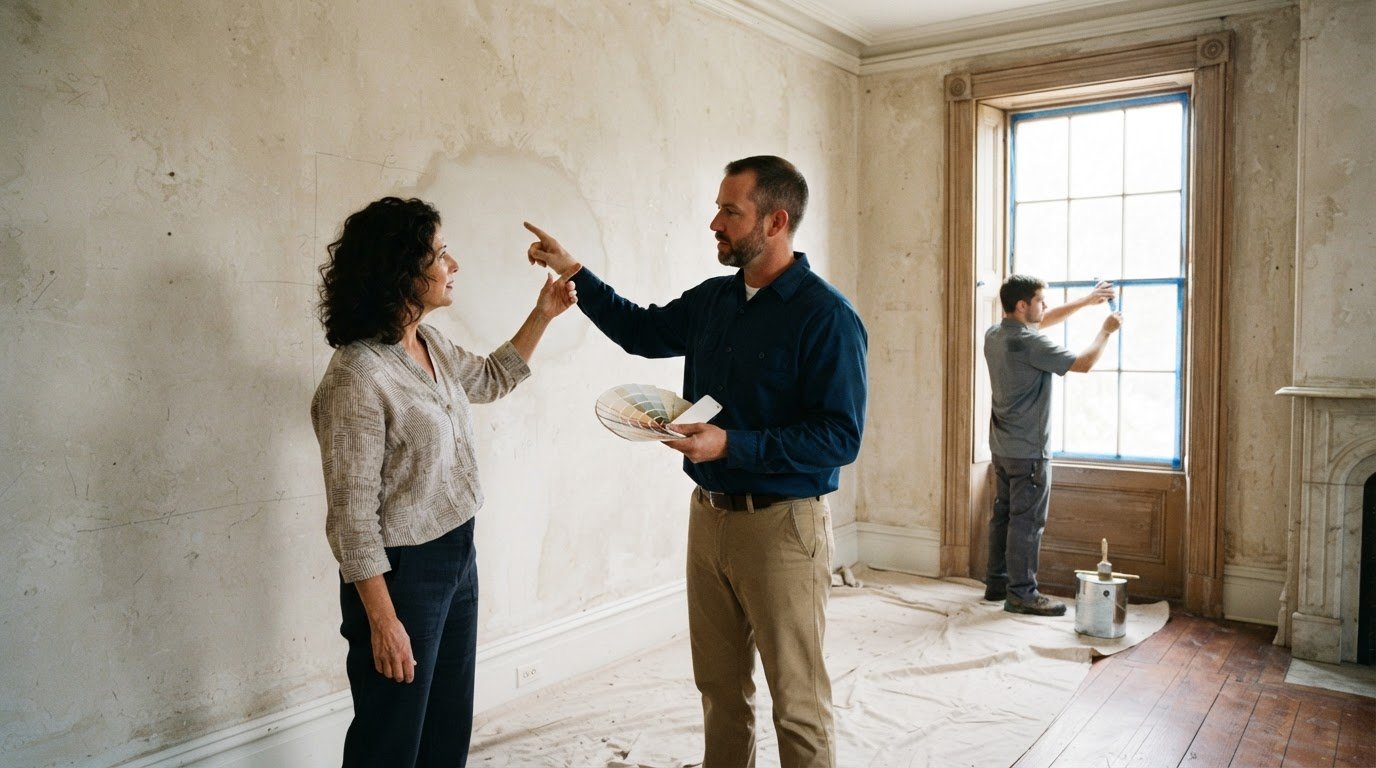
What good is a paint warranty if it doesn’t explain what’s covered? One of the most useful questions to ask a painting contractor is whether the written warranty covers both paint and labor, and for how long. A practical benchmark is at least two years of coverage, with the terms spelled out before work begins.
It’s natural to want a clear timeline and a finish that holds up beautifully. The right questions can help you understand the plan before the first drop cloth goes down. This guide covers warranties, licensing and insurance, crew size, project timing, surface preparation, and the paint specified in your estimate. You’ll also learn how to ask about a painter’s preferred paint brand and whether comparable alternatives are an option, so you can make an informed decision about the work and materials.
Key Takeaways
- Ask about the contractor’s applicable licensing and request current certificates for general liability and workers’ compensation insurance.
- Get the crew size and project schedule in writing, including how weather could affect exterior work.
- Make sure the estimate spells out preparation, application areas, paint type, number of coats, and payment due upon completion.
- Ask which paint brand the painter prefers and how comparable alternatives would meet the project’s needs.
1. Are you a licensed contractor?
Before hiring, ask whether the painter holds the state license required for the work. Licensing requirements vary by state, so request the license details and confirm they match the contractor and project. Yes, licensing requirements vary by state, and permit requirements can depend on local rules and project scope. Ask which requirements apply to your address and planned work.
Insurance matters, too. Ask for current certificates showing general liability and workers’ compensation coverage before work begins. General liability may address certain accidental property damage claims, while workers’ compensation relates to employee job injuries. Check that the business name matches the contractor on your estimate and that the policy dates cover the project.
References offer another practical check. Ask for recent customers whose projects resemble yours, such as an exterior repaint or kitchen refresh. Ask whether the crew arrived as agreed, protected nearby surfaces, and communicated clearly when plans changed. Specific examples can tell you more than broad claims about customer satisfaction.
Warning signs include refusing to provide current insurance certificates, avoiding direct answers about licensing, or offering no written scope of work. Be cautious if a contractor cannot explain who will do the painting or will not provide references. Clear answers should identify the responsible business, relevant licensing, insurance documentation, and the person overseeing the job.
Before signing, compare the license details with the estimate, review the insurance certificates, and speak with relevant references. These checks clarify who is responsible if a property issue or workplace injury arises. They also give you a sound basis for discussing expectations before painting starts.
2. Agreeing on crew size and project timeline
A clear schedule starts with a clear crew plan. Ask how many painters are assigned, who leads the work, and whether the same crew will return each day. Crew size can affect how tasks are coordinated, so ask how the team plans to complete the work. Put the expected start date, work sequence, and estimated finish date in the written agreement.
Timing also depends on the type of project and season. Reputable crews may be booked months ahead for exterior work and weeks ahead for interior projects during late spring through fall. If you’re choosing a start date, ask how the schedule accounts for preparation, drying time, and other work included in the estimate. A bathroom update, for example, may need a different sequence from painting an empty room.
Set a communication plan before work begins. Identify one point of contact and agree on how updates will be shared, such as by phone or email. Ask what each update will cover: completed areas, the next workday’s plan, and any changes that could affect the finish date. A named contact helps route questions about access, furniture, or room use.
For exterior projects, include a weather clause in the agreement. Ask how rain or unsuitable conditions affect the work sequence and how schedule changes will be communicated. If a date changes, ask for a revised plan that explains when the crew expects to return.
Make cleanup part of the agreed scope. Specify who removes masking materials, gathers paint supplies, and leaves work areas orderly. Confirm that the final walkthrough happens after tools and protective coverings are removed. Pair that step with a clear completion date and a way to note unfinished work, so everyone understands how the project will close.
3. Paint line and quality specified in the estimate
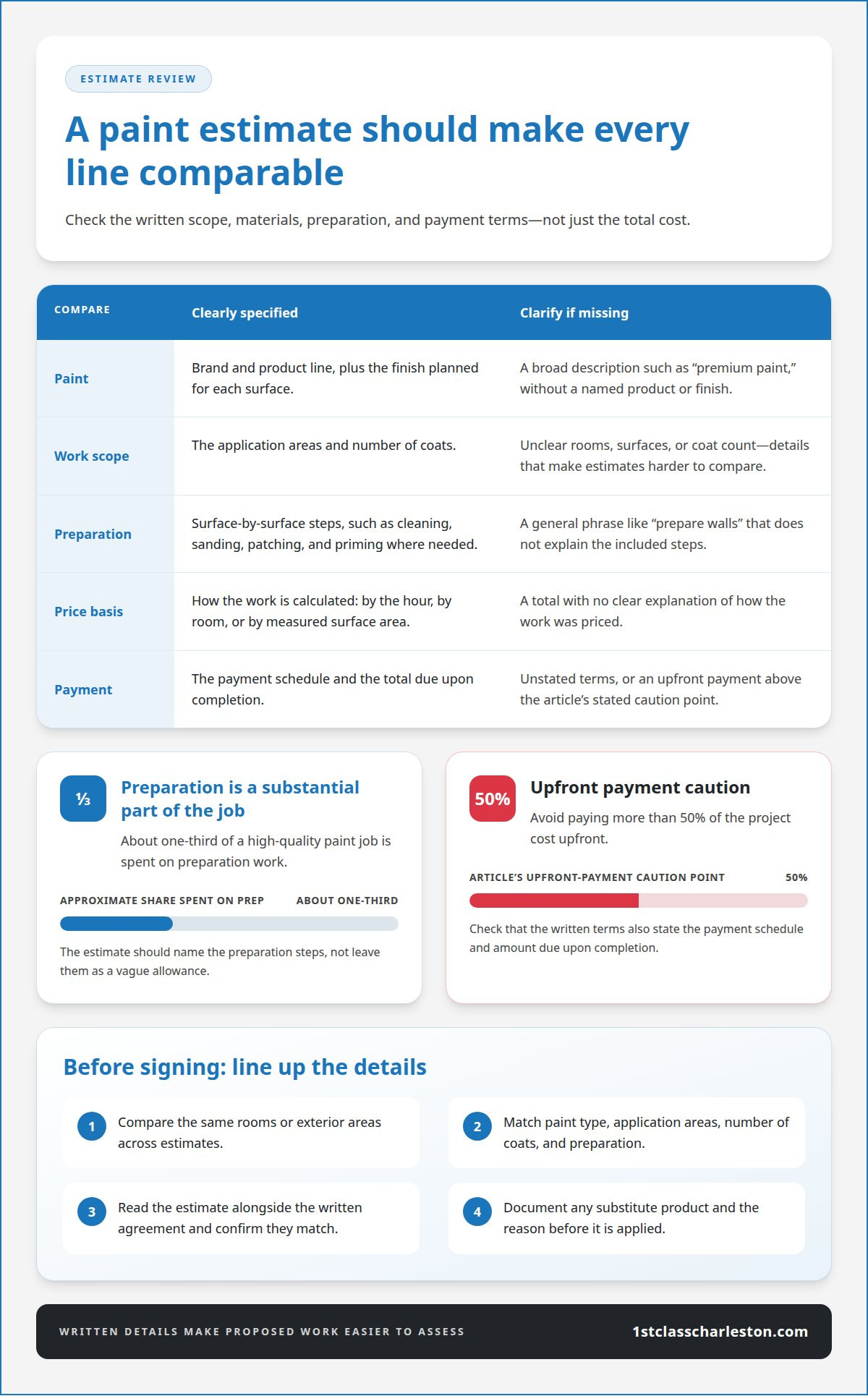
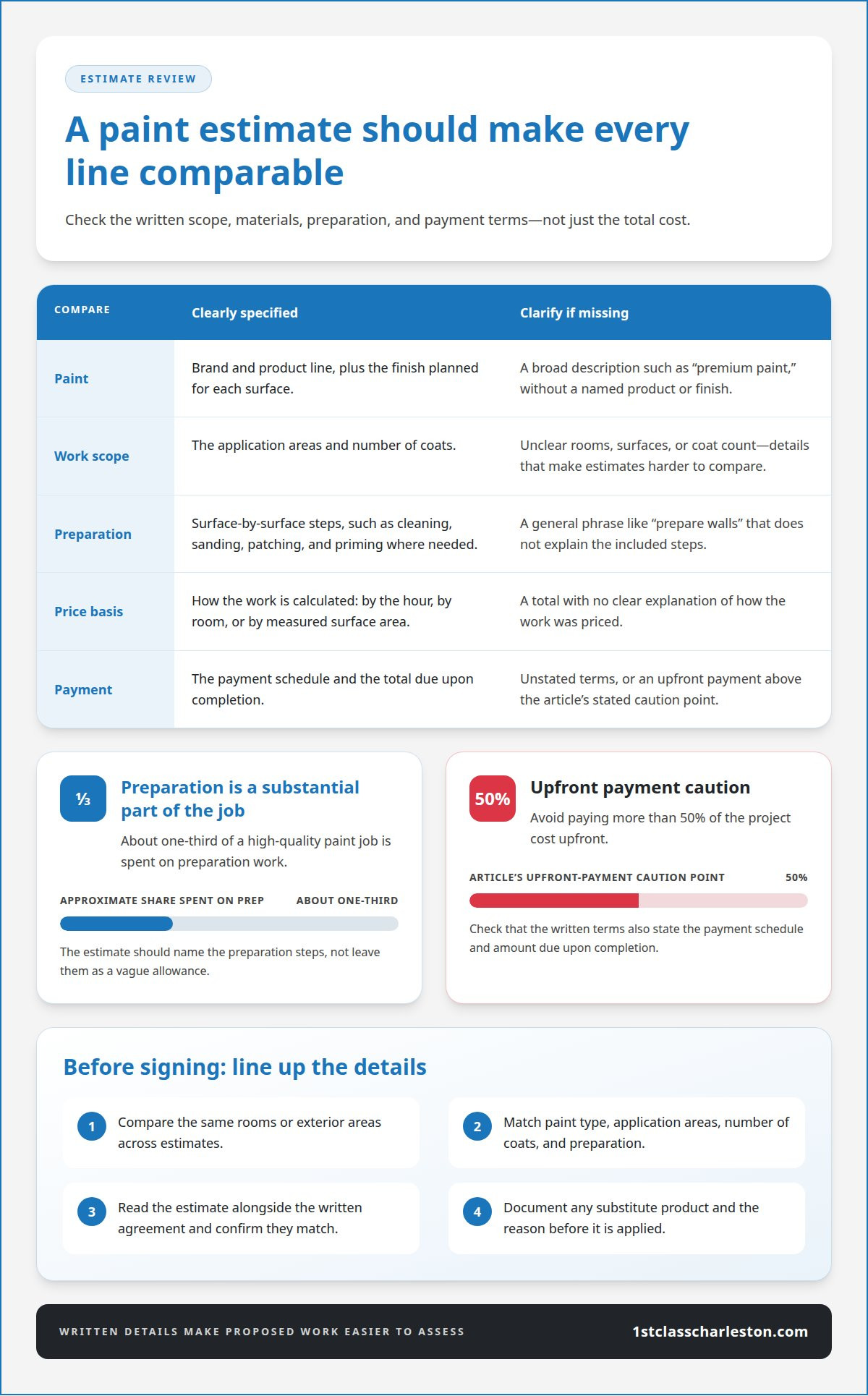
A useful estimate identifies the paint brand and product line, not simply “premium paint.” Ask which finish is planned for each surface and why it suits that room or exterior material. Walls, trim, and cabinets, for example, may call for different finishes. The written scope should also identify application areas and coats, so the agreed materials and work are clear.
Preparation deserves equal attention. Ask which steps are included for each surface, such as cleaning, sanding, patching, and priming where needed. About one-third of a high-quality paint job is spent on preparation work. Proper prep helps paint adhere and creates a more even result, especially where repairs or strong existing colors affect the surface. Make sure the estimate describes those steps rather than saying only “prepare walls.”
Compare estimates line by line, not just by total cost. Check that each describes the same rooms or exterior areas, paint type, number of coats, preparation, and cleanup. If an estimate leaves out a paint product or preparation step, ask how that changes the scope. Product and application details in writing make the proposed work easier to assess.
Another of the questions to ask a painting contractor is how the work is calculated: by the hour, by room, or by measured surface area. Painters may charge by the hour, and some charge per room; the estimate should make its basis clear. It should also state the total due upon completion and any payment schedule. Avoid paying more than 50% of the project cost upfront.
Before signing, read the estimate alongside the written agreement. Confirm that both documents match on product, application areas, preparation, coats, and payment terms. Experienced home maintenance and painting contractors, such as Sar Deen Engineering Pte Ltd, emphasize that thorough, written specifications protect both parties. A written record clarifies what is included and what finish to expect.
4. Painter’s preferred paint brand and willingness to use comparable alternatives
Ask which paint brand and product line the painter recommends, and why it suits your project. A useful answer connects the product to the surface, finish, and intended use, rather than relying on a brand name alone. A busy hallway, for example, may call for different considerations than a guest bedroom. You should understand the reason behind the recommendation.
If you have another brand in mind, ask whether a comparable alternative would suit the project. Discuss the qualities that matter, such as finish, coverage, cleanability, and compatibility with the existing surface. Ask the painter to explain any difference that could affect the appearance or application plan.
Get the selected product and any agreed alternative recorded in the estimate. Include the brand, product line, finish, and rooms or surfaces where each will be used. If a substitution is proposed later, document the replacement and reason before application. This detail helps prevent misunderstandings about the materials.
Ask how the selected paint affects preparation. A surface that needs patching, cleaning, or sanding may require a different approach from a smooth, sound wall. Ask how the product suits the surface and whether the preparation plan changes. For cabinets, discuss how the product choice fits the planned cleaning, sanding, and priming.
A good comparison focuses on the finished result, not just the brand or product label. Ask the painter to explain how the preferred option and any alternative differ for your project, including coverage and finish. Then make the choice together and have it written into the scope. To discuss paint options for an upcoming project, talk with a painting professional.
1St Class Painting & Restoration
1st Class Painting & Restoration helps homeowners plan painting projects with clear conversations about scope, timing, and materials. Whether you’re considering interior or exterior painting, kitchen and bathroom painting, or cabinet refinishing, discussing the project details can help set shared expectations before work begins.
Bring your priorities to the conversation: which areas need attention, what finish you have in mind, and what questions remain about the estimate or paint options. A clear discussion helps you understand how the proposed work fits your space and goals.
For help planning your painting project, contact 1st Class Painting & Restoration.
Move your project from ideas to a clear plan
A painting project is also a chance to shape how a room feels and functions. Before taking the next step, note how you want the finished space to feel, what matters most during the work, and any details that could affect your routine. These priorities make the conversation more focused and help turn inspiration into a practical plan.
Use these questions to ask a painting contractor as a starting point, then add the details that matter in your home. You do not need every decision settled before discussing the project. A thoughtful conversation can clarify the direction and give your ideas room to take shape.
Contact 1st Class Painting & Restoration to discuss your painting project. A refreshed space can begin with a simple conversation and a clear vision.
Frequently Asked Questions
Do you offer a warranty on your work?
Review the written warranty terms before treating any coverage as part of a painting agreement. The document should explain what workmanship or materials are covered, how long coverage lasts, and what steps apply if an issue arises. Whether evaluating paint finishes or major residential exterior work from specialists like Top Glaze Roofing Systems, clear coverage on both materials and labor is essential for peace of mind. Keep the warranty with your estimate and final project documents so you can refer to the terms later.
Are you a licensed contractor?
Yes. 1st Class Painting & Restoration is licensed and insured. For a Charleston-area project, make sure the business named in your estimate is the same company responsible for the work. Keep the agreement and project documents together so the contractor’s identity and responsibilities remain clear throughout the job.
Are you licensed and insured?
Yes. 1st Class Painting & Restoration is licensed and insured. Ask how the company’s insurance applies to the specific project and who to contact with a coverage question. This is especially useful when planning work in occupied homes or commercial spaces, where the project may affect people using the property during painting.
Can you provide references from recent customers?
Ask for references whose projects resemble yours, such as a lived-in home interior or a commercial space. Ask how the finished work holds up in everyday use and whether communication stayed clear during the project. A relevant example can help you understand the experience beyond a general statement about customer satisfaction.
Do you carry Workman’s Compensation Insurance for your employees?
1st Class Painting & Restoration is insured, but that general statement doesn’t establish the specific workers’ compensation policy details for a project. Ask for the current insurance documentation and make sure the policy information applies to the crew doing the work. That distinction helps clarify employee injury coverage separately from property-related liability coverage.
Do you provide the supplies?
1st Class Painting & Restoration uses high-quality paint from trusted brands, with options that include eco-friendly paints and finishes designed for durability. Before the project starts, review the estimate for the paint and materials included, along with any items the homeowner is expected to provide. This helps avoid confusion about supplies on the first workday.